
Stop Gutting the Conventional Army
Published Nov. 16, 2026 • Read time: 5m
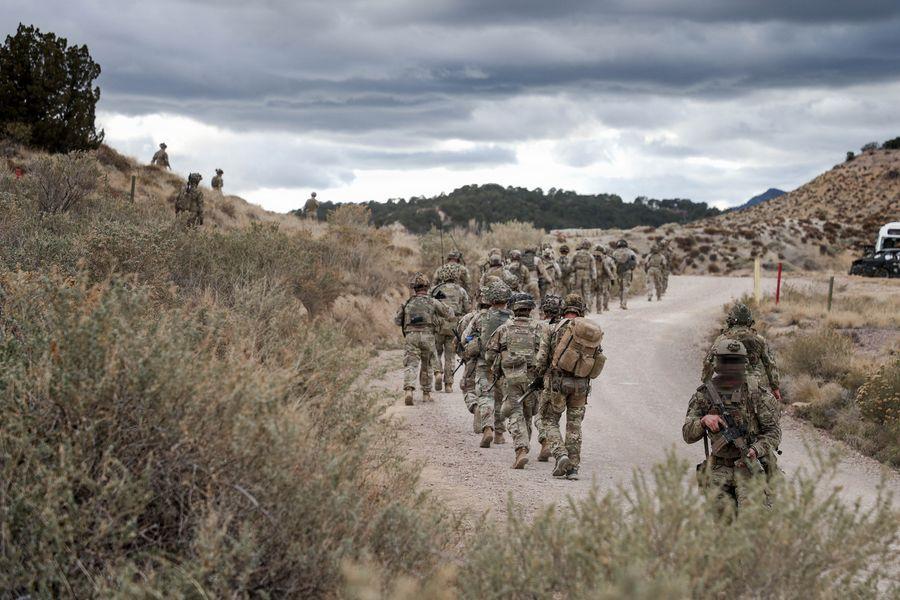
In wars fought principally on land, the U.S. Army’s conventional forces – its maneuver brigades and divisions – are the primary agents of victory. They take and hold territory and play by far the most important roles in engaging and destroying enemy forces. Accordingly, the quality and numbers of their leaders are all-important in setting conditions for success in land wars. If so, why are the Army’s best leaders regularly siphoned off in huge numbers to other communities that cannot play decisive roles?
Here is a snapshot of the problem. In 2026 the Active Army fields 20 Special Forces (“Green Beret”) battalions with a total of 360 twelve-man “A” detachments, totaling 4,320 officers and noncommissioned officers. All are drawn from the conventional force. Stacked on top of these hundreds of “A” teams are officers and NCOs at the SF company, battalion and group levels, along with hundreds more in SF training organizations and higher headquarters such as the U.S. Army Special Operations Command (USASOC), 1st Special Forces Command and the US Army Special Warfare Center, SF’s training organization. Many others are assigned to the Joint Special Operations Command (JSOC) and U.S. Special Operations Command (USSOCOM). For decades, Special Forces Groups included three battalions, but during the Global War on Terror (GWOT) a fourth battalion was added to each group, along with a support battalion. All told, these high-quality leaders represent enough combat leaders to staff the combat units for three Army divisions.
The Army’s elite 75th Ranger Regiment represents a further drain on the combat leadership resources available to the conventional force. Highly trained, well-funded, exquisitely equipped and manned with the very best Soldiers and leaders, the Rangers are the apex predators of the Army. Essentially a raiding force, the Ranger Regiment – like the Green Berets – does not take and hold ground as conventional forces do. All Ranger officers must first serve in conventional formations before serving with the 75th. Organized with only two small battalions throughout most of the Cold War, the Rangers expanded dramatically beginning in the 1980s, adding a third battalion and a regimental headquarters. The Global War on Terror saw a fourth rifle company and a support company added to each battalion, along with a ranger special troops battalion and military intelligence battalion. A fourth ranger infantry battalion is reportedly forming. Many of the best junior officers and sergeants from across the Army, especially from the Army’s fourteen light infantry brigades, migrate from these conventional formations to the 75th every year.
Other “special” organizations also compete for the leadership talent found in Army brigades and divisions. The Army’s active duty Civil Affairs community was expanded in 2006 from a single battalion to five battalions under the 95th Civil Affairs Brigade. The Psychological Operations career field saw a similar expansion, with no active duty battalions in 1975 but seven today. Neither community is “entry level” for commissioned officers; all are drawn from the conventional force. Grouped under 1st Special Forces Command, all are airborne organizations and wear the SF shoulder patch, attracting significant numbers of young leaders from the less-glamorous conventional Army.
These organizations draw heavily on the leadership “cream” of the Army, but they are not the only ones. The 5th Security Force Assistance Brigade (SFAB) performs “advise and assist” missions, training foreign armies in combatant command areas of responsibility. Manned with 123 officers and 693 NCOs (all E6/staff sergeants or above), it represents the equivalent of the leadership of an entire maneuver brigade combat team. The SFAB concept may have made sense when high intensity conflict with peer competitors was not in prospect. Today those resources can be put to far better use.
There is, of course, a case to be made for each of these organizations and communities. In the best of worlds, a full toolkit is always desirable. But in a world of constrained resources, hard choices have to be made. Concentrating large numbers of the Army’s best combat leaders in bespoke organizations that, in the end, are not decisive in land warfare does not serve the national interest. The Army does not win wars with commandos. It wins with large, powerful, fully manned conventional forces led by quality leaders. Today, those forces are regularly stripped of their best talent in favor of boutique communities performing secondary missions. Most were grown to their current size following 9/11 for a security environment that no longer exists.
What is the alternative? A good place to start is to look is to look at the Active Army and the logic underpinning its force structure. Much of the growth of the Army’s specialist communities can be traced to pressure from regional combatant commanders desiring “aligned forces” oriented on their AORs. The SOF community was only too happy to oblige by expanding to meet the demand and by folding in civil affairs and psyops formations. If the true priority is an Army postured for large scale combat operations, a more rationalized approach would look something like this:
· Three Special Forces Groups of three battalions, each with three companies
· One Ranger Regiment of three battalions, each with three companies
· One Civil Affairs Brigade and one Psyops Brigade of three battalions, each with three companies
· No Security Force Assistance Brigade
Pruning excess or overstaffed headquarters in these communities can also go far to rebalance the force. Deactivated formations may migrate to the reserve component. These changes would preserve needed capabilities while returning thousands of quality combat leaders to Active Army brigades and divisions badly in need of their talent – where the demand is greatest and the stakes the highest. Soon, the Army may find itself once again engaged in major theater war. Before it does, it makes sense to posture for success.
R.D. Hooker Jr. is a Senior Fellow with The Atlantic Council. He served three tours on the National Security Council and commanded a parachute brigade in Iraq.
End the Jones Act Waiver
By Mark H. Buzby • RealClearDefense
Prediction Markets Are Becoming a New Frontline for Military Operational Security
By Yang Yunke • RealClearDefense
Can Robots Bring Maneuver Warfare Back?
By Ayeza Areej • RealClearDefense
Buy Smarter, Fly More
By Jeff Kojac • RealClearDefense
Stop Gutting the Conventional Army
By R.D. Hooker, Jr. • RealClearDefense
Hung Cao Facing Contentious Confirmation To Become Navy Secretary
By Konstantin Toropin • Associated Press
U.S. Marines Expand M27 Rifle Contract
By Inder Singh Bisht
Kadena AFB Gets First F-15EX Eagle IIs
By Emily Ryan Miller, Defence BlogHung Cao Facing Contentious Confirmation To Become Navy Secretary
By AP
Fair Winds, Peacoat and Desert Camo: Navy Makes Big Changes to Seabag
By MTimes