
A Closure and Reopening: The World as It Has Always Been
Published March 14, 2026 • Read time: 5m
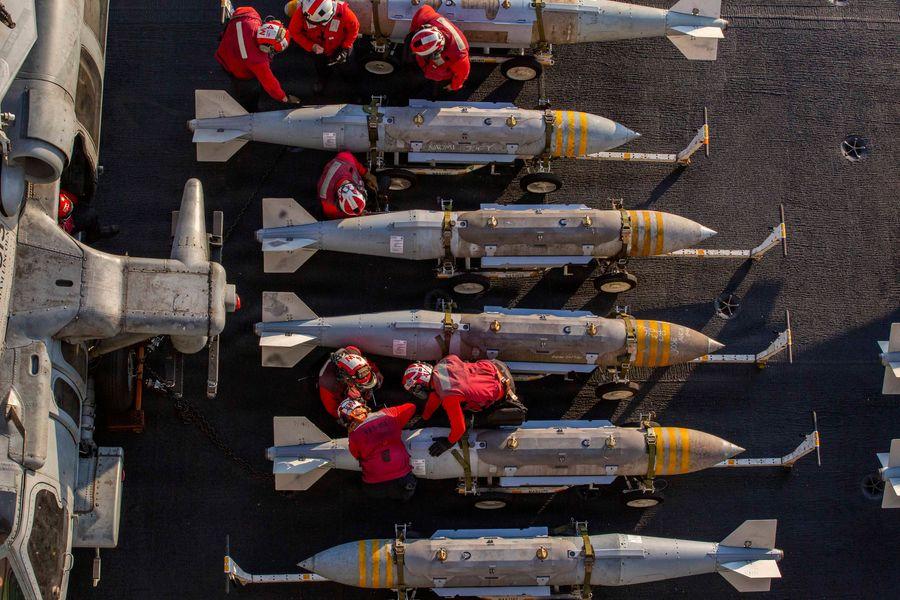
Major wars often trigger geopolitical realignments that reshape regional balances of power and, over time, the global order. This will happen again, whether the United States achieves regime change in Iran, succeeds only partially, or if the Iranian regime survives the war, though with its nuclear and missile programs significantly degraded. And regardless of whether this is a quick campaign as the Trump administration initially promised, a prolonged struggle, or something in between, the world has changed, and the assumptions many of America’s policy elites relied on for three post-Cold War decades have been effectively abandoned. We are returning to a world defined more by power politics and risk than by assumptions of stable norms. The post–Cold War expectation of a steadily consolidating liberal order is fading, but as it ends, is the West able to face the consequences of this change?
Freedom has always been connected to the idea of power, with the story of the American Republic showing that if you want to be free, you have to fight for it. If you want to be free, you have to take risks and remember two seemingly opposing paths: act, and if you choose the wrong way, live with the consequences, persevere, and try again until you succeed. This outlook long shaped Western strategic culture, emphasizing resolve, accountability, and a willingness to defend core interests. For many Western elites, this no longer holds true, as if we can no longer move beyond cynicism and guilt. As if self-reinforcing assumptions have dulled strategic realism.
International Allied Reliability of States: Criteria and Evolution
Why Iran is Not Vietnam
The Pressure Is the Message: What Xi and Putin Faced in Shenzhen
Previewing The Shenzen Summit: A Critical View
History will judge whether the Trump administration’s decision to attack Iran was justified and whether, indeed, there was a clear and immediate threat to the United States. Regardless of whether this is a war of choice or necessity, the Middle East is now on fire, and, as in any war, even the best strategic and operational plans often don’t hold up under initial contact with the enemy. I hope this war is short, and I pray for our military currently in the thick of it, but no one truly knows what the endgame will be. It is indeed ironic that the United States is fighting in the Middle East again, led by an administration that once condemned endless wars in that region and constantly criticized “neocons” for their naive and costly “democracy-building projects.”
Can the West quickly re-adapt to new power realities? Since 1991, we've convinced ourselves that we live in a “rules-based international order,” even though war has been a constant over the past thirty years. Now, the Kantian fantasy is over. So, what comes next? How do we regain the West's assertive confidence to support deterrence? Over the past three decades, Western responses to revisionist aggression have often been cautious and incremental, at times bordering on appeasement. Russia invaded Georgia in 2008, and little changed—Nord Stream 1 pipeline was completed. It annexed Crimea in 2014, and again, little happened beyond verbal condemnations—Nord Stream 2 was started. Putin brutalized Syrians at Aleppo in 2015, and our elites discussed Russia returning as a regional player. Then, he invaded Ukraine a second time in 2022, and the Biden administration, though initially standing firm, found itself entangled in debates over red lines and escalation management.
History shows few instances where deterrence, once broken, was restored without war. Maybe what's happening in the Middle East is the war that will start our democracies to re-learn the core principles of statecraft and power politics – that is, if the United States succeeds at an acceptable cost. If we fail, this could mark the beginning of a broader, system-changing conflict.
Public discussion of this war by Trump administration officials frequently veers into displays of performative toughness. But maybe this excess is what’s needed to give Western elites a sense of strength again. Perhaps visible demonstrations of resolve are intended to revive the notion that without power, there is no freedom, and without geostrategic assertiveness, there is no safe homeland. The West—especially Europe—is wealthy like never before, but being fat doesn’t mean being strong. Rome didn’t fall because the Romans had a higher standard of living than the Barbarians; rather, the frontiers were porous, Rome’s defenses were strained, and its adversaries were prepared to exploit both.
The Iran war may become a pivotal test of Western strategic resolve. This is now about great power rivalry and conflict. The most significant impact of this war will be on U.S. relations with China and Russia, both observing the U.S. military’s skill, weapon performance, and, most importantly, whether the operations achieve their aims and how quickly. Whatever the outcome, the world that emerges from this war’s crucible will differ from what we recall just a year ago. We are back in a world as it has always been, one where outcomes are increasingly shaped by power relationships rather than shared norms. But are we in the West willing to accept this reality? Are we ready for it?
Andrew A. Michta is Professor of Strategic Studies at the Hamilton School at the University of Florida and a Nonresident Senior Fellow at the Atlantic Council in Washington, D.C. Views expressed here are his own.
Ending the Conflict with Iran
By Anthony Cowden • RealClearDefense
Going After the Cyprus Money Laundering Hub
By Lise Korson • RealClearDefense
Don’t Bet Against CMMC
By Thomas Graham • RealClearDefense
When Losing Control of AI Becomes a Weapon
By Yunus Emre Tumen • RealClearDefense
International Allied Reliability of States: Criteria and Evolution
By Sergey E. Ivashchenko • RealClearDefense
Coast Guard’s Updated Force Design Plan Includes Maven Smart System
By DS
F-22 Raptor Commands MQ-20 Avenger From the Cockpit
By K. Osborn, Warrior M.
ULA’s Vulcan Rocket Is Grounded for Third Time
By I. Klotz, V. Machi, Aviation Week
Tragedy That Convinced the Coast Guard It Needed Rescue Swimmers
By WATM
USAF Contracts Final KC-46 Lot of Original Production Deal
By Satam, The Aviationist