
A Shortage of Yellow Ribbons
Published April 2, 2026 • Read time: 5m
As the ill-conceived war with Iran drags past its third week, the usual armchair strategists are flooding the zone of legacy media with midwit takes that fluff the Trump administration and justify its actions. No doubt the thought leaders' pontifications are commensurate with the wishes of their shadowy patrons, and the volume of their respective voices is relative to their proximity to the slop trough that is the DC patronage network.
The spasmodic statements by the Commander-in-Chief make it impossible for any sort of coordinated or unified messaging. How is the interagency supposed to interpret the almost intra-daily vacillations and conduct any sort of strategic plan? Perhaps by getting back to the basics of strategic analysis using the framework of a certain Prussian military theorist.
Carl von Clausewitz in his treatise "On War" describes a paradoxical trinity consisting of the people, the military, and the government which interact with and affect each other. Given the complex and non-linear nature of war, understanding it, and achieving victory, this dynamic must be grasped. In layman's terms, to achieve the best odds of victory these three points of the triangle must resonate on the same frequency. That is not to say that having the above facets of your society humming the same tune is a guarantor of victory; but if you do not, the odds of victory are diminished significantly.
The first point on the triangle is government. Despite the change in administrations, the old adage seems to hold true that "they never met a war they didn't like." There is an entrenched bureaucracy in the executive branch, some elements within the intelligence community, and unaccountable representatives in the legislative branch that have vested interests in war, no matter the cost. Trump himself seems to have abandoned his non-interventionist campaign promises. And of course, the foreign interests that have pushed us into this quagmire cannot be ignored.
Why are most of these actors so eager (or at the very least, flippant) about the prospects of this war with Iran? Mostly because they believe they won't have to bear the brunt of the consequences. At least, they didn't before oil prices soared and the overestimation of the efficacy of regional air defenses became apparent. So, it seems the government is on board with prosecuting and expanding US involvement in this conflict.
The second point is military. On paper, the military is subordinate to civilian authority of the government, and so far, the brass seems to be saluting smartly and carrying out orders as best they can. However, they may be far less on board with further action in this conflict than their civilian bosses realize. First, the institutional rot in the form of partisan ideologues pushed up and through the ranks during the last administration will likely affect organizational cohesion. Do we believe these people will enthusiastically support any mission passed down from a Trump White House?
Also, take into account the well-seasoned officers and NCOs still in the military that lived through the Iraq/Afghanistan debacle. There may not be insubordination on a mass scale, but publicized incidents of it coupled with bureaucratic foot-dragging, lack of desire to re-enlist, or leaving service completely will no doubt have a compounding and cumulative negative effect on battlefield readiness.
For example, unconfirmed reports speculate recent sewage backup and laundry room fire on the USS Gerald Ford aircraft carrier forward deployed to the region may have been instigated by disgruntled members of the crew in a type of "passive insubordination" in response to extended deployments and a belief that they may intentionally be placed in harm's way such that they would be vulnerable to Iran's hypersonic missile capability and could be sunk, acting as a "casus belli" for further American/Israeli escalation.
Additionally, it seems like the US and Israel grossly underestimated Iran's capability and resolve. That should give us pause before we jump in further; the morale and fighting spirit isn't there for this particular endeavor.
The final corner of the triangle is the people. Unequivocally, they are not on board with any sort of intervention in this growing conflict. President Trump won a resounding democratic victory on a platform of keeping us out of foreign entanglements, so they understandably feel betrayed. Iran had not attacked us directly, Israel acted impetuously despite US warnings, and the repeated statement that Iran is "weeks away from a nuke" has been bandied about for 20 years. The people are not fooled.
A common theme in galvanizing public support for war throughout history has usually been some unifying tragedy that triggers emotional investment in renewed nationalist fervor. America was staunchly non-interventionist during WWI until the sinking of the Lusitania helped rouse public opinion to enter that war. Same for WWII until Pearl Harbor. Same for Vietnam until the Gulf of Tonkin and Iraq/Afghanistan until 9/11.
However, America at this juncture is too polarized, trust in the institutions too eroded, that any such event would be unlikely to elicit the usual response. Perceptions would vary from "deserved blowback from an illegal war" to "suspected false flag in order to get the people on board with this latest misadventure." What does that say about the people's trust in or affection for their government? You cannot manufacture consent of this magnitude in the age of instant information.
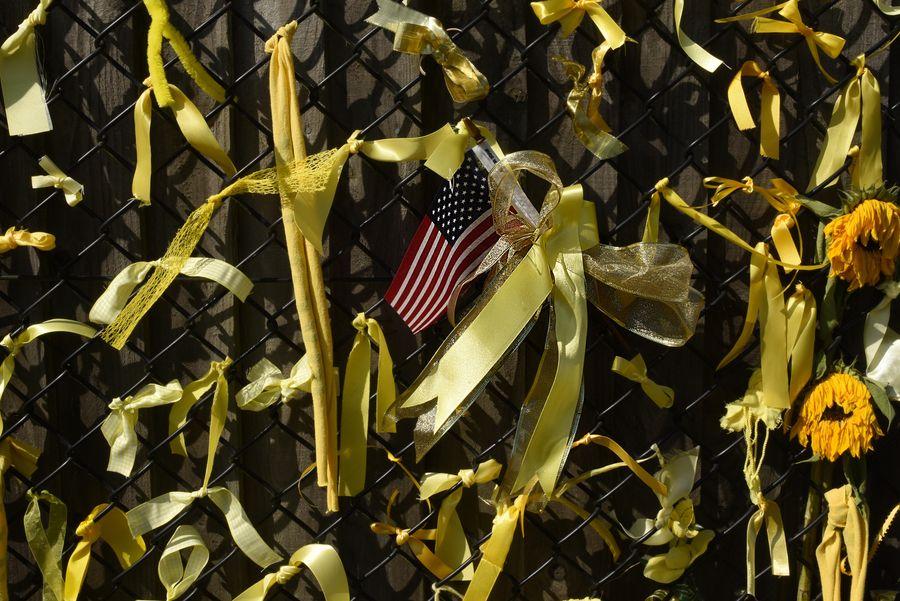
Any such "galvanizing" event will be met with enmity alright, but not for the intended adversary. Unlike the previous Gulf Wars, there will be no yellow ribbons of solidarity around trees. Sadly, there may be increased calls to see ropes hung from their branches.
The above sober assessment does not bode well for a successful outcome for this war. We need to find an off ramp now before it escalates beyond everyone's control.
Greg Archetto was a foreign affairs officer in the Bureau of Political Military Affairs at the U.S. Department of State, a security assistance officer at the Defense Security Cooperation Agency, Office of Secretary of Defense, and an advisor to Senator Rand Paul. Greg has an MA in National Security/Strategic Studies from the U.S. Naval War College.
After the Midterms, the Right Strategy Against Iran
By Lance Gordon • RealClearDefense
The Color Revolution Came Home
By Emzari Gelashvili • RealClearDefense
When Access Becomes the Fight
By Richard Byno • RealClearDefense
What the 2026 Midterm Results Mean for U.S. Strategic Competition with Rivals
By Dean Chen • RealClearDefense
Measurable by Design: Project Meridian
By Alex Willard • RealClearDefense
New USAF Force Design Bets on Technology
By Stephen Losey, Air & Space Forces
DoD Pushes $450M in Loans To Bolster U.S. Space Companies
By Hitchens, BrDefense
The U.S. Navy Needs a New Battlecruiser. Will It Get One?
By Sadler & Ouellette, NatInt
U.S. Army Rehearses Rapid HIMARS Rocket Launcher Deployment
By Global Defense N.
Coding Commander's Intent into Unmanned Systems
By Thomas Baumstark, Proceedings