
China Sits Out Iran Conflagration
Last updated 09:42 PM EDT • Read time: 5m
Beijing sees little upside in getting entangled in Middle Eastern wars
and currently lacks the bandwidth to be a truly global security player.
Rewind a couple of years to the China-brokered Iran-Saudi Arabia rapprochement in March 2023, which quickly developed its own mythology.
Although the tentative détente was finalised in Beijing, it had many fathers – with Kuwait, Oman and Iraq having worked assiduously to host preceding rounds of talks. China’s imprimatur was important, but not necessarily vital to catalysing a de-escalation that both countries independently sought.
Nevertheless, the 2023 agreement was widely construed as marking Beijing’s definitive transition from oil customer to a major actor in regional politics and security. Both Tehran and Riyadh hoped that the deal would give China more of a direct stake in upholding regional order. The agreement coincided with a frenetic bout of Chinese diplomacy, with Beijing attempting to cast itself as a peacemaker in conflicts across large tracts of Eurasia ranging from Kabul to Gaza to Donetsk.
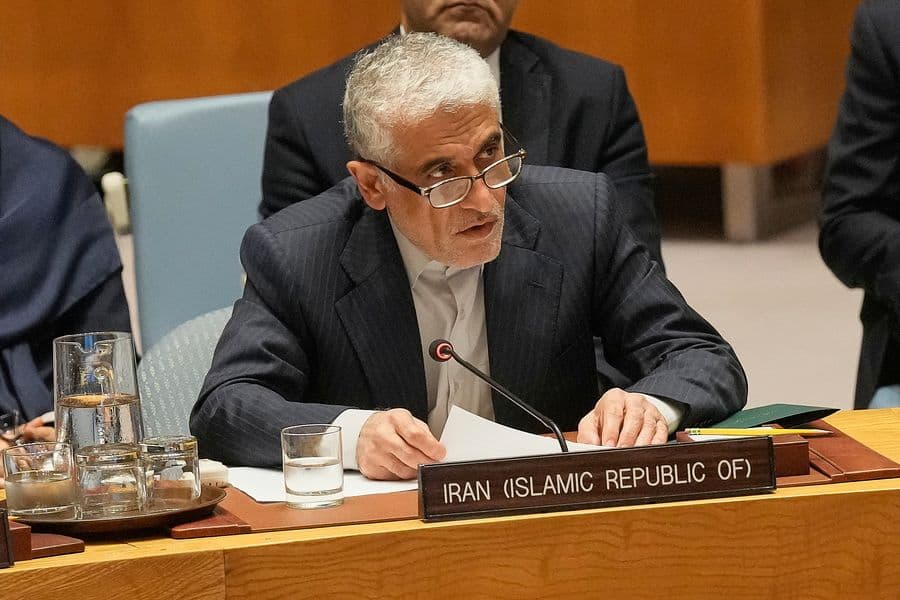
Now fast forward to the present, and China’s response to Israeli and U.S. strikes on Iran has been conspicuously low-key. Aside from posturing at the United Nations combining acerbic criticism of the United States with diplomatic platitudes, China has essentially been a spectator in this latest conflict. To the extent that any power outside the Middle East has influence on events, it is the United States and, at a stretch, the European Union.
Another analytical construct that now looks markedly less robust is the notion of a Beijing-Moscow-Tehran-Pyongyang axis of autocracy. Although China has reportedly supplied Iran with precursor materials used for ballistic missiles, it has eschewed directly military sales, even after the expiry of the UN-mandated embargo.
Tehran would have even more reason to feel let down by Russia. Moscow has apparently refused to deliver on a contract to sell Iran fighter jets and attack helicopters. Most damningly, Russia was also either unwilling or unable to replenish Iran’s air defence systems after they were obliterated in Israeli strikes last year.
China’s relative inaction is not for a lack of significant interests at stake. Iran supplies China with about 14% of its oil needs – often at low cost. China’s near monopsony on Iranian oil purchases (as few others are willing to flagrantly violate U.S. sanctions) allows it to strike a hard bargain. Chinese investments in Iran are substantial even if they have never lived up to the hype.
Iran's Foreign Minister Hossein Amirabdollahian, left, shakes hands with his Saudi Arabian counterpart Prince Faisal bin Farhan Al Saud, right, and Chineses counterpart Qin Gang in Beijing Thursday, April 6, 2023 (Iranian Foreign Ministry)
China has little interest in seeing a nuclear-armed Iran. But the U.S.-backed Israeli decapitation strikes on Iranian officials and open musings about regime change are anathema to Beijing’s sensibilities. Previous U.S. Middle Eastern adventures played an important and sometimes overlooked role in driving early Chinese military modernisation.
There are several drivers of China’s reticence and tepid response.
China’s relationship with Iran has always been transactional and more than a little superficial. Beyond a generalised sense of grievance against the United States and distaste at its growing propensity for sanctions, there is little in the way of strategic convergence. China has benefited more than most from the status quo in the Middle East. It also has reason to be wary of Iran’s hegemonic ambitions.
The suspicion is mutual. In 2020, the famously pugnacious former president of Iran Mahmoud Ahmadinejad described draft versions of the Iran-China 25-year Cooperation Program deal as “suspicious and secretive”. Rumours circulated through Iranian media that the pact allowed for surreptitious Chinese military bases.
China’s increasingly sophisticated economic partnerships with United Arab Emirates and Saudi Arabia involving tens of billions in greenfield investment invariably has political implications. China drew Iran’s ire last year when it appeared to endorse the UAE’s claim over disputed Iranian-held islands in the Persian Gulf. China and its two primary Gulf partners share a similar dread of Iran’s periodic threats to close the Strait of Hormuz.
China is also acutely aware of the costs in blood, treasure, social cohesion and reputation borne by the United States in its long history of Middle Eastern wars. This has generated a risk aversion that appears to have shaped China’s approach to diplomacy. It may also speak to deeper-seated inhibitions around taking on any type of interventionist security role, even if China’s power continues to grow apace.
Evidence from elsewhere suggests that China has only put real skin in the game in brokering conflicts in its immediate sphere of influence where its core interests are most directly threatened. This has most clearly played out in Myanmar.
Then there is the question of capability. China is certainly investing in tools of distant power projection, including aircraft carriers. However, its military posture remains geared towards Asia, with a Taiwan contingency taking precedence.
Except for its outpost in Djibouti, China lacks anything like the formidable network of regional bases maintained by the United States. U.S. efforts appear to have headed off tentative attempts to establish bases in Oman and the UAE.
China’s sheer economic weight as a consumer of hydrocarbons – rapid electrification notwithstanding – will always give it a degree of influence in the Middle East. Still, it appears to be a long way from supplanting the traditional U.S. role in the region, if indeed, it has any intention of ever doing so.
Henry Storey is Manager - Projects, Research and Analysis at Dragoman with a focus primarily on Asia and the South Pacific. He holds a Master of International Relations degree from Melbourne University and was formerly an editor at Foreign Brief and Young Australians in International Affairs. The views expressed are his own.
This article appeared originally at Lowy Institute's the interpreter.
Washington Cannot Ignore Afghanistan’s Weapons Legacy
By Saima Afzal • RealClearDefense
Moral Injury at One O'Clock
By Jeff Hood • RealClearDefense
The Mirror-Life Trap: When Deterrence Must Prevent Invention
By Lawrence J. Kaiser • RealClearDefense
The Pentagon’s AI Agents Could Complete the Mission and Still Leak Secrets
By Burak Oktenli • RealClearDefense
A Passage to the Middle East: India as a Mediator and Security Partner
By Irina Tsukerman • RealClearDefense

U.S. Intel Confirms This Is China’s Secret Spaceplane
By Joseph Trevithick, The WarZone
Navy Sees 10-year High For Class A Aviation, Afloat Mishaps
By H. Mongilio, USNI News
U.S. Navy To Install AI Vessel Detection System on Five Destroyers
By The Defense Post
U.S. Navy’s CHAOS Program
By Dylan Malyasov, Defence Blog
Two U.S. Navy Carriers Ready to Operate New MQ-25A Tankers
By Global Defense News