
Is the Pentagon About to Hand Iran a Major Border Crossing?
Last updated 05:26 PM EDT • Read time: 3m
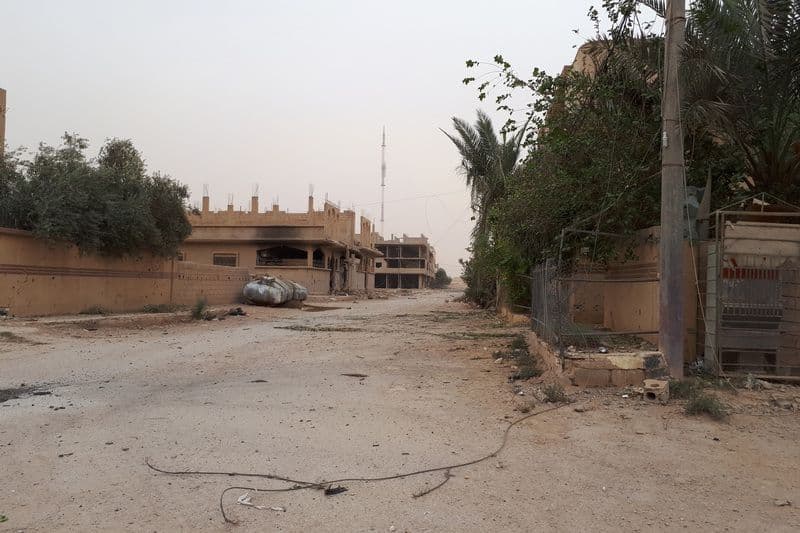
U.S. airstrikes are softening the Islamic State at a key border crossing without any plans for a follow-on ground offensive to deny it to Iran.
The Pentagon announced on Wednesday the start of its final ground offensive against the Islamic State in Syria. The Coalition will support the primarily Kurdish Syrian Democratic Forces (SDF) in capturing Hajin, a village north of the Euphrates River near the Iraq-Syria border. Hajin, however, is not the last pocket of Islamic State control. Coalition airstrikes indicate that the Islamic State maintains a robust presence in Abu Kamal, a critical position along the Syria-Iraq border that Iran seeks to control.
Since the start of Operation Roundup – the campaign to accelerate the defeat of the Islamic State in the Euphrates River Valley and the Iraq-Syria border region – the Coalition has conducted 69 percent of its strikes in Abu Kamal. In the past three months alone, U.S.-led airstrikes have destroyed 14 Islamic State command-and-control centers in this territory, more than all other locations in Iraq and Syria combined.
Curiously, despite these concentrated strikes, U.S.-backed forces will not be conducting a follow-on ground offensive there. The Coalition has limited its ground offensives to areas north of the Euphrates River, as a means to preserve deconfliction between the Coalition and the regime axis: the Syrian government, Russia, Iran, Hezbollah, and Shiite militias. Thus, the Coalition is prematurely concluding ground operations against the Islamic State and effectively ceding Abu Kamal to Iran.
Iran is eager to capture Abu Kamal to secure a land route over Iraq and Syria towards Lebanon. Although Iran has a robust air bridge to supply its foreign wars, an overland route is more reliable and less expensive. Iran has worse odds at the other two crossings: Tanf, where the United States has positioned Special Forces, and a northern crossing under Kurdish control.
Whereas those two crossings would be difficult to conquer, the only thing standing between Iran and a secure overland route at Abu Kamal is the Caliphate that the Coalition is striking daily. Without a follow-on ground offensive, Coalition strikes enhance Iran’s position. To put it another way, the American air campaign is trading one enemy for another.
Iranian forces are already present in Abu Kamal and are using it to facilitate weapons flows. On June 17, an Israeli airstrike killed members of Iran’s elite Islamic Revolutionary Guard Corps, who were training militias on how to transfer weapons in the area. Additional Iranian forces – those leaving Syria’s southwest – could also be redeployed there.
The regime axis has not yet turned its attention fully to Abu Kamal, given that its priority is securing western Syria. Indeed, the Syrian regime is only engaged in limited clashes with the Islamic State outside of Abu Kamal. It may, however, pivot toward a full-scale offensive as other operations conclude. U.S.-led strikes could certainly pave the way.
President Trump has routinely vowed, “the United States will not allow Iran to benefit from our successful campaign against ISIS.” However, the American air campaign in Abu Kamal is poised to do just that. Coalition air strikes that fail to secure this territory will gift Iran a major highway connecting Damascus and Baghdad, thereby empowering Iran at a moment when American policy aims to do the exact opposite.
Alexandra N. Gutowski is a senior military affairs analyst at the Foundation for Defense of Democracies. Follow her on Twitter @angutowski.

The U.S. Nuclear Deterrent Umbrella
By Peter Huessy • RealClearDefense
The Islamic Republic Can Lose the War and Still Win
By Nima Gholam Ali Pour • RealClearDefense
Talent Ecosystems: Building a Scalable National Security STEM Workforce
By Payuna Uday • RealClearDefense
The Underground Cloud
By Ben Poulin • RealClearDefense
Trump's Disrupt First, Negotiate Second: Greenland in Focus
By Meda Parameswara Reddy • RealClearDefense
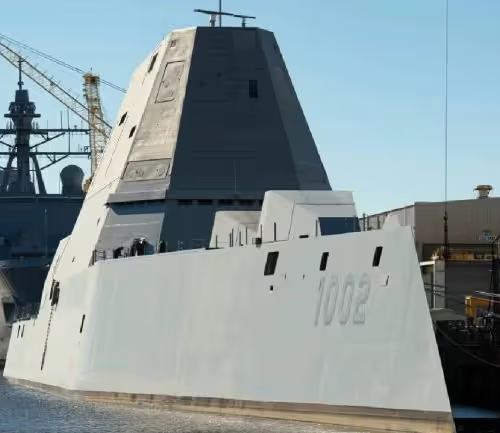
U.S. Navy to Begin Testing for USS Lyndon B Johnson (DDG 1002)
By Naval-Technology
Marine Corps Moves To Expand Maven Smart System Account Access
By DefScoop
Navy F/A-18 Spotted With New AIM-174B And AIM-260 Long-Range Missiles
By TWZ
Pentagon’s 6th Generation Stealth Fighter Will Control Drone Swarms
By Warrior M.
Air Force Needs 1,509 Combat-Ready Jets by 2035
By Michael Marrow, Breaking Defense