
Saudi's Young Leader Arrives to a Washington Divided Over Yemen
Last updated 05:29 PM EDT • Read time: 5m
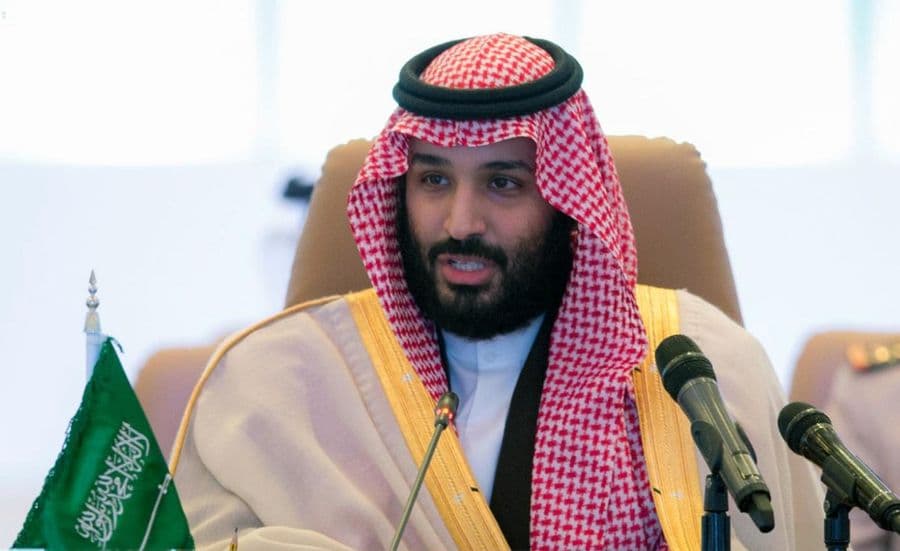
Mohammed bin Salman, Saudi Arabia’s powerful crown prince and architect of its war in Yemen, will meet President Trump at the White House on Tuesday. The crown prince has undertaken an ambitious reform agenda at home, but the war in Yemen has upset U.S.-Saudi relations at a critical juncture when Iranian aggression threatens the vital interests of both Washington and Riyadh. The Trump administration has committed to a bold strategy to push back Iran and Saudi leads the effort to disrupt Iranian attempts to create a Hezbollah-like proxy in the Arabian Peninsula. Congress and the Trump administration should use the crown prince’s visit to reassure him that U.S. support for the Yemen campaign will continue, but he must address humanitarian concerns.
Although many presume the war in Yemen to be a hopeless quagmire, the Saudi crown prince has transformed the conflict in Riyadh’s advantage in two important ways. First, he has chipped away at both the Yemeni rebels’ power and their utility to their sponsors in Tehran. Second, he has sought to circumvent humanitarian criticism by opening new pathways for relief.
In early December, the Saudi-led coalition in Yemen split the rebel movement by encouraging former Yemeni President Ali Abdullah Saleh to dissolve his alliance with the Houthis. The coalition assured Saleh of the safety of his family, a future political position, the lifting of sanctions, and financial rewards. The Houthis retaliated by assassinating Saleh, but the Saudi-led coalition was nonetheless able to leverage the breakdown of the Houthi-Saleh alliance to reduce the extent of Houthi-controlled terrain. The loss of terrain has reduced the Houthis’ utility as an Iranian proxy because they no longer control the border areas in northern Yemen from which they have launched scores of ballistic missile attacks on civilian targets in Saudi Arabia. Tehran’s role in arming the Houthis with missiles became clear after the December release of battlefield evidence by the United States.
To temper humanitarian concerns, Saudi Arabia has moved to develop auxiliary ports and humanitarian supply routes to reduce the impact of its blockade of Yemen’s primary humanitarian channel, the Houthi-controlled port of Hodeidah, which raised significant ire from humanitarian actors. In late January, Saudi Arabia also committed $1.5 billion to the UN humanitarian appeal for Yemen. During his visit to Egypt last week, the crown prince said that "the war in Yemen is close to achieving its goals to restore legitimacy in the face of the Houthi militia and their end is imminent.” Although the Saudi-led coalition has made laudable gains in the past quarter, this assessment is extremely premature--hence the need for Congress and the president to reassure the prince about continuing U.S. support, to steer the Saudi war effort in a direction that will secure shared interests.
In addition to mutual concerns about Iranian adventurism, Saudi Arabia, and the United States share an interest in protecting maritime freedom of navigation and reducing jihadist influence in Yemen. The Houthis still control much of the coastline along the strategic Bab al-Mandeb Strait, a critical maritime choke point that astride the route from Europe to Asia via the Suez Canal. Along the Yemeni coast, military and commercial vessels face regular threats from Houthi missiles, kamikaze boats, and even lasers. In addition, for as long as Yemen remains a chaotic state, Salafi-jihadi groups like the Islamic State and Al-Qaeda in the Arabian Peninsula will enjoy safe haven to plot attacks against the West. Both Washington and Riyadh would like to resolve a conflict that is extremely expensive for the Saudis, while marginal injections of support for the Houthis produce outsize benefits for Tehran.
The Yemen war is revealing differences between the Trump administration and Congress in advance of the young royal’s visit. Secretary of Defense Jim Mattis personally appealed to Congress to continue American support to the Saudi-led coalition, in response to a Senate effort to condition U.S. involvement on congressional approval. The effort, led by Sens. Bernie Sanders, Chris Murphy, and Mike Lee, seeks to block U.S. refueling, targeting, and coordinating with the Saudi-led coalition. Alternative legislation, introduced by Sens. Todd Young and Jeanne Shaheen, would allow support to continue while pushing for an “urgent and good faith” effort to address the humanitarian crisis and end the war. Even the White House, a strong ally of the Kingdom, previously criticized its conduct of the war.
Congressional concern over Yemen’s humanitarian situation is understandable. However, abruptly ending U.S. support to the coalition would threaten both the U.S.-Saudi partnership and regional security. American support to the Saudi coalition offers a low-cost means to contain Iran’s malign regional role. Continued American involvement also creates opportunities to shape the conduct of the war. The alternative, threatening to abandon the mission entirely, might push the young prince towards a hasty, face-saving exit that would unnecessarily jeopardize American security interests. The United States and Saudi Arabia have a shared interest in rolling back Iran’s destabilizing influence while simultaneously addressing humanitarian concerns.
Varsha Koduvayur is a senior research analyst at the Foundation for Defense of Democracies, where Alexandra N. Gutowski is a senior military affairs analyst. FDD is a Washington, DC-based nonpartisan research institute focusing on national security and foreign policy. Follow FDD on Twitter @FDD. Follow the authors at @varshakoduvayur and @angutowski

The U.S. Nuclear Deterrent Umbrella
By Peter Huessy • RealClearDefense
The Islamic Republic Can Lose the War and Still Win
By Nima Gholam Ali Pour • RealClearDefense
Talent Ecosystems: Building a Scalable National Security STEM Workforce
By Payuna Uday • RealClearDefense
The Underground Cloud
By Ben Poulin • RealClearDefense
Trump's Disrupt First, Negotiate Second: Greenland in Focus
By Meda Parameswara Reddy • RealClearDefense

U.S. Navy to Begin Testing for USS Lyndon B Johnson (DDG 1002)
By Naval-Technology
Marine Corps Moves To Expand Maven Smart System Account Access
By DefScoop
Navy F/A-18 Spotted With New AIM-174B And AIM-260 Long-Range Missiles
By TWZ
Pentagon’s 6th Generation Stealth Fighter Will Control Drone Swarms
By Warrior M.
Air Force Needs 1,509 Combat-Ready Jets by 2035
By Michael Marrow, Breaking Defense