
Trump's International Trip: Sending a Message to Iran and Extremists
Last updated 05:51 PM EDT • Read time: 5m
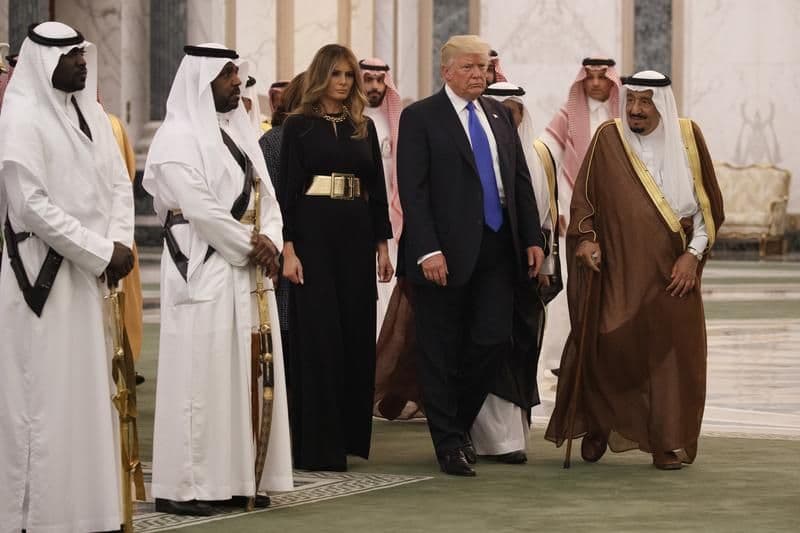
President Trump made a bold move by including Israel and Saudi Arabia on his first international visit. His predecessors, dating back to President Ford, chose the safer political confines of Canada, Mexico, and the United Kingdom when making their first international jaunts. By selecting Israel and Saudi Arabia, the trip not only symbolizes a chance to reset relations with these countries after a rupture over the Iran nuclear deal; it also shows America’s allies and the rest of the world that Trump’s administration is serious about confronting the extremist forces that threaten the region.
While there are a wide variety of issues expected to be discussed when the president sits down with his counterparts, there are three in particular that should be at the top of his agenda: Hamas’ rapprochement with Iran, Hezbollah’s war drums, and bolstering relations with the Gulf Cooperation Council (GCC). Each of these issues shares a root concern for Trump and the United States as they involve Iran’s threats to American security interests, regional stability, and world peace.
Hamas, a designated terrorist organization, and Iran have enjoyed a long but complicated history highlighted by their recent rift over the Syrian civil war. Hamas has publicly condemned the genocide of Syrian citizens, while Iran has provided logistical, technical, military and financial support for the Assad government to carry out its deadly attacks. However, being on opposite sides of that conflict has not stopped Iran from funding Hamas so that the terror organization can continue to launch missiles into Israel and carry out deadly terror attacks on Israeli citizens. No one seriously believes that Hamas will cease these actions despite the superficial revisions made to its charter, namely changing the name of their sworn enemies from Jews to occupiers and accepting that the 1967 borders are the basis for a Palestinian state—while continuing to deny Israel’s existence.
More important than the revised tenets is the election of Hamas’ leader in Gaza, Yahya Sinwar. Sinwar is a U.S.-designated terrorist who enjoys close relations with Iranian leaders. Sinwar’s first order of business will likely be to repair any rift with Iran stemming from Syria and bring the Hamas movement closer to Tehran. Working with Egypt—and especially through President Trump’s relationship with President Sisi—to ensure Hamas remains isolated despite cosmetic amendments to its charter will be especially important.
Hamas is not the only terror organization that is greatly influenced by the Iranian regime. Hezbollah, which receives funding, training, arms and political support from Iran, is expected to redeploy to southern Lebanon and use its new platform in the Golan Heights in preparation for yet another war with Israel. Hezbollah has used its Syrian operations protecting the Assad regime to gain valuable airpower and battlefield experience. Armed with new and enhanced capabilities, including access reportedly to Iranian-owned long-range missile factories in Lebanon, Hezbollah is well-positioned to carry out attacks on Israel, threatening the stability of the entire region. In this regard, the administration should seek guarantees that the new “safe zones” established by Russia, Iran, and Turkey last week will not serve as a staging ground for attacks on the Jewish state.
In the Arab world, shared interests, such as weakening Iran’s regional hegemony through confronting their terror proxies, does not always result in concrete cooperation, especially when navigating the politics within the GCC. But President Trump’s visit provides an opportunity to unite and strengthen this effort.
By working collaboratively with individual GCC states and the bloc as a whole to build capacity, the United States can incentivize the GCC states, including mavericks such as Qatar and Oman, to close ranks in a pro-Western alliance dedicated to upholding a palatable U.S. vision of regional security and stability.
In doing so, the Trump administration can explore pathways to developing more formal security arrangements with the GCC. One available option in the long-run is extending the designation of “major non-NATO ally” to more states within the GCC, something that the Obama administration considered in 2015. Such a designation—which does not include a mutual defense agreement—would provide the GCC countries with a variety of financial and military benefits, including expedited defense procurement, joint defense research and development endeavors, and counterterrorism cooperation.
Also, this visit enables the administration to cultivate improved ties and security coordination between the GCC and other key U.S. allies in the Middle East. President Trump has encouraged reconciliation between the GCC and Egypt, urged Saudi Arabia to expand ties with Iraq in an effort to curtail Iran’s influence, and has promoted Saudi ties with Pakistan, as evidenced by the selection of former Pakistani army chief of staff General Raheel Sharif as head of Saudi Arabia’s newly formed Islamic Military Alliance.
Likewise, President Trump should seek to cultivate closer ties between the GCC and Israel, as both face the twin threats of Iranian and Sunni jihadist extremism. If these efforts take hold, the GCC’s efficacy in confronting Iran throughout the region will be greatly improved. U.S. security will be enhanced by the creation of a stronger regional alliance structure which can promote burden sharing—a goal that fits squarely in an ‘America first’ foreign policy.
Jason M. Brodsky is the policy director of United Against Nuclear Iran (UANI). He is on Twitter @JasonMBrodsky.

The U.S. is Overpaying for Missiles
By Alex Lee • RealClearDefense
The U.S. Nuclear Deterrent Umbrella
By Peter Huessy • RealClearDefense
The Islamic Republic Can Lose the War and Still Win
By Nima Gholam Ali Pour • RealClearDefense
Talent Ecosystems: Building a Scalable National Security STEM Workforce
By Payuna Uday • RealClearDefense
The Underground Cloud
By Ben Poulin • RealClearDefense
U.S. Navy to Begin Testing for USS Lyndon B Johnson (DDG 1002)
By Naval-Technology
Marine Corps Moves To Expand Maven Smart System Account Access
By DefScoop
Navy F/A-18 Spotted With New AIM-174B And AIM-260 Long-Range Missiles
By TWZ
Pentagon’s 6th Generation Stealth Fighter Will Control Drone Swarms
By Warrior M.
Air Force Needs 1,509 Combat-Ready Jets by 2035
By Michael Marrow, Breaking Defense