
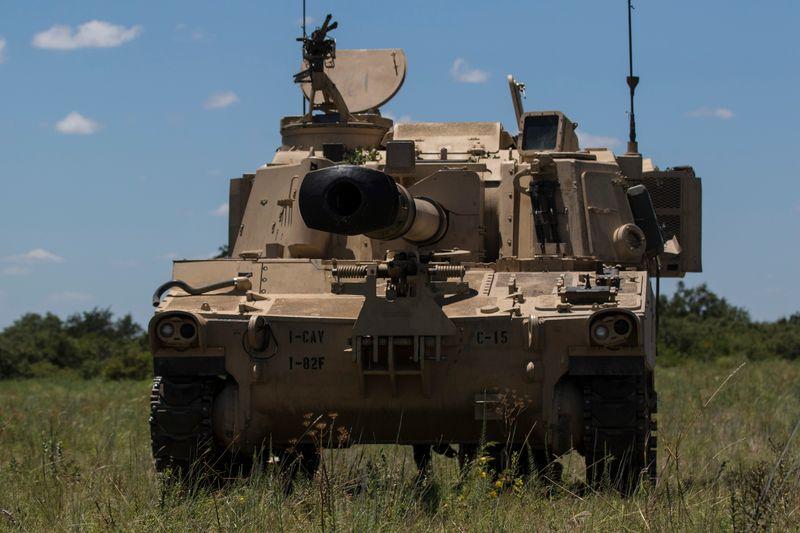
Reconsidering Division-Cavalry Squadrons
Last updated 04:59 PM EDT • Read time: 2m
Part IV: the Division-Cavalry Task Force
(Editor’s note:This is the last in a four-part series that describes the problem, history and potential solutions for the U.S.Army’s lack of dedicated division-level ground reconnaissance and security capacity.)
Since the U.S.Army adopted tactical modularity in 2004, reorganized its final deployable armored-cavalry regiment (ACR) as a Stryker brigade combat team (BCT) in 2011 and, more recently, restructured its battlefield surveillance brigades without cavalry squadrons, it has lacked dedicated and optimized ground formations to conduct forceful information collection (IC) above the brigade level. Thoughintended to produce greater combined-arms versatility at lower tactical levels, modular transformation violated the long-held requirement, as argued by VII Corps after Operation Desert Storm, that ground forces require “armed and armored recce at every level...battalion through corps.”This capabilities gap has consequently impaired division and corps ability to execute informed and dynamic expeditionary operations across theaters featuring challenging area-denial networks.2This deficiency–whichstemmed from episodic understanding of the potential for maneuver warfare between peer and hybrid states–canbe remedied, in part, by extracting insights from the Army’s long record of successfully employing cavalry forces. World WarII, the Korean War, Vietnam War, first Persian Gulf War, Afghanistan Warand second Persian Gulf War each provided testing grounds for combinations of heavy, medium, light and aerial squadrons as higher commands adapted pre-conflict organizations to the realities of complicated settings and adaptive foes. From the jungles of Indochina to the deserts of Mesopotamia, two lessons have emerged with certitude: division cavalry should optimize for high-end combat relative to threatcapabilities, and division cavalrymust also be empowered with enablers to maintain demanding tempos across battlefields of expanded breadth and depth.
Visit Armor Magazine where this article was originally published.

The Dual Threat: Why Beijing’s Collapse Is Just As Dangerous as Its Rise
By Efraín Vázquez-Vera • RealClearDefense
Optimizing Trump’s Strategy to ‘Rot Iran’s Economy’
By Brian G. Chow • RealClearDefense
The AI Scare Is the New Y2K: A Veteran’s Perspective on Hype, Risk, and the Discipline Needed to Modernize Safely
By Kenneth Smith • RealClearDefense
The Pentagon’s AI Rush Needs Adult Supervision
By Michael Aaron Cody • RealClearDefense
ICE Is Not a Four-Letter Word
By Meda Parameswara Reddy • RealClearDefense

Marine Died of Injuries Suffered During Fast-Rope Training on Okinawa
By Brian McElhiney, Stars and Stripes
Drones Built To Look Like Birds Evaded Detection at Air Force Tech Exercise
By T&P
Navy Unfairly Evaluated Saildrone Musv Proposal, Court Finds
By D. Stancy, BrDefense
HII and Thales Demonstrate UUV with End-to-End Autonomous MCM
By Naval News
General Atomics Joins Army-Navy Hypersonic Glide Body Production
By Defence Blog