
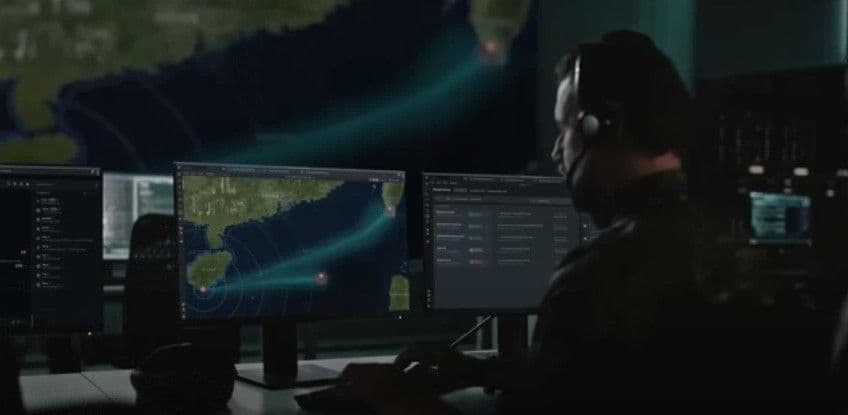
The Pentagon’s AI Rush Needs Adult Supervision
Last updated 06:18 AM EST • Read time: 3m
Join the Conversation
0Recent news about AI inside the Pentagon shows a concern I raised in Small Wars Journal on March 30, in “Corporate AI as the Military’s Weakest Link.” The concern was ordinary people becoming too comfortable with commercial AI inside military workflows. Contractor-managed environments, excessive permissions, and informal data sharing were already reasons to slow down and examine what was being built. Putting a convenient tool into daily use changes how people behave once it becomes part of standard operating procedure. The paradox of accountability is expecting security discipline to hold while everyone gets comfortable in the warm embrace of the corporate AI industry.
According to WIRED’s October 29 report, an individual allegedly hooked their personal Claude Code account into a Pentagon system used by multiple intelligence agencies and holding sensitive, unclassified information. The agent reportedly ran for two months before the problem was identified. WIRED’s sources say it apparently sent credentials and a network map to an outside site NIST had already flagged as high risk. The individual’s employer disputes the allegations and says an independent investigation found them without merit and that it met its obligations. No classified-network compromise has been established, nor does this article say it does. This is about concern and governance, not any individual company or incident.
I made the broader argument again in RealClearDefense on September 14, in “The Pentagon’s AI Rush Is Creating a Security Weakness.” More AI adoption brings more credentials, connections, stored information, and opportunities for mistakes. Training, accreditation, and written procedures matter. The objection was that none of them guarantees disciplined behavior across an expanding institution. Officials promoting deployment should be prepared to demonstrate how the security burden is being managed, rather than treating adoption itself as evidence of progress.
The Pentagon should explain its safeguards in terms the public can understand and trust. What prevents someone from connecting a personal AI account to a sensitive environment? Who approves access? Who reviews permissions afterward? What detects information leaving for an unauthorized service? These are questions about whether the institution controls the systems it operates and the contractors it employs. The Pentagon and its contractors should have practical answers.
These warnings were published across several outlets before this reporting appeared. The risks were foreseeable enough to describe publicly. The CIA, NSA and Department of War need to explain what adequate preparation looks like.
This matters globally. Democracy is backsliding in Western countries, and confidence in the United States is dropping. And here we are, watching AI play out at the highest levels of government. The Pentagon needs to get back to work on this and align policy with procedure.
Michael Aaron Cody is an independent theorist published in Physics Essays, Journal of Modern Physics, European Physical Journal Plus (Springer Nature), FPIF, Small Wars Journal, and RealClearScience. His work spans physics and defense policy. Find him at Michaelaaroncody.com

The Dual Threat: Why Beijing’s Collapse Is Just As Dangerous as Its Rise
By Efraín Vázquez-Vera • RealClearDefense
Optimizing Trump’s Strategy to ‘Rot Iran’s Economy’
By Brian G. Chow • RealClearDefense
The AI Scare Is the New Y2K: A Veteran’s Perspective on Hype, Risk, and the Discipline Needed to Modernize Safely
By Kenneth Smith • RealClearDefense
The Pentagon’s AI Rush Needs Adult Supervision
By Michael Aaron Cody • RealClearDefense
ICE Is Not a Four-Letter Word
By Meda Parameswara Reddy • RealClearDefense
Marine Died of Injuries Suffered During Fast-Rope Training on Okinawa
By Brian McElhiney, Stars and Stripes
Drones Built To Look Like Birds Evaded Detection at Air Force Tech Exercise
By T&P
Navy Unfairly Evaluated Saildrone Musv Proposal, Court Finds
By D. Stancy, BrDefense
HII and Thales Demonstrate UUV with End-to-End Autonomous MCM
By Naval News
General Atomics Joins Army-Navy Hypersonic Glide Body Production
By Defence Blog