
The Friction Between Israel and Russia, Following the War in Ukraine
Published March 1, 2023 • Read time: 8m
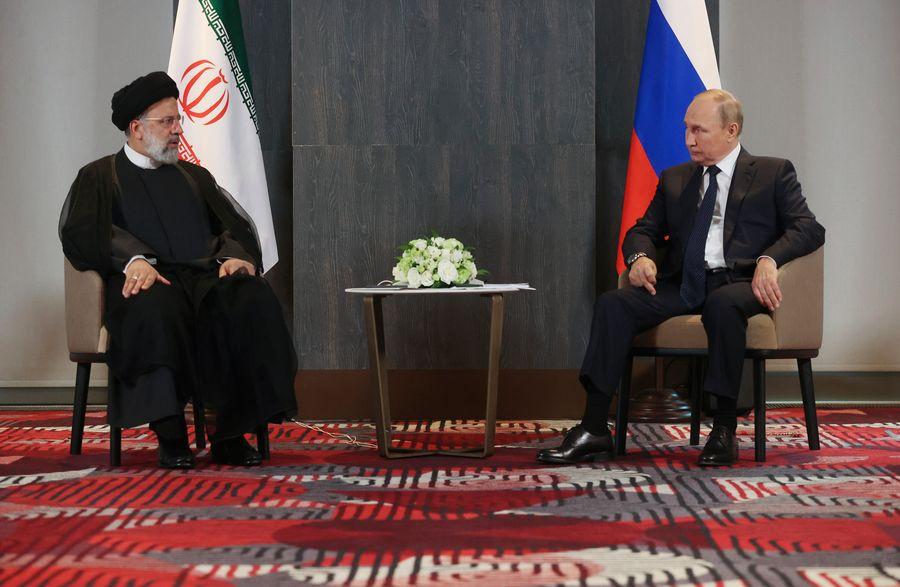
Israel has ties with Russia, yet there is tension between them following the war in Ukraine, mostly because of Iran. Russia receives from Iran military aid such as drones, which assists Russia’s war effort. In return Russia provides "unprecedented level" of military aid to Iran. Russian assistance to Iran, including in other issues such as regarding Syria and Iran’s nuclear program, cause friction between Israel and Russia and in the worst case it could bring a clash between their militaries.
Iran and the War in Ukraine
The war in Ukraine puts Israel in a tough spot. Israel does not want to aggravate Russia, because of several interests including protecting the Jews who live in Russia, who might be at risk if Israel supports Ukraine. On the other hand, Israel certainly does not associate itself in any way as a Russian partner in the war in Ukraine. Israel even gave some civilian aid to Ukraine. Russia warned Israel not to provide weapons to Ukraine, yet Israel might do it, in coordination with the United States.
Such an Israeli move depends among others on how Russia cooperates with Iran.
Iran sold Russia drones that attacked Ukrainian cities. Iran and Russia also plan to build drones together. Ukrainian air defense might not be able to shoot down Iranian ballistic missiles, if they are delivered to Russia. Iran’s military aid to Russia concern Israel because Iran would learn from the war in Ukraine how to improve its drones and missiles. Later on, Iran can use them against Israel by firing them directly at Israel or by providing this arsenal to Iran’s partners, non-state actors like Hezbollah and Hamas. In that sense Russia’s invasion into Ukraine gave Iran an opportunity to test its weapons in a shooting war, where there is an air defense that tries to intercept Iran’s drones. Israel has a formidable air defense and there were calls in Israel to send some of it to protect Ukrainian cities and by that also to learn lessons that would help Israel to prepare for a war with Iran and its allies. Yet Israel hesitates in giving its air defense systems to Ukraine, fearing of the Russian response. It will also take time to train Ukrainian troops to operate Israel’s air defense system like Iron Dome. Israel would definitely not deploy its own troops in Ukraine. Although Israel would protect the Ukrainian rear, not confronting Russia’s forces at the frontline, Israeli soldiers would still be in harm’s way, and it would also provoke Russia.
In late January 2023 a covert strike damaged an Iranian missile and drone facility, an attack that “might help Ukraine.“ since it would make it harder for Iran to supply Russia. This strike, which was probably conducted by the United States and / or Israel, was therefore aimed at both Russia and Iran. The latter would have to do better in protecting those facilities. If Iran keeps losing drones in mysterious explosions inside its territory, then Iran might want to reduce the delivery of drones to Russia, in order to save them for Iran and its partners in the Middle East, in case there is a war between them and Israel. The ongoing tension between Israel and Iran could cause that.
Since 2014, the United States gave Ukraine more than 20 billion in military aid. Other NATO members also provide military aid to Ukraine. The Iranian involvement in favor of Russia is used by Israel to present Iran as an enemy of NATO. In late January 2023 Israeli President Isaac Herzog urged NATO to deal “with the Iranian threat now at Europe’s doorstep…NATO must take the strongest possible stance against the Iranian regime.” NATO and Israel negotiate on “a new partnership agreement, aimed at enhancing cooperation in fields like “emerging threats/cyber defense,” counterterrorism etc. Israel – NATO ties might concern Russia and increase the tension between her and Israel.
Dealing With Iran’s Nuclear Program
The Biden administration seeks to resume the negotiation with Iran, regarding Iran’s nuclear program. The last round of talks ended in a stalemate, because of Iran. In order to urge Iran to negotiate, on January 29, 2023, US Secretary of State, Anthony Blinken, argued that all the options are “on the table”. It meant the United States does not rule out a military option against Iran. At that time a huge joint US – Israeli exercise “Juniper Oak 23.2” was carried out. The drill was not officerly aimed against Iran, but the message to Iran was that the United States can deal with the war in Ukraine, and also with Iran. It was part of an ongoing process. In late November2022 the Israeli air force (IAF) held another exercise that was “one of its largest drills in years with the United States Air Force” simulating strikes against Iran’s nuclear sites. If Iran would get very close to producing nuclear weapons, it will significantly increase the odds that Israel will bomb Iran’s nuclear sites.
Russia assisted Iran’s nuclear program. “Russia could also contribute to a potential future Iranian nuclear weapons effort by providing technology and know-how, whether covertly or openly.” Russia might do it, in return to Iran’s help in the war in Ukraine. Since Iran’s nuclear program is the biggest threat Israel faces then Russia would be assisting Israel’s arch enemy in having the capability to destroy Israel. Since the early 1990s about a million people arrived to Israel from the former Soviet Union. Many of them keep contact with their relatives and friends in Russia. Those who came to Israel from Russia are part of the Russian diaspora, which is a source of pride for Russia that also needs them for different purposes. Nevertheless, Russia jeopardizes ethnic Russian who live in Israel, by helping Iran to improve its drones let alone if Russa assists Iran to produce nuclear weapons.
If Israel strikes Iran’s nuclear sites, the IAF will have to overcome Iran’s Russian air defense and fighters. Iran’s air force is quite absolute, relying on old fighters such as Mig - 29. Yet lately Iran is preparing to assimilate 24 Su-35 Fighters. Iran’s air defense has the Russian S – 300, an advanced antiaircraft system. Iran might also receive a better Russian antiaircraft system, the S- 400. Russia therefore makes it more difficult for Israel to remove an existential threat if Iran eventually produces nuclear weapons.
Russia has a military presence in Syria, following its assistance to the Assad regime in fighting the rebels there. Israel has been bombing targets in Syria since 2012, in an effort to reduce the transfer of weapons from Iran to its Lebanese partner, Hezbollah. Israel also tries to limit Iran’s military presence in Syria, where Iran wants to establish a base to attack Israel. In 2015 Russia and Israel reached an understating that allowed Israel to attack inside Syria, without getting into clashes with Russian forces. Over the years there were some crises in this matter, yet Russia and Israel managed to keep the coordination. Iran, in return for its assistance to Russia in Ukraine, can ask Russia to stop or at least to reduce Israeli strikes inside Syria. Russia might do it, especially if Israel provides military aid to Ukraine. Israel might refuse the Russian demand regarding striking in Syria, and take a risk, since continuing bombing there can lead to a collision between Israeli aircraft and Russian air defense and fighters. Both Russia and Israel seek to avoid such a clash, but it might still happen.
If Israel strikes Iran the latter can mobilize her allies to strike Israel. Iran’s most powerful partner is Hezbollah that fought together with Russian forces against Syrian rebels. The cooperation between them upgraded Hezbollah’s capabilities, which will help the group if it fights Israel. Russia probably did not assist Hezbollah in order to help Hezbollah to harm Israel, but for Israel this is one of the results of Russia’s determination to assist Israel’s foe, the Assad regime, to win the Syrian civil war.
Hezbollah has 150,000 rockets and missiles, covering Israel. In the next war Israel might be hit daily by up to 2,000 rockets and missiles. Furthermore, Israel is concerned about Hezbollah’s effort, which receives strong Iranian support, aimed at improving the accuracy of some of its missiles, which would allow Hezbollah to pinpoint targets in Israel. It could severely damage Israel’s civilian and military infrastructure. Therefore, Israel is eager to slow down this Hezbollah’s project, by bombing inside Syria. If Russia, as a favor to Iran, following Iranian aid in Ukraine, tries to restrain Israel’s operations in Syria, it would assist Hezbollah in upgrading its missiles. This is another factor that could increase the friction between Israel and Russia.
Overall, Israel and Russia would continue to maneuver to keep their relations, with all its benefits. However, there is some friction between them, following the war in Ukraine, mostly because of Iran. The more Russia needs Iran, including in Ukraine, the higher the chances the tension between Israel and Russia will grow. At a certain point it could cause a serious crisis between them and in the worst case even a certain confrontation, in Syria.
Dr. Ehud Eilam has been dealing with and studying Israel's national security for more than 25 years. He served in the Israeli military and later worked for the Israeli Ministry of Defense as a researcher. He has a Ph.D. and he had published six books in the U.S / U.K. His latest book is: Containment in the Middle East, (University Press of Nebraska, 2019)

The Army’s AI Cyber Defenders Need a Proven Stand-Down Order
By Gleb Tsipursky • RealClearDefense
After the Silence
By Chase Skylar DeMayo • RealClearDefense
Defense Chip Procurement Needs a Recovery Test
By Percy Yixuanchen Yu • RealClearDefense
FORTRESS America Must Measure Missions, Not Megawatts
By Burak Oktenli • RealClearDefense
After the Midterms, the Right Strategy Against Iran
By Lance Gordon • RealClearDefense
After the Silence
By Chase Skylar DeMayo • RealClearDefense
Underwater Arms Race Puts U.S. Naval Supremacy at Risk
By Tom O'Connor, Newsweek
New Facilities To Pump Out Upgraded F/A-18E/F Super Hornets
By Trevithick, WarZone
U.S. Navy Expands Tomahawk Warhead Production
By Naval News Staff, Naval News
SSN(X) Attack Boat Will be a Swift, Lethal Mothership for Undersea Drones
By USNI N.