
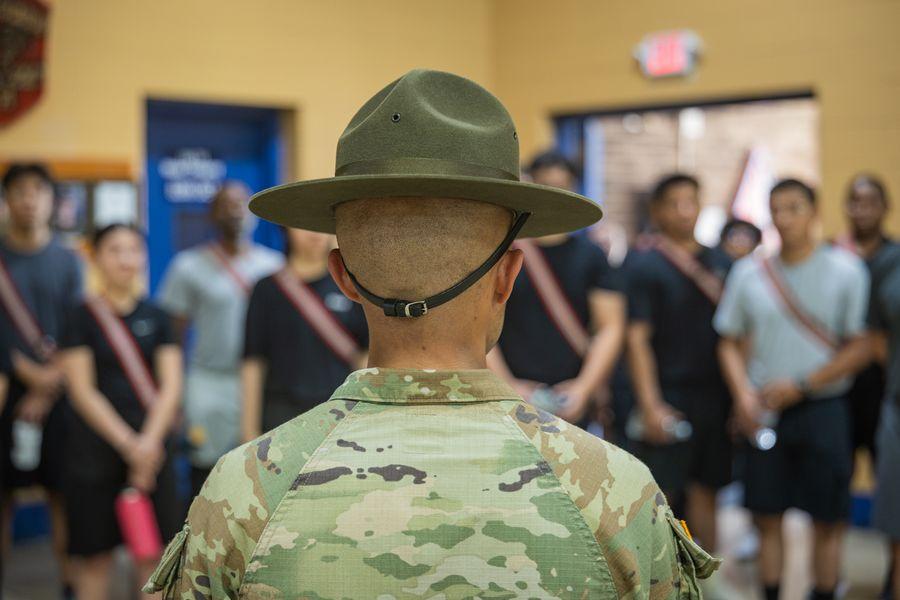
The Quieting of Combat
Published Oct. 23, 2025 • Read time: 7m
Restoring Grit Without Losing Accountability
Introduction
For generations, America’s combat arms thrived on a hard edge—dark humor, vulgar cadences, and rough rites that forged trust under fire. Full Metal Jacket and Platoon captured a truth veterans know: banter and gallows humor aren’t moral failings; they’re pressure valves that build cohesion.
Reform was overdue after Tailhook and Fort Hood’s Vanessa Guillén tragedy, which exposed failures of leadership and justice, but overcorrection followed. In the rush to protect dignity, culture itself was treated as the enemy—commanders began to sanitize the very grit that once welded Soldiers together. What began as accountability became sterilization, and with it, a profession built on toughness started to lose its voice.
Readiness Not Nostalgia
The past decade’s zero-tolerance culture blurred the line between crime and camaraderie. Leaders, fearing headlines more than failure, traded judgment for process. What once ended with a quick “knock it off” now launches investigations that crush trust and initiative. When every joke or ritual risks legal review, Soldiers learn paralysis, not professionalism.
Secretary of War Pete Hegseth’s 2025 directive confronted that paralysis head-on, ordering an end to anonymous complaints and frivolous investigations. His review of hazing, bullying, and harassment definitions admitted that policies had become “overly broad, jeopardizing combat readiness and trust.”
That recognition mattered. Commanders stripped of discretion can’t build disciplined units; bureaucracy replaces leadership. Hegseth’s order for a 30-day rewrite of definitions was the first official acknowledgment that protecting dignity must not mean criminalizing grit.
Stand Proud of the Force
After the Silence
One Year Later: The U.S. Military Continues Quartering Charlie Kirk Assassination Celebrants
The Uniform Doesn't Come With a First Amendment Waiver
Meanwhile, the numbers tell their own story. According to Military.com reporting in March 2025, U.S. Army data show that nearly a quarter of Soldiers recruited since 2022 failed to complete initial contracts. Some losses stem from health or performance—but cultural softness is part of it. A force that processes out those who say “I can’t handle it” instead of training them for hardship invites decline. War offers no opt-out.
Reform, then, is not nostalgia. It is a return to the toughness that keeps Soldiers alive and missions won.
Unpoliticized Standards and Survivability
Commanders insist that standards must never be lowered—and they’re right. Fairness in uniform comes from shared hardship, not adjusted expectations. Survivability depends on performance, not sentiment. Whether moving artillery rounds in combat or completing Ranger School’s punishing field phase, victory demands physical and mental endurance, not accommodation.
The new directives restore that truth. Combat billets are again tied to the highest wartime benchmarks, and the so-called “1990 Test” requires that any change to standards must improve lethality, not comfort. The “E-6 Test” demands that new policies simplify, not complicate, the staff sergeant’s mission.
These measures reject politics in favor of readiness. Cohesion is built in the crucible of difficulty, where everyone earns the same trust through the same pain. A rifle squad or cannon crew cannot be redefined by ideology—they live or die by performance.
Even the data agree: GAO’s 2024 audit found that relaxed training norms correlate with higher attrition, while RAND’s gender-integration studies showed mission success depends on uniform, transparent standards.
Equality is not lowering the bar—it’s holding everyone to it.
When Ideology Eclipses Lethality
A system built to protect Soldiers can also be weaponized against them. In some units, grievance has become a tactic—used to punish leaders who enforce discipline. When ideology outweighs lethality, readiness suffers—and the military forgets its purpose.
The IG Oversight and Reform Directive (OSD010718-25) ends that paralysis. It requires that credibility assessments close within seven duty days, and non-credible allegations be dismissed immediately. During that brief review, no one is flagged unless credible evidence exists.
In plain English: commanders and Soldiers are innocent until proven otherwise. Complaints without merit can no longer linger for months or years, destroying trust and careers.
The reform restores a forgotten balance. Misconduct will still be punished—but grit, blunt leadership, and discipline are not crimes. Restoring fairness is not weakening accountability; it is rebuilding the moral spine of command.
Leadership Incentives Matter
Leadership thrives when courage is rewarded, not punished. Yet for years, the Army’s system of evaluation and promotion encouraged the opposite. Commanders learned that the surest way to survive was to avoid risk—to manage appearances, not outcomes. Overregulation made judgment dangerous; accountability became a minefield. In such a climate, initiative dies first.
This risk-averse culture grew from good intentions but yielded predictable decay. When leaders fear accusation more than failure, they stop leading. Decisions are deferred, standards drift, and Soldiers begin to doubt whether truth or politics governs their profession.
The Adverse Information Policy Directive (OSD007632-25) begins to reverse that decline. It establishes “preponderance of the evidence” as the minimum threshold, enforces the ten-year rule on stale allegations, and prohibits re-litigating the same event across multiple boards—no more rumor files, no more careers destroyed by repetition.
For officers and NCOs once shadowed by unproven claims, this is more than administrative relief—it is a restoration of moral logic. It returns fairness to the system and tells every commander that judgment and honesty, not conformity, define integrity.
The lesson is clear: when the institution trusts its leaders to act with both strength and fairness, the mission thrives. When it rewards caution and fear, it slowly forgets how to win.
Uneven Accountability Erodes Trust
Accountability must cut both ways—or it isn’t accountability at all. When senior officers retire honorably after substantiated misconduct while junior Soldiers are dismissed for far less, the rank-and-file lose faith in justice itself. Hegseth’s message is unambiguous: no unfit troops, and no unfit generals.
The IG Reform Directive and the Adverse Information Policy now form the backbone of that fairness. They end anonymous witch hunts, cap investigations with strict timelines, and restore the presumption of innocence. No more perpetual limbo, no more death by rumor.
This restoration of fairness echoes the same cultural correction visible throughout these reforms: when Soldiers see that integrity—not politics—guides outcomes, trust returns. The same clarity that restores justice can rebuild confidence in leadership.
The directives don’t shield the guilty; they shield the honest from bureaucratic abuse. For a profession built on trust, that distinction isn’t procedural—it’s existential.
The Culture We’re Losing
For nearly twenty years, I saw the American Dream most alive in uniform—men and women of every race, faith, and background bound by a single promise: to fight and bleed for one another. In that world, Army Values were not slogans; they were survival. You learned fast that trust was earned through hardship, humor, and the willingness to suffer together.
That bond is fraying. When grievance is rewarded and fear replaces honesty, cohesion collapses. Soldiers now measure their words more carefully than their marksmanship, worried that a joke, a cadence, or a tradition might later be used against them. The fear is no longer of battle—it is of misinterpretation.
This is the quieting of combat: when commanders lead on eggshells and grit is policed out of existence. Discipline must remain, but toughness cannot be sterilized. A military that fears offense more than defeat cannot endure.
The danger is simple: when camaraderie is criminalized, lethality is compromised. Our task is balance—protect dignity, punish real misconduct, and stop criminalizing the rough edges that make warriors unbreakable.
While not every Soldier connects with every tradition, effective leaders adapt to build cohesion through shared resilience, not rigid conformity.
Policy Shift: From Paralysis to Command Trust
The Department of War’s triad of reforms—OSD010714-25 (Hazing, Bullying, and Harassment Review), OSD010718-25 (IG Oversight and Reform), and OSD007632-25 (Adverse Information Policy)—represents the most significant restoration of command authority in decades. Together they end anonymous accusation systems, tighten evidentiary standards, and return discretion to commanders responsible for readiness.
These directives are not nostalgia—they are survival doctrine. They affirm a truth every warrior understands: strength without fairness becomes tyranny, and fairness without strength becomes collapse. Restoring command trust is not regression; it is a return to balance and mission clarity.
Conclusion
The U.S. military has always prevailed through teams that laughed in the mud, cursed in the cold, and still delivered when it mattered most. The Fort Hood reckoning demanded reform, but confusing accountability with sterilization hollowed the culture that once sustained victory.
The path forward is simple and sacred: protect the innocent, punish the guilty, and stop criminalizing camaraderie itself. A profession that remembers its purpose—to fight and win the nation’s wars—needs grit, mercy, and courage in equal measure. That is how trust is restored, and how warriors remember who they are.
Mark W. Castillon served in the Army National Guard from 2004 to 2024, including combat deployments in support of Operations Iraqi Freedom and New Dawn, and emergency management responses from Hurricane Katrina through the COVID-19 pandemic. He advocates for veteran mental health, leadership accountability, and due-process reform.

Iron Raven: Remembering Colonel Joseph B. Conmy, Jr.
By Louis Marano • RealClearDefense
Stand Proud of the Force
By Jay Rogers • RealClearDefense
How a Dying Agency Turned Fentanyl Into a Weapon of Mass Destruction
By Barry Angeline • RealClearDefense
The Pressure Is the Message: What Xi and Putin Faced in Shenzhen
By Emzari Gelashvili • RealClearDefense
China’s Revised Mobilization Law and the Expanding Reach of National Defense
By Muhammad Shoaib • RealClearDefense

Marine Corps Hero Under Federal Investigation
By Laporta, Burnham & Watson, CBS
A Postmortem of Maneuver Warfare in the U.S. Marine Corps
By Donald Vandergriff
U.S. Putting Weapons in Space: A Strategic Blunder?
By Ajey Lele • RealClearDefense
U.S. Senate Seeks to Exchange Shipbuilding Funds for More Munitions
By Naval News
F-35C Completes First Launch and Recovery Trials on a Ford-Class Carrier
By Navy T.