
Drafting NATO's Long-Needed Arctic Strategy to Defuse Russia
Last updated 05:52 PM EDT • Read time: 6m
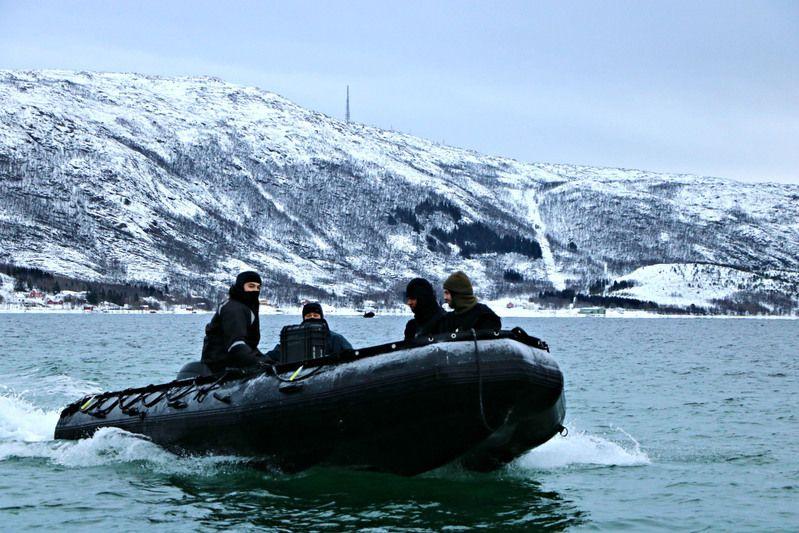
Since the end of the Cold War, the Arctic region has largely been ignored by NATO. It was not mentioned in NATO’s most recent strategic concept, nor was it mentioned at the Alliance’s past several annual summits. This neglect has emboldened Russia to pursue a unilateral military expansion in the region and left only a few smaller powers to manage the threat—all in the backdrop of growing NATO-Russia tensions and the thawing of lucrative Arctic waterways.
Recently, however, NATO specifically underscored Russia’s “provocative military activities in the periphery of NATO territory.” Geographically, this includes the Arctic—and while more pressing Russian threats lie in Eastern Europe, it sets an important precedent that must now be capitalized on for NATO to be prescient.
While the precise nature of NATO’s role in the Arctic is a contested subject, there is a general consensus among analysts and NATO state leaders that the Alliance must explicitly outline a “High North” policy. Notwithstanding, little analysis exists regarding what exactly NATO’s Arctic strategy should look like—and those strategies that have been proposed are light on detail. Heading toward NATO’s 2017 summit, the Alliance must adopt policies that counter Russian advances while still preserving the region’s historic tradition of cooperation.
The Prevailing Arctic Security Environment
Over the last seven years, Russia has established a robust military presence in the Arctic: numerous new or reopened military bases, airfields, deep water ports, and research stations that can double as observation or electronic warfare posts. Even more worrisome, Russia is deploying large numbers of advanced air defense systems and coastal defense missile systems to the Arctic.
Hypothetically, these systems allow Russia to create an A2/AD zone to control open air traffic and shipping. Meanwhile, many NATO member nations, including the United States, have taken haphazard approaches to building up their Arctic security in response to Russia.
Introducing a Resilient Strategy
These efforts should serve as the nucleus for a NATO-wide strategy. NATO is the ideal platform to coordinate ongoing individual security efforts, enhancing their effectiveness and sending a message of unity to Russia. NATO’s involvement lessens the burden on the Arctic’s littoral NATO nations by providing materiel and manpower support for increased naval and air patrols.
The cost of building necessary, but expensive Arctic infrastructure should be distributed across the Alliance. The development and implementation of a NATO Arctic strategy is an opportunity for a nation other than the United States to play a leading role in the Alliance. Norway, for instance, is a natural fit—having been at the frontlines of Russia’s Arctic military expansion and previously calling on NATO to renew its Arctic engagement. Leadership, from outside Washington, on strategy development and implementation is beneficial for shaping the perceptions of hesitant NATO nations, without a direct stake in the region.
Development of a NATO Arctic strategy needs to include a cooperative framework with Sweden and Finland. Neither Sweden nor Finland holds NATO membership, but both states are important security partners with land inside of the Arctic Circle. Cooperating on Arctic security enhances NATO ties with both countries while strengthening the effort to counter Russia’s regional buildup.
Balance through Cooperation
Despite the numerous disagreements between Russia and individual Arctic-littoral NATO nations, a comprehensive NATO strategy offers opportunities for cooperation.
NATO is currently working to transform and refine its security mission in a modern context. The inclusion of environmental security is an ideal bridge to Arctic security. Much of Russia is vulnerable to rising sea levels, especially along the Arctic Coast. NATO’s Arctic strategy should call for cooperation with Russia on environmental security issues like rising seas and the nuclear impact of decommissioned Soviet naval vessels on the environment and smuggling.
Furthermore, mutual interests exist between NATO and Russia regarding the protection from poaching and smuggling of vulnerable animal populations in the Arctic. As the Northern Sea Route becomes a more viable year-round shipping route, coordination on sea rescue and escort operations are yet another area of cooperation that could and should be built upon. These cooperative strategic elements can enhance NATO’s calling for a moratorium on the development of military infrastructure in the Arctic Circle.
Preempting the China Factor
A final, perhaps untraditional, strategy that NATO should pursue involves clearly acknowledging the Arctic interests of China, welcoming Chinese involvement, and actively pursuing NATO-China cooperation in the region. On the surface, this proposal may appear unrealistic and uncharacteristic of the Alliance. In reality, such a policy neatly furthers the established NATO interest of greater cooperation with China—while also simultaneously maintaining the cooperative ethos of the Arctic, countering Russia’s High North ambitions, and diluting the emerging Sino-Russian cooperation on Arctic matters.
It also is logical from a Chinese perspective, as China seeks to further legitimize its position as a “near-Arctic” power under its regionally employed values of “respect, cooperation, and win-win" agreements. More so, China’s desire for open access to thawing Arctic waterways benefits more from a multipolar Arctic than the increasingly Russia-dominated Arctic, of the present.
The first step in achieving this policy is for NATO to openly recognize China’s Arctic role, which is underscored by both its Observer State membership in the Arctic Council and its burgeoning portfolio of regional investments. Issuing an official statement—a less binding declaration than the annual summit communiqué—that addresses the Arctic and mentions the prospect of cooperation with China would be a reasonable yet impactful means of beginning engagement.
Precedent beyond this initial gesture is found in NATO-China cooperation on piracy—where joint military drills have been conducted between the Chinese Navy and NATO ships. In similar fashion, NATO-states might propose reciprocal icebreaker visits, Arctic information sharing, and ultimately joint patrols between Chinese ships and those under a NATO banner. In addition to representing a major increase in NATO involvement in the region, outreach to China would bring the benefit of a powerful Arctic third party to help balance Russian influence while preserving the ideal of Arctic collaboration.
Looking towards Brussels
Though NATO faces more immediate challenges from Moscow’s forays into Eastern Europe, continuing without an articulated Arctic strategy is myopic and precarious. As the Alliance approaches the 2017 summit in Brussels, Russian capabilities in the Arctic are surpassing the combined resources of member states by increasing margins. NATO’s need for a geostrategic plan in the High North is, therefore, evident and ever more urgent. Such a strategy need not instigate a military escalation nor tarnish the Arctic’s exemplary precedent of cooperation—it can be achieved by initiating a decisive yet discerning regional military presence that also opens new and resourceful avenues for collaboration.
Ian Armstrong is the Geostrategy & Diplomacy Fellow at Young Professionals in Foreign Policy (YPFP). He is also a compliance contractor at the Department of Defense, as well as a Senior Analyst and Commissioning Editor at Global Risk Insights. Ian earned his BA in Political Science from Temple University in 2015.
Daniel Urchick is the Eurasia & Eastern Europe Fellow at Young Professionals in Foreign Policy (YPFP). He is also a compliance contractor at the Department of Defense. Daniel earned his MA in Political Science from Central Michigan University in 2015 and expects to receive his MA in Security Policy Studies from George Washington University in 2018.

Counterterrorism and the Growing Convergence in Homeland Security and Homeland Defense
By Austin Doctor • RealClearDefense
The Future of Space Power Depends on Integration
By Damian DiPippa • RealClearDefense
America Should Unleash Cyber Privateers
By Jacob Schelp • RealClearDefense
America Invented the Battery, but China Controls the Factory
By William Crane • RealClearDefense
A Defense Win for Americans and Israelis in Arkansas
By Bradley Bowman • RealClearDefense

F-16s Build on Iran Combat Lessons to Prepare for China Threat
By Rebecca Grant • Lexington Institute
Key Space Force Satellites Can’t Talk to Each Other
By T. Hitchens, Breaking Defense
Blue Angels Pilot Scott Laux Removed for Failing To Uphold Standards
By Johnson, PNJ
The Future of the Ground Reconnaissance Enterprise
By Joe Albano, The Connecting File
The Future of the ARG/MEU
By William Yale, Proceedings