
Hone the Leading Edge
Published March 11, 2022 • Read time: 7m
NATO’s Black Sea Members are the Key to the Coming Fight against Russia
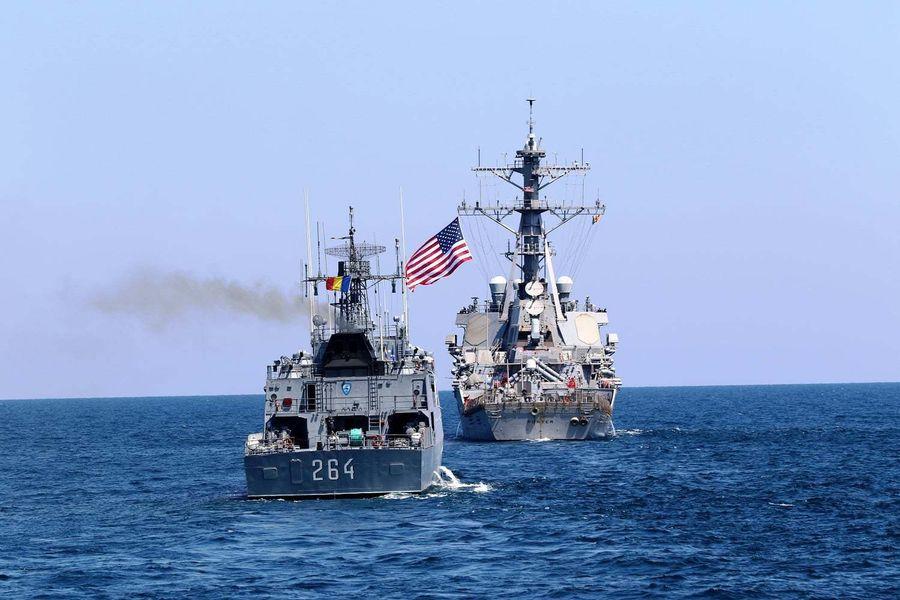
Russia's invasion of Ukraine has already transformed the psychological-political balance in Europe, reopening the prospect of wars of conquest. However, it is poised to transform the military-political balance on NATO's eastern flank. In brief, whether Russia succeeds in total conquest of Ukraine or settles for limited territorial goals, its Black Sea position is likely to improve. The Atlantic Alliance must therefore expect direct pressure against its Black Sea allies, Romania and Bulgaria. NATO can no longer afford a "rotational" regional presence but instead must treat the two states in a similar manner to West Germany during the Cold War. If the Baltics are the North German Plain, the Black Sea is the Fulda Gap. Both areas must be defended.
Vulnerable states on the edge of NATO's defense perimeter are ripe for Russian pressure. Although the Kremlin lacked the pretext it desired in Ukraine, a function of excellent British and American intelligence work that publicized Russian false flags for weeks before the Ukraine War began, Russia typically looks for some sort of initial leverage to exploit. The shrinkage of Donbas’ pro-Russian separatists’ power provided that leverage. Nor should Russian domestic pressures be underestimated. The Kremlin must still "sell" a war to its people. Hence its public effort to demonize Ukraine as a “neo-Nazi state” run by “drug addicts” that committed genocide against vulnerable ethnic Russians – never mind that these same ethnic Russians the Kremlin purports to defend are fighting tooth and nail against it in Mariupol, throughout Donbas, and in Kharkiv.
U.S. and Australia Should Give ANZUS Teeth
How to Win Without Military Victory
Tailored Deterrence and Nuclear First Use in Europe
When Access Becomes the Fight
This need for pretext makes Romania and Bulgaria more vulnerable than the Baltic States and Poland. The latter two areas are Russian targets. But Poland is a robust NATO member, likely to become more powerful because of the current crisis as it is the focal point of NATO support operations in Ukraine. Similarly, public attention is already being paid to the Baltic States, which will result in a larger forward-deployed military presence, both in the Baltics and in Poland, to keep the Suwalki Gap—that links NATO members Poland and the Baltic States—open.
By contrast, Romania and Bulgaria have received scant public attention. Yet Russia's annexation of Crimea has already led to Russian pressure on Romania's Exclusive Economic Zone. Russia could easily employ Moldova's thin pro-Russian strip of land between Moldova and Ukraine known as Transnistria as a pretext for invasion farther west, starting a conflict that would resemble the 2008 Georgian War in scope and duration far more than the current Ukraine war. This would place Russian forces along the Romanian border, a situation for which NATO has never planned.
More broadly, Russian strategy in Ukraine is framed around naval considerations. This is not because of Russia's eternal drive to the sea – this analogy, while intellectually common misses the contingent differences between Imperial, Soviet, and modern Russia. Rather, any Russian strategy that hopes to crack NATO must involve a naval element, simply based upon Russian force structure and incentives.
Modern Russia lacks the overwhelming materiel strength of its Soviet antecedent. The so-called Gerasimov Doctrine or "hybrid war" was an attempt to overcome this deficit by turning to informational means, thereby keeping Russian adversaries off-balance. Ukraine demonstrates the limits of this approach to conflict, particularly when intelligence assessments and the psychological dispositions of political elites are wildly out of touch with reality.
However, the central motivator for a doctrine of hybrid warfare still stands. Russia is at a distinct material disadvantage compared to NATO. It cannot fight on even terms. Its contract soldiers may fight more effectively with better planning and logistics, but its conscripts, well over half of its active-duty forces, are unfit for high-end combat. Russia must therefore exploit "seams" in Western defense and political architecture, moving quickly to keep the Atlantic Alliance off balance and achieving its military objectives.
Naval power is a key seam for Russia to exploit. Despite the crucial role naval strength plays in American and allied strategy, U.S. and NATO naval forces are overstretched. The U.S. Navy lacks the almost 600-ship fleet of the late Cold War and the U.S.' European allies no longer field the green and limited blue water capabilities to screen heavier U.S. assets. Moreover, anti-submarine and missile defense capabilities are a clear American force structure gap.
As in the Cold War, Russian naval power centers upon long-range air and ship-launched missiles, ground-based air defenses, and high-quality conventional and nuclear-powered submarines. Russian control of the Black Sea would solidify its forces in the Eastern Mediterranean, allowing Russia to pressure Europe's "soft underbelly" more effectively during a broader conflict.
More important, as stated above, capturing a land corridor from Donbas through Crimea and to Odesa would give Russia control over "Novorossiya," allowing it to link Moldova's Transnistria directly to Russia, and likely invade an exposed Moldova in the next two years. Russian media penetration into Serbia also raises the prospect of a Balkan crisis to Romania and Bulgaria's rear. Even simply holding "Snake Island," now famous for its defenders' pithy insult to the Russian Navy, will allow Russia to harass shipping to and from the Romanian and Bulgarian coastline.
How, then, is NATO meant to defend these exposed Black Sea states? Four steps are necessary
First, make the Black Sea Rotational Force permanent. The U.S. should consider using the USMC deployments in the Black Sea Rotational Force (BSRF) as a base and build out from there. Marines are uniquely suited to this mission because of their rapid-deployment capabilities, but a permanent American ground presence of at least a division would be a deterrent that could not be overlooked.
Second, add a major anti-air component to NATO's Black Sea presence. Apart from its logistical failures, Russia's greatest weakness in Ukraine has been its complete inability to destroy the Ukrainian Air Force and air defenses. Like Stingers, man-portable air defense systems (MANPADS) are not the central issue here.
Rather, the U.S. should create a layered air defense network in Romania comprised of mobile short-range assets like the AN/TWQ-1 Avenger mobile air defense system, MIM-104 Patriot surface-to-air missile, land-based versions of the Aegis Ballistic Missile Defense and lightweight surface-to-air missiles (RIM-116) point-defense systems. More generally, Romania would be ideal for integrated air and missile defenses at scale, the lessons from which would inform U.S. air and missile defenses in the Western Pacific, particularly in the First Island Chain.
Third, the U.S. should consider either forward-deploying ground-launched Tomahawk Land Attack Missiles (TLAMs) and Mobility Launch Rocket Systems (MLRS) to Romania and Bulgaria or working with both countries to procure or develop their own cruise missiles. The purpose here is to give Romania and Bulgaria the long-range strike capability that Ukraine lacks. The proper course of action depends upon cost and time, although in the short term, using navalised TLAMs for land launch is reasonable.
Fourth, the U.S. should begin transferring older Navy and Coast Guard ships to the Romanian and Bulgarian Navies. There is precedent for this with the Perry-class frigate transfers – the recently-retired LCSs, with additional missile mountings, could be useful in this role. Another option would be to offer Romania and Bulgaria license-built versions of the yet-to-be-built Constellation-class frigate. However, this may be too large for Romanian and Bulgarian needs.
Until Russia’s second invasion of Ukraine on 24 February this year (the first occurred eight years ago in Crimea), U.S. and NATO attention was largely absorbed by the defense of the Baltic states and Poland. The war in Ukraine is a powerful reminder that NATO's eastern flank reaches into southern Europe, including the unitary theater of the Black Sea and Eastern Mediterranean. Better to deter Russia’s movement south than risk another Ukraine-like war.
Seth Cropsey is founder and president of Yorktown Institute. He served as a naval officer and as deputy Undersecretary of the Navy.

Batteries Can Power a Win for America in Super Intelligence
By Manisha Singh • RealClearDefense
Poland’s Fighter Fleet Is Growing: Can Its Training System Keep Up?
By Bruce Allen Lubbering • RealClearDefense
Why Iran is Not Vietnam
By Kevin Brown • RealClearDefense
Closing the Missile (Defense) Gap
By Jason Camilletti • RealClearDefense
Part of a Larger Secret, Hidden World
RealClearDefense
Closing the Missile (Defense) Gap
By Jason Camilletti • RealClearDefense
U.S. Navy Prepares for Third Zumwalt Hypersonic Upgrade
By C. Johnston, Naval N.
Pearl Harbor Hero Doris Miller Will Stay Namesake of CVN-81
By Mongilio, USNI News
Navy CCA Plans Will Not Wait For F/A-XX Next Generation Fighter
By The WarZone
Navy’s Shipbuilding Plan Would Require Massive Hike in Appropriations
By BrDef