

Obama Backtracks On Afghanistan Withdrawal
Last updated 09:18 PM EDT • Read time: 4m
President Barack Obama called the security environment in Afghanistan “precarious” and said today he will keep more troops on the ground in Afghanistan than previously planned. Obama repeatedly promised to end the US mission in Afghanistan before the end of his administration in 2017, but a worsening security situation stemming from previous ill-timed reductions in force and a resilient Taliban proved that to be impossible.
“Instead of going down to 5,500 troops by the end of this year, the United States will maintain approximately 8,400 troops in Afghanistan into next year, through the end of my administration,” Obama said in a briefing at the White House.
Despite admitting the deteriorating conditions, Obama announced he will reduce the number of troops in the country by 1,400 by the end of 2016. Obama did not explain how withdrawing an additional 1,400 US forces this year will aid in the fight against the Taliban and its allies. The Taliban has regained ground in the strategic province of Helmand and other areas in spite of direct US military support to Afghan forces.
Obama admitted that the Taliban has continued to wage an effective insurgency and has taken control of territory.
“The Taliban remains a threat,” Obama said. “They’ve gained ground in some places.”
There are currently 9,800 troops in country conducting an “advise and assist” mission to Afghan forces as well as counterterrorism operations. Those two missions will not change, he stated.
The admission that security in Afghanistan is worsening is a dramatic shift by the Obama administration. Previously the administration maintained that Afghan forces were capable of sustaining combat operations with minimal or no US assistance.
However, this view flew in the face of the realities on the ground. The Taliban waited out the US “surge” that targeted their bastions in the south, and began attacking vulnerable Afghan forces when US troops began their withdrawal. By 2014, the Taliban gained control of a handful of far-flung districts while maintaining a guerrilla campaign throughout the country.
By the summer of 2015, the Afghan government admitted that four districts were under Taliban control. A study by The Long War Journal indicated that by the beginning of October 2015, the Talibancontrolled 29 districts and contested another 36.
The Afghan government, which has notoriously underestimated the threat posed by the Taliban and areas under the jihadist group’s control, admitted in late June 2015 that nine district were now controlled by the Taliban and another 40 are heavily contested. The Long War Journal estimated that the Taliban controls 39 districts and contest another 43.
Perhaps the most worrisome indicator of deteriorating security in Afghanistan is the discovery of al Qaeda training camps in the country. Al Qaeda operated two large scale training camps, including a large facility, in the Shorabak district in Kandahar for more than a year before they were discovered by US forces. One of the camps occupied an area of 30 square miles and was well provisioned with weapons, ammunition, communications gear, and other equipment. In October 2015, a large US military strike force took four days to clear the two al Qaeda camps in Shorabak. More than 150 al Qaeda fighters are thought to have been killed during the operation.
The US military only discovered the location of the two camps in Shorabak after raiding another in Paktika province in July 2015. Abu Khalil al Sudani, one of al Qaeda’s most senior figures, is thought to have been killed during that raid. Al Qaeda obviously assessed the situation in Paktika as being safe enough to place one of their top leaders there.
The Shorabak raids shocked the US military and intelligence and forced them to revised its long-held estimate of 50 to 100 al Qaeda operatives in Afghanistan upwards to 300 in country. For more than six years, The Long War Journal has warned that official estimate of al Qaeda’s presence in Afghanistan is erroneous, and the jihadist group remains a significant threat to this day. [See LWJ report, US military admits al Qaeda is stronger in Afghanistan than previously estimated.]
Bill Roggio is a Senior Fellow at the Foundation for Defense of Democracies and the Editor of The Long War Journal.
This article originally appeared at The Long War Journal.

The Gulf of Finland’s Forgotten Islands
By Ben Poulin • RealClearDefense
NATO’s New Spending Pledge Must Buy Real Energy Resilience
By Chuck Dockery • RealClearDefense
The Army Needs a Data Logistics Discipline Before the Next Surge
By Steve Ferenzi • RealClearDefense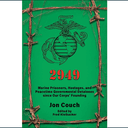
2949 Marine Prisoners, Hostages, and Peacetime Governmental Detainees Since Our Corps' Founding
By Jon Couch • RealClearDefense
America Must Win the Biotech Race Against China
By Rob Maness • RealClearDefense
U.S. Air Force To Arm C-17 Cargo Aircraft With Cruise Missiles
By C. Jones, Defence Blog
How Marine Vet Ernest Langdon Became a Renowned Shooter & Gunsmith
By WATM
In First, Two CCAs Fly Air Combat Maneuvers Using Autonomy Software
By A&SF
Space Force Launches Mission Operations Center
By Jon Harper, DefenseScoop
Pentagon Mulls Placing Fleet of Military Satellites Around the Moon
By Ars Technica