
Military Technology
RealClear Context
Click below to continue reading this story, discover more Military Technology stories from over 25 years of RealClear archives, or follow this topic to stay in the know.
MBDA, Atmos Space Cargo To Explore Deep Strike From Orbit
Missile manufacturer MBDA has teamed up with German startup Atmos Space Cargo to examine the potential development and demonstration of a Precision...
Just nowRead it on Aviation WeekPentagon Looks to 3D Print Tomahawk Missile Parts
The Defense Department is moving out on 3D printing parts for its Tomahawk Land Attack Missile using a contracting method designed to fast-track...
3d agoRead it on National Defense MagazineMegaspeed Proves: Congress Must Act on Chip Security
Smuggled chips hand Chinese rivals the American technology they cannot build....
4d agoRead it on RealClearDefense
Megaspeed Proves: Congress Must Act on Chip Security
Megaspeed, a Singaporean company founded in 2023, bought nearly $2 billion of Nvidia’s most advanced chips in about a year.[i] Last year, Senator Tom Cotton asked the Commerce Department to investigate how “billions of dollars of U.S. chips started flowing to Megaspeed” through “near-empty offices in Malaysia and Singapore.”[ii] Then, on October 29, the New York Times reported that U.S. intelligence officials concluded Megaspeed executive Alice Huang—who is close with Nvidia CEO Jensen Huang—was passing information to Beijing.[iii] The Wall Street Journal reported that officials suspect Chinese intelligence recruited her because of her relationship with Jensen Huang.[iv]
Huang admitted the relationship. Nvidia’s board launched an inquiry.[v] Three House chairs asked him to brief their committees.[vi] But the national security story is bigger than one man.
We Keep Funding ‘Shared Infrastructure.’ Nobody Has Defined It.
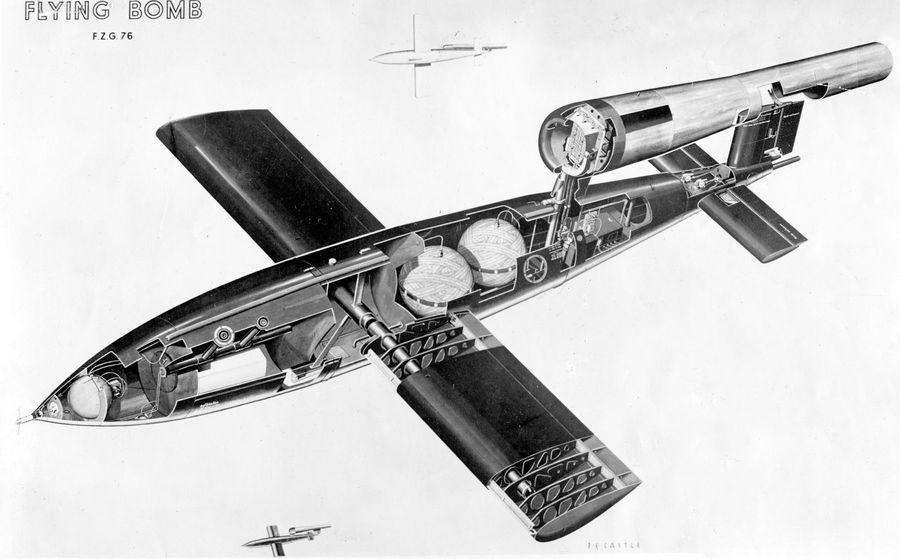
A Patriot interceptor costs about $4 million. The Shahed drone it often gets fired at costs $20,000 to $50,000. In the Strait of Hormuz, Iran has pushed the same math against the world’s most powerful navy, using lightly built fast-attack craft, mines, and fishing dhows rigged for minelaying. The U.S. degraded Iran’s conventional navy, and the strait stayed contested anyway. You can win the battle and lose the financial war.
Our defense industrial base still runs on a handful of large primes making Wunderwaffe. A growing startup scene, in autonomous platforms, is starting to buoy it. Excellence in small numbers becomes a weakness the moment a war runs long. Iran is showing it. The Pentagon’s own inspector general found that munitions spending in the war, which began in February, created inventory shortfalls and exposed bottlenecks in resupply that predate the conflict. Officials say we still have enough for current operations amidst a backdrop of yearslong deficits. Enough for now is not a plan.
We Keep Funding ‘Shared Infrastructure.’ Nobody Has Defined It.
A Patriot interceptor costs about $4 million. The Shahed drone it often gets fired at costs $20,000 to $50,000....
5d agoRead it on RealClearDefenseDARPA's Multifunctional Enhanced RF Systems Project
DARPA is seeking proposals to develop a prototype-staring, radio-frequency sensor that would cover a wide field of regard and large frequency range...
5d agoRead it on Aviation Week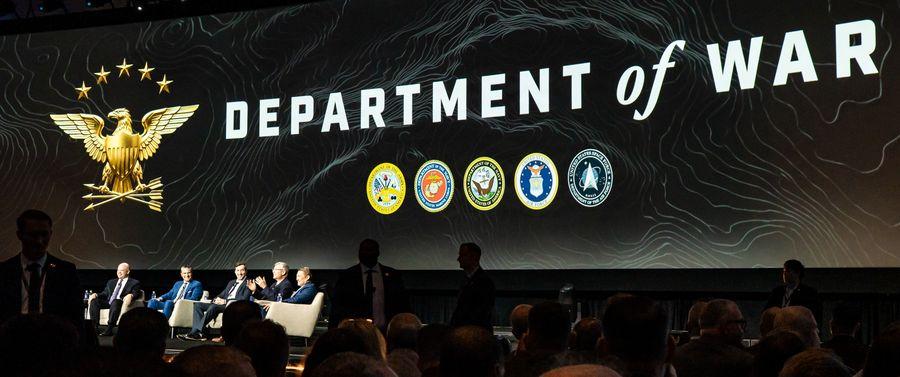
Can Commanders Tell When Artificial Intelligence Is Wrong?
In January, the Department of War directed the military to become an “AI-first” warfighting force. Its strategy included an initiative called Agent Network, intended to advance AI-enabled battle management and decision support from campaign planning to kill-chain execution.[1] The attraction is clear. A system that processes large amounts of information quickly could help commanders assess a changing situation and consider options while there is still time to act.
But an AI-generated recommendation can be wrong even when the software operates exactly as designed. A system may misinterpret a sensor report, rely on outdated information, or produce a plausible assessment from an incorrect assumption. The resulting recommendation may arrive faster than a staff could develop it and appear more certain than the evidence warrants.
Can Commanders Tell When Artificial Intelligence Is Wrong?
The Pentagon needs to establish whether commanders and their staffs can identify those errors before acting on them....
6d agoRead it on RealClearDefenseCan Robots Bring Maneuver Warfare Back?
Kyiv’s Operation Vivaldi represents a transformative shift in the character of land warfare...
1w agoRead it on RealClearDefense
Batteries Can Power a Win for America in Super Intelligence
By Manisha Singh • RealClearDefense
Poland’s Fighter Fleet Is Growing: Can Its Training System Keep Up?
By Bruce Allen Lubbering • RealClearDefense
Why Iran is Not Vietnam
By Kevin Brown • RealClearDefense
Closing the Missile (Defense) Gap
By Jason Camilletti • RealClearDefense
Part of a Larger Secret, Hidden World
RealClearDefense
Closing the Missile (Defense) Gap
By Jason Camilletti • RealClearDefense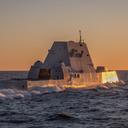
U.S. Navy Prepares for Third Zumwalt Hypersonic Upgrade
By C. Johnston, Naval N.
Pearl Harbor Hero Doris Miller Will Stay Namesake of CVN-81
By Mongilio, USNI News
Navy CCA Plans Will Not Wait For F/A-XX Next Generation Fighter
By The WarZone
Navy’s Shipbuilding Plan Would Require Massive Hike in Appropriations
By BrDef