
Military Technology
RealClear Context
Click below to continue reading this story, discover more Military Technology stories from over 25 years of RealClear archives, or follow this topic to stay in the know.
Megaspeed Proves: Congress Must Act on Chip Security
Smuggled chips hand Chinese rivals the American technology they cannot build....
1h agoRead it on RealClearDefense
Megaspeed Proves: Congress Must Act on Chip Security
Megaspeed, a Singaporean company founded in 2023, bought nearly $2 billion of Nvidia’s most advanced chips in about a year.[i] Last year, Senator Tom Cotton asked the Commerce Department to investigate how “billions of dollars of U.S. chips started flowing to Megaspeed” through “near-empty offices in Malaysia and Singapore.”[ii] Then, on October 29, the New York Times reported that U.S. intelligence officials concluded Megaspeed executive Alice Huang—who is close with Nvidia CEO Jensen Huang—was passing information to Beijing.[iii] The Wall Street Journal reported that officials suspect Chinese intelligence recruited her because of her relationship with Jensen Huang.[iv]
Huang admitted the relationship. Nvidia’s board launched an inquiry.[v] Three House chairs asked him to brief their committees.[vi] But the national security story is bigger than one man.
We Keep Funding ‘Shared Infrastructure.’ Nobody Has Defined It.
A Patriot interceptor costs about $4 million. The Shahed drone it often gets fired at costs $20,000 to $50,000. In the Strait of Hormuz, Iran has pushed the same math against the world’s most powerful navy, using lightly built fast-attack craft, mines, and fishing dhows rigged for minelaying. The U.S. degraded Iran’s conventional navy, and the strait stayed contested anyway. You can win the battle and lose the financial war.
Our defense industrial base still runs on a handful of large primes making Wunderwaffe. A growing startup scene, in autonomous platforms, is starting to buoy it. Excellence in small numbers becomes a weakness the moment a war runs long. Iran is showing it. The Pentagon’s own inspector general found that munitions spending in the war, which began in February, created inventory shortfalls and exposed bottlenecks in resupply that predate the conflict. Officials say we still have enough for current operations amidst a backdrop of yearslong deficits. Enough for now is not a plan.
We Keep Funding ‘Shared Infrastructure.’ Nobody Has Defined It.
A Patriot interceptor costs about $4 million. The Shahed drone it often gets fired at costs $20,000 to $50,000....
1d agoRead it on RealClearDefenseDARPA's Multifunctional Enhanced RF Systems Project
DARPA is seeking proposals to develop a prototype-staring, radio-frequency sensor that would cover a wide field of regard and large frequency range...
1d agoRead it on Aviation Week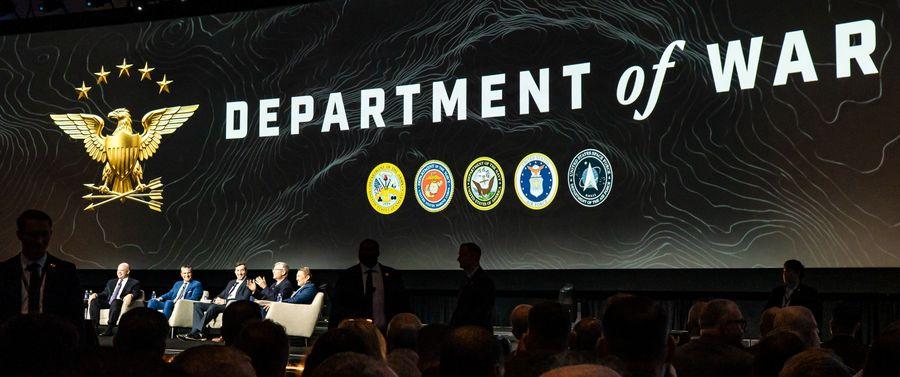
Can Commanders Tell When Artificial Intelligence Is Wrong?
In January, the Department of War directed the military to become an “AI-first” warfighting force. Its strategy included an initiative called Agent Network, intended to advance AI-enabled battle management and decision support from campaign planning to kill-chain execution.[1] The attraction is clear. A system that processes large amounts of information quickly could help commanders assess a changing situation and consider options while there is still time to act.
But an AI-generated recommendation can be wrong even when the software operates exactly as designed. A system may misinterpret a sensor report, rely on outdated information, or produce a plausible assessment from an incorrect assumption. The resulting recommendation may arrive faster than a staff could develop it and appear more certain than the evidence warrants.
Can Commanders Tell When Artificial Intelligence Is Wrong?
The Pentagon needs to establish whether commanders and their staffs can identify those errors before acting on them....
2d agoRead it on RealClearDefenseCan Robots Bring Maneuver Warfare Back?
Kyiv’s Operation Vivaldi represents a transformative shift in the character of land warfare...
3d agoRead it on RealClearDefense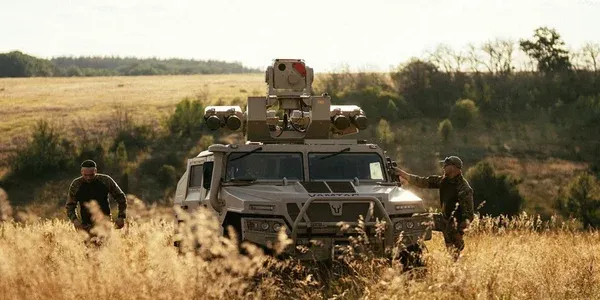
Can Robots Bring Maneuver Warfare Back?
In the Russia-Ukraine war, the persistent use of drones for Intelligence, Surveillance and Reconnaissance (ISR) operations has made it difficult to conceal concentrations of troops and vehicles, while the use of mines, electronic warfare, artillery and First-person-view (FPV) drones has made maneuvering on the battlefield increasingly dangerous and costly. Even ground robots, crossing several kilometers of open terrain, can be destroyed by an FPV or mine before accomplishing their mission. For many operations, getting to the target is the most costly and challenging phase of a mission.
Even the frontline itself is complex to define in real-time as both sides operate in a dense environment of drones and small, dispersed infantry units rather than along clearly established defensive lines. All these conditions have made the three elements of maneuver warfare—movement, concentration of force, and surprise—extremely difficult to achieve. Conventional forces attempting a breakthrough are exposed long before they reach their objective, and the result has been a largely positional war of attrition.
The Army’s AI Cyber Defenders Need a Proven Stand-Down Order
The Army’s October 13 push to develop three AI cyber-defense projects poses an operational question: what happens when a useful defender refuses to...
6d agoRead it on RealClearDefense
South Korea’s Nuclear-Powered Submarines After the Midterms
By Jihoon Yu • RealClearDefense
Why Build a Billion-Dollar Warship if a Cheap Drone Can Sink It?
By Ege Can Gün • RealClearDefense
Megaspeed Proves: Congress Must Act on Chip Security
By Michael Groen • RealClearDefense
Creating a MEF Insurance Policy
By Steven Bancroft • RealClearDefense
Operation Epic Fury and the Illusion of Victory
By Stephen D. Cook • RealClearDefense
South Korea’s Nuclear-Powered Submarines After the Midterms
By Jihoon Yu • RealClearDefenseWhy Build a Billion-Dollar Warship if a Cheap Drone Can Sink It?
By Ege Can Gün • RealClearDefenseCreating a MEF Insurance Policy
By Steven Bancroft • RealClearDefense
U.S. Navy Used Expired Munitions During Iran War
By Riley Ceder, Navy Times
The Coast Guard Icebreaker Nobody Wanted
By David Roza, Task & Purpose