
North Atlantic Treaty Organization (NATO)
RealClear Context
Click below to continue reading this story, discover more North Atlantic Treaty Organization (NATO) stories from over 25 years of RealClear archives, or follow this topic to stay in the know.
Cut NATO's Umbilical Cord
Since its birth in 1949, the North Atlantic Treaty Organization (NATO) has been attached to the United States by a figurative umbilical cord which...
10/11/25Read it on RealClearWorld
NATO’s New Spending Pledge Must Buy Real Energy Resilience
Ukraine has shown that the power grid, fuel network, and people who keep them running are part of the battlefield.
When NATO leaders agreed at The Hague in 2025 to a new defense investment target, the headline was 5 percent of GDP. But one of the most consequential parts of that commitment sits outside traditional military spending: up to 1.5 percent of GDP for critical infrastructure, networks, civil preparedness, resilience, innovation, and the defense industrial base.
NATO’s New Spending Pledge Must Buy Real Energy Resilience
Ukraine has shown that the power grid, fuel network, and people who keep them running are part of the battlefield....
3h agoRead it on RealClearDefenseNATO’s New Defense Plan Would Mean Strikes Deep Inside Russia
Commanders say precise long-range weapons are core to deterring Moscow from attacking the alliance...
1w agoRead it on The Wall Street Journal
Patriot Delays Force a New Air Defense Doctrine on NATO’s Eastern Flank
Expected delays in U.S. Patriot deliveries to Poland have exposed a critical vulnerability in NATO’s reliance on traditional Foreign Military Sales for high-end air defense. Coupled with the unsustainable cost-exchange ratio of firing multi-million-dollar interceptors at cheap Russian drones, frontline states are pivoting from off-the-shelf procurement to localized industrial co-production of low-cost counter-UAS networks. If Washington wants to maintain its defense market dominance in Central Europe, U.S. primes must urgently establish joint manufacturing and maintenance hubs on allied soil.
At this week’s Warsaw Security Forum, two seemingly separate announcements revealed a structural shift in how NATO’s frontline states plan to defend their skies. On Tuesday, just as a senior Polish military commander warned that scheduled deliveries of U.S.-made Patriot air defense systems to Poland are expected to face delays, Polish Defense Minister Władysław Kosiniak-Kamysz issued a blunt ultimatum to international defense primes: future contracts depend on establishing manufacturing and maintenance facilities inside Europe. Hours later, Norwegian defense group Kongsberg answered that call, unveiling a $51 million investment to build a new counter-drone production plant in northern Poland.
Patriot Delays Force a New Air Defense Doctrine on NATO’s Eastern Flank
Expected delays in U.S. Patriot deliveries to Poland have exposed a critical vulnerability in NATO’s reliance on traditional Foreign Military Sales...
1w agoRead it on RealClearDefenseNATO May Redeploy Anti-Drone Defenses As Attacks Sink Black Sea Shipping
Suspected Russian drones have sunk or damaged 5 ships near Bulgaria and Romania....
3w agoRead it on Ars TechnicaNATO Exercise Cobra Warrior Flies More than 900 Sorties
Around 1,800 personnel from the United Kingdom, Germany, Italy, the Netherlands and the United States took part.
3w agoRead it on UK Defence Journal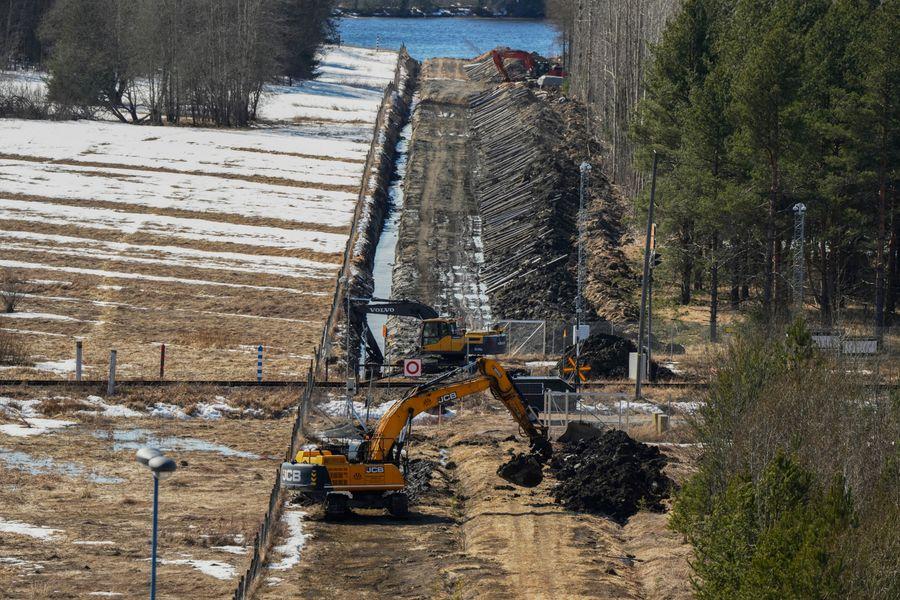
Bogged Down
In the first century AD, two Roman centurions searching for sources of the Nile were halted by enormous marshes where the water was difficult to traverse even by small boat. The Sudd of present day South Sudan is a maze of channels, floating vegetation, mud and seasonally changing water, creating a formidable barrier even to this day. The account captures a durable strategic truth: sometimes the most effective obstacle is not a wall, but the ground itself.
Nearly two millennia later, NATO members are revisiting the same principle. Finland, Lithuania, Latvia and Poland are exploring ways to use environments as part of national defense. Their terrain-shaping measures include restoring selected landscapes, strengthening natural obstacles, narrowing an attacker’s choices and making geography work are becoming part of a larger defense-in-depth system.
Trump's NATO Envoy Calls for Moving Military Forces East
Matthew Whitaker called for an overhaul of NATO's bases and military infrastructure to move forces eastward
10/14/26Read it on Politico EUHow to Make NATO 3.0 Work
U.S. retrenchment from Europe creates an opportunity for further Russian meddling. The timing of the transition is therefore essential.
09/30/26Read it on The National Interest
The Gulf of Finland’s Forgotten Islands
By Ben Poulin • RealClearDefense
NATO’s New Spending Pledge Must Buy Real Energy Resilience
By Chuck Dockery • RealClearDefense
The Army Needs a Data Logistics Discipline Before the Next Surge
By Steve Ferenzi • RealClearDefense
2949 Marine Prisoners, Hostages, and Peacetime Governmental Detainees Since Our Corps' Founding
By Jon Couch • RealClearDefense
America Must Win the Biotech Race Against China
By Rob Maness • RealClearDefense

U.S. Air Force To Arm C-17 Cargo Aircraft With Cruise Missiles
By C. Jones, Defence Blog
How Marine Vet Ernest Langdon Became a Renowned Shooter & Gunsmith
By WATM
In First, Two CCAs Fly Air Combat Maneuvers Using Autonomy Software
By A&SF
Space Force Launches Mission Operations Center
By Jon Harper, DefenseScoop
Pentagon Mulls Placing Fleet of Military Satellites Around the Moon
By Ars Technica