
Revitalizing the Navy: Developing Leaders
Published May 14, 2024 • Read time: 8m
I served on active duty in the Navy for thirty years, including command of a strike fighter squadron, and between active duty tours and civilian service, over twenty two years on the faculty of the Naval War College (NWC). At the College I served in a variety of positions ranging from a classroom instructor to the Dean of the Center for Naval Warfare Studies. From that experience as well as a study of naval history and strategy I have developed an outlook on the kind of professional military education (PME) naval officers should receive, and it is not what they are currently getting. My views correspond closely with those of former Secretary of Defense James Mattis who asserted in the Summary of the 2018 National Defense Strategy “Professional Military Education (PME). PME has stagnated, focused more on the accomplishment of mandatory credit at the expense of lethality and ingenuity.”[1] In the Navy, uniquely, this deterioration has been a consequence not of institutional mediocracy or Service neglect, but of the achievement of academic excellence. The College does what it does very well; the question is whether it is doing the right thing in the context of evolving geopolitical circumstances.
The role of the Naval War College in helping the Navy prepare for its struggle against the Japanese in the Pacific has attained almost legendary status. The decades of wargames by students, and their subsequent ascendence to leadership positions during that war was vital in both pre-war preparation and in achieving the adaptations necessary once war broke out. Since its epochal victory over the Axis navies in World War II the U.S. Navy has reigned supreme on the world ocean. But that victory, and the technical age of atom bombs, jet aircraft and nuclear submarines that ensued, caused problems for NWC. Moreover, possessing command of the sea and in view of the Soviet threat to nations on its periphery, the Navy shifted its mission focus shoreward or as the American political scientist Samuel Huntington put it: “More specifically, it is to apply naval power to that decisive strip of littoral encircling the Eurasian continent.”[2] The approach to the study of naval war at sea that had characterized its pre-war era no longer seemed relevant, and so the College faced a quandary: what was its purpose?
Rejuvenation arrived in 1972 in the person of Rear Admiral Stansfield Turner, an Oxford-educated officer specifically selected by activist Chief of Naval Operations Elmo Zumwalt to inject vitality into NWC. Turner totally revamped the curriculum, focusing it on national level strategy and policy, defense economics and only a third of the curriculum on operations (which eventually evolved into an almost complete focus on joint operations). To teach this curriculum he hired top-notch civilian scholars, especially for the Strategy and Policy Course, which became regarded as the best of its kind in the world. And the NWC course would be rigorous, involving considerable reading, writing, essay tests and university style grading. Turner’s “revolution” was initially meant for the senior course, but the intermediate level students lobbied to receive it and soon essentially the same course was delivered to both levels.[3] The College managed doing this with the same faculty by juggling the order in which the three core courses were presented. The logic was that a naval officer would only get one shot at NWC, and during that time should receive a grounding in national strategy and processes. NWC quickly attained the reputation as the best of the nation’s professional military education institutions.
Another consequence of the Navy’s altered strategic and operational environment after World War II was the shift of research out of the NWC core curriculum and into specialized organizations. When NWC was established in 1884 the Navy did not know how to constitute a modern fleet, later how to integrate aviation into naval warfare nor how to conduct a trans-Pacific campaign against Japan. Many of the answers emanated from NWC. By 1945 these questions were answered, and the new ones did not seem to fit easily into a professional military education curriculum. The divorce between teaching and research became final in 1981 with the Center for Naval Warfare Studies (CNWS) and the small, elite Strategic Studies Group. Students would be broadened while dedicated researchers probed specific issues via wargaming and other forms of research. This intellectual bifurcation was satisfactory for Navy purposes for the duration of the Cold War and the two decades after. Serendipitously, the imposition of Goldwater-Nichols education requirements fit nicely into the NWC curriculum, and its rigor allowed accreditation for a masters degree, all providing incentive for the Navy to send top notch officers (which it had been reluctant to do before). Then China opened its economy to the world, became rich, and decided to build a navy that could advance its interests, which are in many ways inimical to those of the United State, both in its oceanic periphery and around the world.
It is now the U.S. Navy that is in a quandary. Over the post-Cold War years its fleet has shrunk to levels not seen since before World War I, yet the demands of U.S. security interests have only increased. The advance of technology has produced a rapidly changing environment in which it is not clear what the nature of future naval warfare will look like. This, to a degree, mimics the situation in which the Navy found itself when NWC was founded; it does not know how to constitute a modern fleet nor how to use it in conditions it may encounter. Moreover, the Navy’s officer corps now faces a gap in its development that mirrors the divorce between teaching and research that occurred at NWC in the wake of World War II. Officers receive excellent tactical training on their particular systems and traditional carrier battle group tactics, and they receive excellent instruction on national strategy at NWC. But they do not have the opportunity to learn about what is in between: naval warfare as a whole, especially through the medium of exploration and innovation via wargaming. This is now what should be the focus of the intermediate curriculum at the Naval War College; a classified, wargame-rich, warfighting curriculum whose goal is to allow students to explore future naval warfare and possibly come up with new ideas. This is critical, because like with World War II, it will be those graduates that end up leading out in the fleet if war comes.
While this appears to make sense, there is considerable inertial both within NWC and Navy headquarters. The Navy values the credentials the current curriculum provides for bureaucratic purposes and the College’s faculty, particularly the civilian academics remain justly proud of the course’s reputation for quality. Likely the only way this logjam can be broken is for another activist Chief of Naval Operations to appoint an equally activist and determined Naval War College President. There will be significant opposition at various levels, but if the consequences of inaction are fully understood, a loss of American naval superiority and even a major defeat at sea, revitalization of NWC can be achieved.
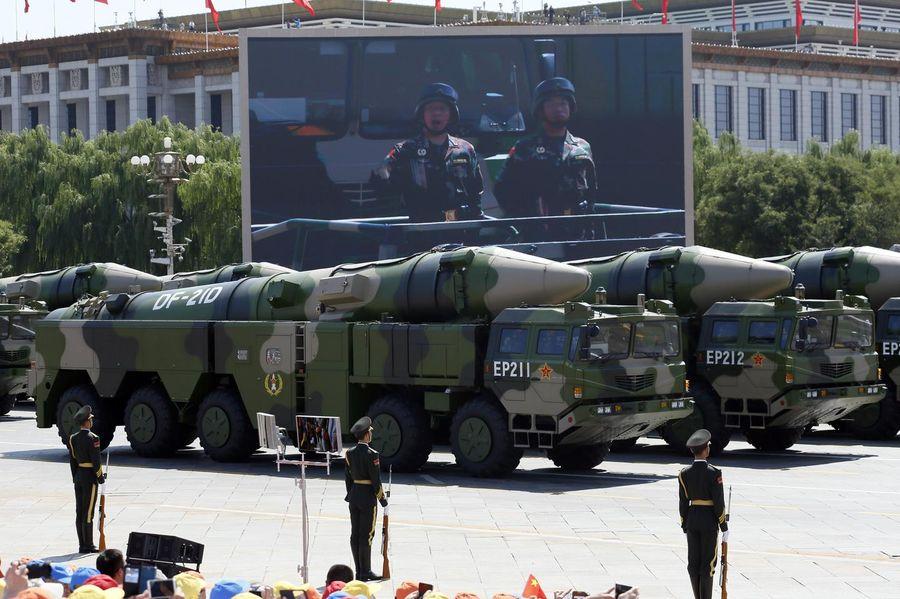
A few years ago, one of my faculty members, leader of a small student advanced research elective, briefed students at the nearby surface warfare pre-command course on the results of their studies, which involved conflict scenarios with China. Before he started his brief, he asked for a show of hands for who knew what a DF-21 was (the Chinese anti-ship ballistic missile that had recently been revealed). Only two hands in a class of over twenty pre-command officers. These officers had clearly mastered their ships’ weapons and engineering systems, in addition to the social and ethical requirements of a coed Navy, as well as skills in navigation and administration, otherwise they would not have been in the class. But knowledge of the DF-21 required a wider knowledge and understanding of the emerging naval warfare environment. It is likely the Navy has improved the preparation of its prospective commanders, but the gap still remains because the Navy still does not know how to fight with something other than aircraft carrier battle groups, and it is not producing a cadre of officers who have spent time at NWC trying to figure that out.
Captain Robert C. Rubel (U.S. Navy, ret.), was a Navy pilot who flew light-attack and strike-fighter aircraft. He retired after 30 years of active duty and then served for 13 years on the faculty of the Naval War College, including eight years as dean of the Center for Naval Warfare Studies.
Notes:
[1] Department of Defense, Summary of the 2018 National Defense Strategy of the United States of America, p. 8.
[2] Samuel Huntington, “National Policy and the Transoceanic Navy,” Proceedings, Vol. 80, No. 5, May 1954, (Annapolis, MD: U.S. Naval Institute), p. 491.
[3] The intermediate course, also known as the College of Naval Command and Staff (CNCS) is attended by mid-level officers of 8-12 years of service, lieutenant commanders in the Navy, and majors in the other Services, The senior course, the College of Naval Warfare, is attended by officers with 15-21 years of service, Navy commanders and captains, and lieutenant colonels and colonels in the other Services. Government civilians and foreign officers of commensurate rank also attend.
Iran’s Nuclear and Chemical Weapons Threat
By Ben Ollerenshaw • RealClearDefense
Europe’s Rearmament Paradox
By Daniel Darling • RealClearDefense
Pentagon’s Pursuit of Faster Acquisition
By Ben Harris • RealClearDefense
The Army’s AI Cyber Defenders Need a Proven Stand-Down Order
By Gleb Tsipursky • RealClearDefense
After the Silence
By Chase Skylar DeMayo • RealClearDefense
The First Surface Drone-v-Drone Fight
By CDR Salamander, CDR Salamander
Air Force Strengthens F-22 Raptor Combat Readiness in the Pacific
By Global DefenseAfter the Silence
By Chase Skylar DeMayo • RealClearDefense
Underwater Arms Race Puts U.S. Naval Supremacy at Risk
By Tom O'Connor, Newsweek
New Facilities To Pump Out Upgraded F/A-18E/F Super Hornets
By Trevithick, WarZone