
Japan Seeks Stronger Missile Defense Alliance With U.S.
Last updated 05:26 PM EDT • Read time: 4m
TOKYO (AP) — Japan needs to bolster its missile defenses and its alliance with the United States, its government stressed Tuesday in an annual defense review that judged North Korea to still be a serious threat that has not taken concrete steps to denuclearize.
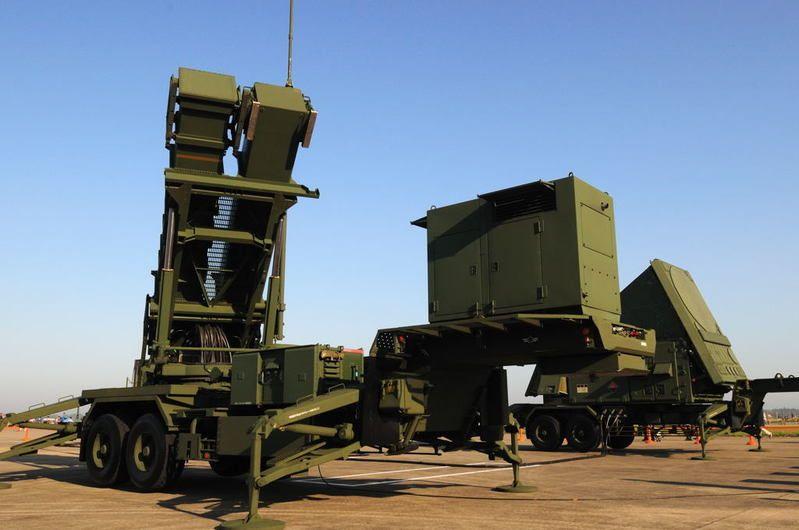
The defense paper, approved Tuesday by the Cabinet, said Japan must add to its missile defense capabilities to be fully prepared while watching if North Korea keeps its promise.
President Donald Trump and North Korean leader Kim Jong Un signed a vague joint statement at their summit in June that included agreements to denuclearize the Korean Peninsula. Last week, Trump directed Secretary of State Mike Pompeo to postpone a planned trip to the North, citing insufficient progress.
North Korea tested intercontinental ballistic missiles last year, including launching some over Japan, and it deploys several hundred shorter-range Rodong missiles capable of hitting Japan. The defense paper also says Pyongyang likely has made miniaturized nuclear warheads it can place atop ballistic missiles, an advancement of its nuclear capability that North Korea has claimed to have achieved.
North Korea has increased the range, accuracy and versatility of its missiles and diversified its launch sites and methods over the past few years. In addition to the three nuclear tests the North has conducted since 2016, it also has carried out more than 40 missile tests in that time, according to the paper.
“Its military actions have become an unprecedentedly serious and imminent threat to Japan’s national security,” the paper said. “There is no change in our basic recognition about the threat of North Korea’s nuclear weapons and missiles.”
It was “significant” that Kim promised to pursue denuclearization of the peninsula but it is necessary to watch what North Korea does to scrap its nuclear weapons and missiles, the report said.
While the United States is primarily concerned about the ICBMs that can reach its mainland, Japan is within range of North Korea’s smaller missiles. Prime Minister Shinzo Abe has pushed to raise Japan’s military participation and its missile defenses. Joint exercises with the U.S. and other defense partners including Britain and Australia have significantly increased, and Japan is buying costly U.S. equipment as Trump tries to sell more weapons and reduce the U.S. trade deficit.
Japan is currently updating its national defense guidelines and the medium-term defense program to reflect North Korea’s threat, and to have “necessary and sufficient defense capabilities qualitatively and quantitatively,” the paper said.
It has also stepped up surveillance and patrolling in regional seas to crack down on offshore ship-to-ship oil transfers to North Korean vessels in violation to U.N. sanctions.
Tuesday’s report comes days before Japan’s Defense Ministry is set to approve its fiscal 2019 budget plan that would include an initial acquisition cost for a land-to-air missile defense system, Aegis Ashore. Opposition to that purchase has risen since Pyongyang suspended missile tests this year as it made diplomatic overtures to its ally China as well as the U.S. and South Korea.
The defense paper also raised strong concerns about China’s military budget increases, its modernization and buildup of forces and weaponry, and its continuing assertive moves in the region’s airspace and seas.
Japan and China have long disagreed over their history and over a cluster of East China Sea islands they both claim, but their relations have seemed to improve as China tries to be a leader in Asia, a better neighbor and a contrast to Trump’s U.S.-first policy. The defense paper welcomed China’s cooperation in starting a mechanism for sea and air defense communications, an initiative meant to avoid unanticipated events in disputed areas.
Follow Mari Yamaguchi on Twitter at www.twitter.com/mariyamaguchi.
© copyright 2018 Associated Press. All rights reserved.
The Dual Threat: Why Beijing’s Collapse Is Just As Dangerous as Its Rise
By Efraín Vázquez-Vera • RealClearDefense
Optimizing Trump’s Strategy to ‘Rot Iran’s Economy’
By Brian G. Chow • RealClearDefense
The AI Scare Is the New Y2K: A Veteran’s Perspective on Hype, Risk, and the Discipline Needed to Modernize Safely
By Kenneth Smith • RealClearDefense
The Pentagon’s AI Rush Needs Adult Supervision
By Michael Aaron Cody • RealClearDefense
ICE Is Not a Four-Letter Word
By Meda Parameswara Reddy • RealClearDefense

Marine Died of Injuries Suffered During Fast-Rope Training on Okinawa
By Brian McElhiney, Stars and Stripes
Drones Built To Look Like Birds Evaded Detection at Air Force Tech Exercise
By T&P
Navy Unfairly Evaluated Saildrone Musv Proposal, Court Finds
By D. Stancy, BrDefense
HII and Thales Demonstrate UUV with End-to-End Autonomous MCM
By Naval News
General Atomics Joins Army-Navy Hypersonic Glide Body Production
By Defence Blog