
Pyongyang's Small-Ball Playbook
Published March 26, 2026 • Read time: 6m
How AI’s Elevating North Korea’s Geopolitical Strategy
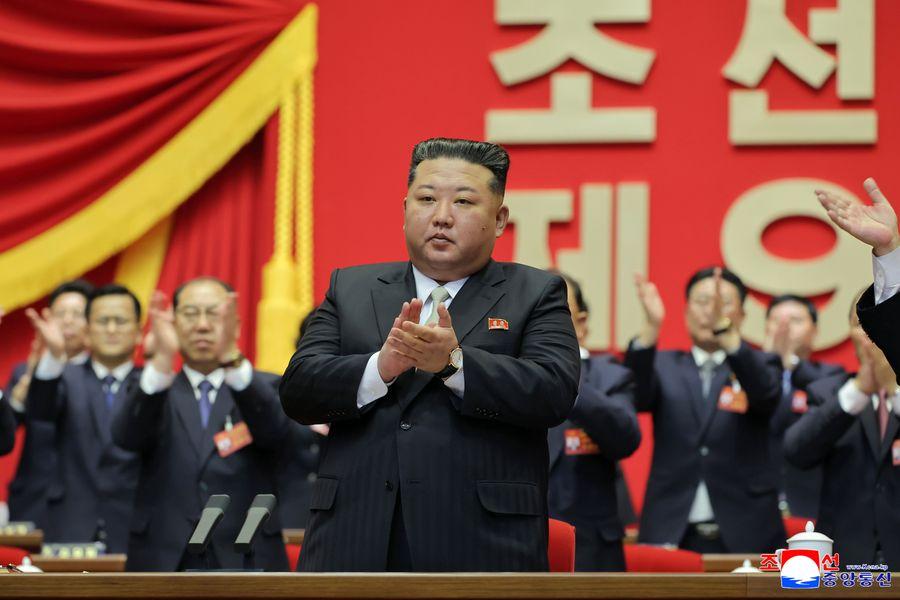
Amid popular discussions over the “AI arms race,” North Korea may seem an irrelevant contender. Largely cut off from global flows of technology, capital, and information, Pyongyang seemingly lacks the digital infrastructure, venture capital, and data necessary for AI developments. Despite the country’s constrained technological resources, the regime operates a potent cyber apparatus that is consistently underestimated by the West. Over the past decade, North Korea has leveraged digital operations—including state-sponsored cyberattacks, espionage, and financial hacking—to pursue strategic interests. AI has been integrated into North Korea’s strategies, enhancing the regime’s digital offensive.
Kim Jong Un may have a nostalgic affinity for 1990s-era basketball and the Chicago Bulls, but his AI strategy can be better understood by referencing the 21st-century “small ball” approach. For decades, basketball teams were built around centers—the tallest, most physically dominant players—who controlled the paint and anchored the defense. However, in the 2010s, the Golden State Warriors changed the game with a “small-ball” lineup: they prioritized quicker, more agile players, allowing the team to outmaneuver bigger, slower opponents. Similarly, North Korea, lacking the vast resources of major powers, seeks to use agility, innovation, and targeted technology to compete strategically, just as small-ball teams use speed and versatility to challenge physically dominant teams.
Today, the United States relies on economic sanctions and conventional military strength to contain North Korea. These tools resemble the traditional “big man” approach—powerful, but cumbersome against a nimble AI strategy in the grey zone. First, AI-enabled cyber operations could allow North Korea to circumvent sanctions. Second, the regime’s AI ambitions may create security risks by strengthening its military capabilities. Given these evolving threats, U.S. policymakers must reassess how Washington counters North Korea’s increasingly sophisticated digital arsenal.
A Digital Fast Break Against Sanctions
The international community has heavily sanctioned North Korea to constrain the regime’s weapons development; however, the effectiveness of this economic coercion remains contested. Pyongyang has become increasingly adept at circumventing sanctions, particularly through cybercrime. Over the last three years, North Korean hackers stole over $3 billion, and these gains from cybercrime have provided vital funding to the regime’s nuclear and missile programs.
AI could significantly amplify these efforts to evade sanctions. By enhancing the sophistication of cyber operations, AI allows North Korean actors to automate personalized phishing campaigns, refine malware code, and generate convincing fake identities. Recently, North Korea developed an elaborate scheme where operatives posed as remote IT workers to secure employment at Western companies. These “workers” would funnel their income back to Pyongyang or gain access to sensitive data. Leveraging widely available AI tools, North Korea managed to place a worker at nearly every Fortune 500 company.
Beyond cybercrimes, AI can also directly facilitate trade-based sanctions evasion. For instance, automated systems can generate falsified shipping documents and analyze sanctions enforcement patterns to misclassify sanctioned goods or avoid detection. By accelerating these tactics, AI shifts sanctions evasion from a manual, error-prone process to a largely automated one. This presents a serious challenge to the US-led sanctions regime, as AI can overwhelm existing compliance and investigative frameworks.
North Korea’s AI ambitions may become a central component of the regime’s economic security strategy. Consistent with the country’s historic emphasis on self-reliance and modernization, Pyongyang has sought to integrate technology into national development. In 2019, the regime amended its Constitution to add “informatization” as an economic priority, signaling a formal commitment to the strategic use of information technologies, including AI, to support economic objectives.
The Autonomous Sixth Man of Military Strategy
Pyongyang is likely to incorporate AI into the regime’s national security framework. Facing overwhelming American military dominance, North Korea seeks asymmetric advantages to level the playing field. This “asymmetric strategy” prioritizes the development of low-cost, highly disruptive military technologies—especially those that can disrupt or undermine U.S. credibility without triggering nuclear escalation. Pyongyang views AI as a force multiplier that enhances the effectiveness of this strategic approach. Even when traditionally outmatched, AI offers Kim opportunities to achieve strategic leverage and exploit vulnerabilities in the U.S.-South Korea alliance.
According to North Korean state media, Kim stated that the use of AI is a “top priority” in modernizing the regime’s weapons technology. The regime has expanded AI research, constructed AI development facilities, and increased AI education opportunities at Kim Il Sung University. North Korea is reportedly developing a machine learning war-gaming simulation to refine military decision-making. These efforts are part of a broader five-year strategy to integrate AI across military management and strategic command structures.
Pyongyang has also begun experimenting with autonomous systems, AI-guided munitions, and AI-based strategic command platforms. These capabilities carry offensive potential and could be integrated with elements of North Korea’s nuclear infrastructure. Beyond the battlefield, AI could enable the regime to undermine U.S. deterrence—through information warfare, propaganda, or even meddling in foreign elections—and remain below the threshold of open conflict.
AI ambitions are accelerating North Korea’s pursuit of drone modernization. In 2025, open-source intelligence indicated tests of reconnaissance and attack drones with “unspecified artificial intelligence capabilities.” These systems may feature enhanced intelligence capabilities and even include “kamikaze” functions that detonate upon impact with their designated targets.
For U.S. and South Korean forces, AI drones present a particularly troubling asymmetric challenge—defending against drones places an enormous strain on government finances and supply chains. North Korea’s drone modernization epitomizes the regime’s prioritization of asymmetric warfare. In a potential conflict on the Korean Peninsula, countering swarms of AI drones may become a central operational concern for the U.S.-South Korea alliance.
Conclusion
Pyongyang’s accelerating AI development should prompt a significant reassessment of Washington’s approach to North Korea. For decades, the United States has relied primarily on economic sanctions and overwhelming conventional military superiority to contain the regime. Yet North Korea’s AI strategy may allow it to circumvent sanctions more quickly and with greater sophistication while simultaneously enhancing low-cost, asymmetric military technologies.
Washington must drop static, brute-force tools and use more agile, targeted strategies. Policymakers should also consider diplomatic engagement with the regime. Without adaptation, the U.S. may strengthen the Kim regime’s asymmetric strategy and raise the risk of conflict on the peninsula. Just as the NBA’s small-ball revolution forced teams to rethink roster construction and in-game strategies, Pyongyang’s technological adaptation could disrupt long-standing assumptions about deterrence and escalation dynamics on the Korean Peninsula.
Jimin Park is a graduate student at Georgetown's School of Foreign Service in Asian Studies. He holds a B.A. in Global & International Studies and a B.A. Political Science from the University of Kansas.
Operation Epic Fury and the Illusion of Victory
By Stephen D. Cook • RealClearDefense
Previewing The Shenzen Summit: A Critical View
By Stephen Blank • RealClearDefense
How to Win Without Military Victory
By Kevin Eyer • RealClearDefense
We Keep Funding ‘Shared Infrastructure.’ Nobody Has Defined It.
By Frederick Gale • RealClearDefense
Congress Must Reauthorize Section 702 of the Foreign Intelligence Surveillance Act
By Bryce G. Poole • RealClearDefense

Five Takeaways From Navy Nominee’s Rocky Hearing
By Seligman & Weisgerber, WSJ
U.S. Air Force Taps Anduril for Containerized Launcher
By Global Defense News
Time To Say Goodbye to the NMESIS and NSM
By Marine Corps Compass Points
HII and U.S. Navy Break Ground on Shipyard Complex
By George Allison, UKDJ
Rare U.S. Air Force Spy Plane Spotted Over the Black Sea
By D. Malyasov, Defence Blog