
Russia's Failure in Ukraine Proves Europe Can Defend Itself
Published Dec. 14, 2022 • Read time: 5m
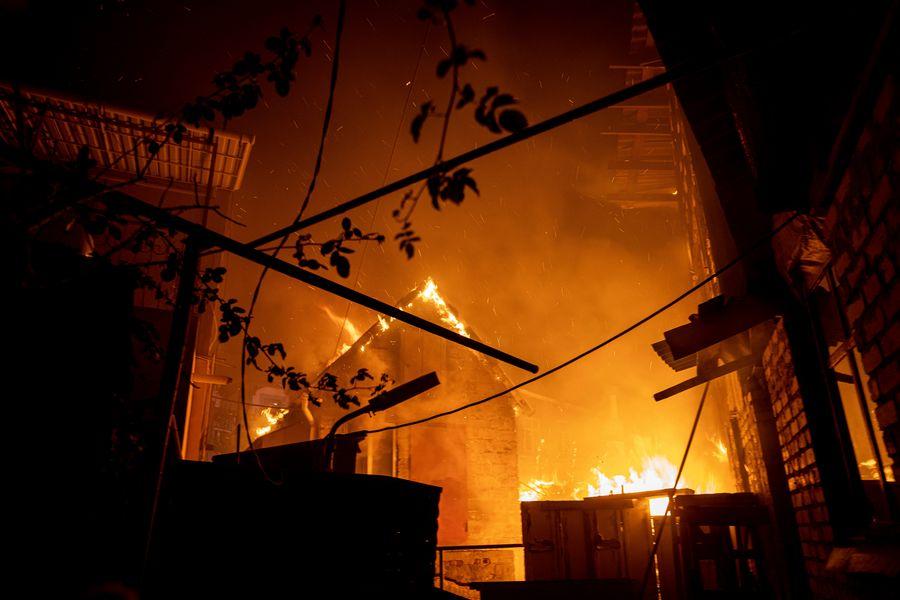
Russia’s invasion of Ukraine, now in its tenth month, is a strategic fiasco for Moscow. Russia has solidified itself as a pariah in Europe, prompted neutral Finland and Sweden to seek NATO membership, and encouraged some European states to revitalize long-dormant defense policies and increase defense spending. Every phase of Russia’s ill-advised invasion has faltered beginning with its initial attempt to take Kyiv in a matter of days. The recent retreat of Russian forces from Kherson, the only regional capital Russian forces managed to conquer, is only the latest embarrassment for the Kremlin. Many of the Russian forces previously stationed in Kherson are now reinforcing an effort to take the eastern Ukrainian town of Bakhmut, but are being stymied by fierce Ukrainian resistance. Moscow continues to pay a heavy price for its misadventure, with a recent Pentagon estimate claiming upwards of 100,000 Russian casualties. While the war is a tragedy for Ukraine, it has made clear Russia’s military ineptitude.
As Europe grows stronger and Russia weaker, the United States must reevaluate its oversized defense commitment to the continent. Facing myriad domestic issues and a rising geopolitical competitor in China, Washington can no longer afford to bear the primary burden of ensuring Europe’s security. The war in Ukraine should serve as a turning point in a new trans-Atlantic relationship—one where wealthy and capable European allies take more responsibility for their own defense.
Russia’s lackluster capability should be a signal to Washington that the United States can do less in Europe and remain secure. Instead, the Biden administration surged an additional 20,000 U.S. troops to Europe, bringing the total to more than 100,000 U.S. service members deployed across the continent. Increasing U.S. defense commitments to the region risks European allies reneging on their own defense commitments, as they can continue to pass the buck to the United States. That may already be a reality in some cases, including Germany, where the continent’s largest economic power is set to miss NATO’s two percent spending on defense target—despite Chancellor Olaf Scholz calling Russia’s invasion a historic turning point and declaring Germany would meet the two percent mark.
Despite Germany and other European countries failing to back up their strong rhetoric with action, NATO-Europe (NATO excluding the United States and Canada) is still collectively far more powerful than Russia. NATO-Europe’s 2021 defense expenditure totaled over $330 billion compared to Russia’s $62 billion and its GDP was over $19 trillion compared to Russia’s $1.6 trillion. Such a balance of power clearly favors Europe. In other words, Europe has capability but lacks the political will that can transform Europe into the primary provider of its own defense.
While numerous U.S. presidents have complained about NATO allies not paying their fair share for collective defense—only 9 out of 30 members meet NATO’s two percent of GDP spending target—an evaluation of the necessity that the United States serve as the primary guarantor of European security has not taken place. Even former President Trump, certainly the president most publicly critical of the alliance, seemed more focused on the argument that European allies were not spending enough on defense, rather than questioning the strategic utility of the United States being so deeply engaged militarily in Europe in the first place.
During the Cold War, NATO was an effective mechanism to ensure a stable balance of power between western Europe and the Soviet Union—a country far more powerful than the modern Russian Federation. But the Soviet Union no longer exists, European allies have rebuilt from the ashes of the Second World War to become some of the world’s strongest economies, NATO has expanded to 30 members with Sweden and Finland waiting in the queue, and Russia has proven itself inept at waging conventional warfare as it struggles to hold territory in an adjacent country.
To ensure that European allies are serious about prioritizing defense, the United States should work with its allies and set a timeline to reduce U.S. forces in Europe and transfer greater responsibility within NATO to the Europeans themselves. A multi-year transition would allow Europe to coordinate military procurement and develop strategic capabilities that it currently depends on the United States to provide, such as airlift, air refueling, command and control, and intelligence, surveillance, and reconnaissance systems.
The threat of Russia overrunning and dominating Europe—the fear that led Cold War strategists to keep U.S. forces in Europe—is inconceivable today. U.S. policymakers should avoid threat inflation and seek a more equitable relationship with prosperous European allies. Adhering to a policy out of habit rather than adapting it to conform to reality is folly. The United States has served as Europe’s primary defender for over seven decades. It is high time that Europe provides for its own defense. If the largest war in Europe since the Second World War does not prompt that change, what will?
Sascha Glaeser is a Research Associate at Defense Priorities. He focuses on US grand strategy, international security, and transatlantic relations. He holds a Master of International Public Affairs and a Bachelor's in International Studies from the University of Wisconsin-Madison.

The Army’s AI Cyber Defenders Need a Proven Stand-Down Order
By Gleb Tsipursky • RealClearDefense
After the Silence
By Chase Skylar DeMayo • RealClearDefense
Defense Chip Procurement Needs a Recovery Test
By Percy Yixuanchen Yu • RealClearDefense
FORTRESS America Must Measure Missions, Not Megawatts
By Burak Oktenli • RealClearDefense
After the Midterms, the Right Strategy Against Iran
By Lance Gordon • RealClearDefense
After the Silence
By Chase Skylar DeMayo • RealClearDefense
Underwater Arms Race Puts U.S. Naval Supremacy at Risk
By Tom O'Connor, Newsweek
New Facilities To Pump Out Upgraded F/A-18E/F Super Hornets
By Trevithick, WarZone
U.S. Navy Expands Tomahawk Warhead Production
By Naval News Staff, Naval News
SSN(X) Attack Boat Will be a Swift, Lethal Mothership for Undersea Drones
By USNI N.