
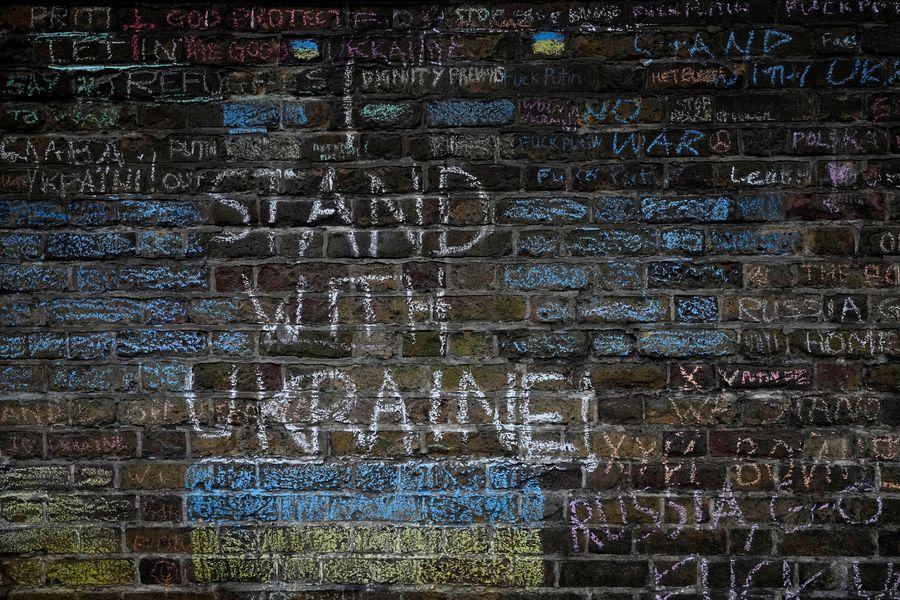
Russia's Invasion of Ukraine is a Wake Up Call
Published March 12, 2022 • Read time: 29m
Prior to Russia's invasion, I wrote that one of the benefits that Russia might see to war in Ukraine is an opportunity to showcase new military capabilities, impressing the world with what its modernized forces can do, much the same way that the U.S. impressed friends and foes alike in its fantastic, unanticipated dominance during the Gulf War. Perhaps this was one of Putin's intentions, but its clumsy prosecution thus far suggests instead that Russia sought to intimidate and miscalculated. Russia's lackluster performance is failing to impress the world's modern militaries and certainly the United States and NATO. It is also probably causing China to rethink some of its assumptions about its ability to roll over Taiwan. That said, it is the first European example of what appears to be a blatant attempt at territorial conquest through overwhelming military force since the Second World War. Although we cannot know how much Russia is willing to sacrifice economically, diplomatically and militarily to achieve its objectives, nor can we predict how the conflict will unfold or conclude, the first two weeks of conflict should already be causing political leaders to rethink some long-held strategic assumptions. Most importantly, in order to maintain the liberal world order, the West will likely need to consolidate its commitments, standing strong and arming up where it is determined to fight and seeking compromise where it is not. While compromise with dictators might be a bitter pill to swallow, Russia's and China's leaders are not fools; they are aggressive, ambitious, and seek to upend Western dominance. The worst outcome for the U.S.-led liberal world order would be to have its bluff called and not respond. And the worst policies are those that drive Russia and China together. Jingoistic, moralistic and nostalgic thinking must not divert Western leaders from interest-based thinking. Russia's invasion of Ukraine threatens to do just that. This paper examines seven areas where the world has changed strategically and offers nine practical suggestions for Western, particularly U.S. leaders to maintain dominance and prevent catastrophe in this new era.
I The world is becoming multipolar, not returning to Cold War bipolarity.
The end of the Cold War was a moment of triumph for the West and for the United States, which emerged as the first and only true modern global hegemon. Francis Fukayama famously declared it to be “the end of history.” The triumph was short-lived. While international terrorism never threatened U.S. hegemony, it did distract the U.S. while Russia and China grew stronger, the latter exponentially so. Now history has returned, but comfortable Cold War comparisons in regards to Russia are dangerously misleading.
The threat of Soviet aggression in Europe was the West’s top military focus during the Cold War. However, Soviet tanks never did come rolling through the Fulda Gap. Now, hundreds of miles to the east, a far weaker, poorer and diplomatically less potent Russia is rolling its military into Ukraine, causing some of the Cold War generation to draw parallels. It is impossible to turn on cable news or open up a mainstream periodical like the New York Times, without seeing a headline like “Mr. Putin Launches a Sequel to the Cold War” or “In Ukraine Crisis, the Looming Threat of a New Cold War.” The Washington Post ran an article entitled “Putin thinks he can win a new Cold War. He may be right.” Even Military.com published a piece entitled “A New Cold War Emerging as Russia Launches Full-Scale Invasion of Ukraine.” Politicians from both major parties have used this language. The top Republican on the House Foreign Affairs Committee, Representative Michael McCaul said “the U.S. is engaged in a new cold war with Russia.” The democrat Congressman Stephen Lynch, chair of the Subcommittee on National Security also called the situation in Europe “a new Cold War.” Top think tanks, like the Council on Foreign Relations and Brookings have used the Cold War analogy as well. This is just a tiny sampling of the myriad media platforms, think tanks, and bipartisan politicians’ statements that draw Cold War parallels to Putin’s Russia. Interestingly enough, for the past couple of years prior to this Ukraine crisis, the vast majority of the Cold War analogies cited China in the role of the new Soviet Union, a much more apt comparison. Clearly the West’s attention has been diverted.
Cold War analogies are inappropriate because China, not Russia, has the economic ability and stated desire to compete with the U.S. for global dominance. Russia, with its relatively tiny economy cannot compete with the West, but it can greatly help China, especially if the crisis distracts the West from the Indopacific and drives Russia to increase its ties to China. If China and Russia work together in a classic multipolar balancing strategy, the U.S. could soon see itself greatly overextended. It is out of these fears that some, like MG John Ferrari, U.S. Army (ret.), are arguing for a new defense strategy calling for a military ready to handle 2.5 wars instead of one at a time. The question is, does the U.S. have the resources for that? Unlike under bipolarity, where two superpowers compete by arms racing because no single country can provide much in the way of changing the balance of relative power through alliance, in multipolarity, countries can vastly improve their power by linking up. While the U.S. could and should boost its defense spending and encourage NATO to do the same, it would be far more feasible to come to an accord if possible with Russia in Europe, freeing up resources to focus on China, rather than driving the two together and trying to contain both.
One reason why this emerging period cannot be termed bipolar for many is because Russia still poses a peer strategic threat with its nuclear arsenal and harbors the ambition and potentially the ability to maintain a sphere of influence. Furthermore, Russia is an energy giant and China is energy thirsty. China, with its massive market can offer to supplant economic needs closed off to Russia by Western sanctions. In fact this is happening. China clearly has its own reasons for not condemning Russia. It sees its own narrative regarding Taiwan mirrored in Russia’s ”historical unity” justification for invading Ukraine; namely, that as a result of weakness in a balance of power which is nearing its end, Russia and China lost control of territory they once owned. Leaders throughout history have taken immense risks to regain what they consider lost territory, and leaders (and individuals) that believe themselves to be in the realm of loss have been shown to be much more risk acceptant. Leaders, like cats, are also more likely to accept risk when they believe themselves to be backed into a corner. Sand and Freeman at War on the Rocks warn that, just like how the U.S. policy of completely cutting off Japan’s fuel supply during the Second World War led them to attack Pearl Harbor, an action the Japanese knew would lead to an “unwinnable war,” if the West is “too successful” in economically isolating Russia, it could lead to acts of desperation. More likely, it will lead to deepening ties with China, both outcomes are undesirable for Western security.
Western leaders that wish to uphold world peace, and maintain the economic prosperity and justice upheld by a liberal world order, must realize that Russia and China are bonded in mutual dissatisfaction with the U.S. led order, yet they also have mutual suspicions, a history of conflict and many divergent interests. Western leaders should formulate strategy with the goal of exploiting their differences, not driving them together. Russia’s replacement of Mastercard and Visa with China’s Unionpay is a worrying development, foreboding what may come. With China being the real global rival to Western dominance, the U.S. should be seeking to cooperate with Russia and playing upon Russia’s legitimate fears of ending up a junior partner and perhaps even a client state in China’s sphere of influence.
II Clausewitz is not dead. Leaders still consider war a viable tool for achieving political aims.
Understanding the global strategic context requires looking at the strategic judgments behind actions without clouding your thinking with jingoism or moral judgments. This is hard to do when the world has such a ready villain in Putin, either as a cold and calculating tyrant or as a madman at the helm of a vast nuclear arsenal attacking a weaker neighbor, and such a ready hero in the brave and steadfast Zelensky defending his homeland from hostile invaders.
But, from a hard-nosed analytical perspective, it is impossible to escape certain reckonings. In Putin, we see a return of the Clausewitzian concept of unapologetic warfare for political ends, but did this really ever go away for the world’s most powerful?
Looking at the world like a chessboard, where one does not ask whether black or white is the "good guy" or the "bad guy," one is struck by certain realities. First, the United States is still far more powerful than Russia in all national power elements: diplomatic, informational, military, and economic. Indeed, aside from a nuclear arsenal, which Russia and the U.S. both have in superfluous quantities to destroy the world several times over, the only country that has the potential to eventually rival the U.S. in any of these other areas is China. Second, as the opening weeks of Russia's war in Ukraine have shown, the U.S. and its allies have immense economic, diplomatic and informational advantages over Russia. Third, some might say that the United States is blessed with having two distinct borders in the Atlantic and Pacific oceans and not a single great power rival anywhere in the hemisphere. I would not call this a blessing of nature, for that implies an accident while this incredibly strategically advantageous outcome, although enabled by geography, is by design. The U.S. has zealously guarded its hemisphere and articulated this as a core element of its national strategy in the Monroe Doctrine going back to 1823. Since then, the U.S. has intervened in sovereign nations several times to defend against the rise of a great power-backed alliance on its border and defend its less existential interests. Most comparable to the expansion of NATO, When the Soviet Union brought Cuba into its sphere and militarized it, the U.S. saw this as intolerable. Yes, Cuba was a sovereign nation, free according to Western principles of liberty and self-determination to decide with whom to ally and what weapons to allow on its soil. But, the U.S. would not accept it for obvious reasons.
Like the U.S., Russia has not hesitated to intervene in surrounding countries to promote its perceived national interest. Due to its geography, Russia has never had the option of having an entire hemisphere to itself. Throughout its history, it has faced powerful rivals on vulnerable frontiers with no natural barriers. Russia's most formidable foes have always been to its west, so it is not difficult to understand Russia's apprehension that NATO, the world's most powerful military alliance and one that has been rhetorically hostile to Russia for the last few years, might expand closer to its capital and main population centers. Indeed, Ambassador George Kennan, the author of "the long Telegram" that guided U.S. thinking for the duration of the Cold War, argued in 1998 that NATO expansion was "the beginning of a new cold war," saying, "I think the Russians will gradually react quite adversely and it will affect their policies. I think it is a tragic mistake." Henry Kissinger also strongly advised against expanding NATO eastward to include Ukraine, arguing for a compromise that cemented its neutral status. This was not a radical view. Many of President Clinton's closest advisers took that position. They lost out to voices who advocated for rapid NATO “enlargement.'' The ghosts of the U.S. decision to take advantage of its newfound preponderance of power would come back to haunt European peace in 2008, 2014 and now. Boris Yeltsin’s drunken ravings over NATO expansion in 1994 have been echoed since at least 2007 by the eminently sober Vladimir Putin. As for the U.S., it faces no equivalently powerful alliance anywhere near it.
Finally, even outside of its hemisphere, the U.S. has unilaterally decided to use military force to secure its interests as it defined them against sovereign nations. No American wants to look in the mirror and see Vladimir Putin. Still, it is hard not to draw parallels between the U.S. invasion of the sovereign nation of Iraq on the false pretenses of Saddam Hussein's ties to al-Qaeda, 9/11. A non-existent nuclear weapons program and Putin's various indefensible justifications for invading Ukraine, ostensibly to protect Russian national security interests, e.g., the arguably equally bogus claim that Zelensky is a Nazi seeking nuclear weapons. Indeed it is likely that Putin is cynically claiming that ‘Ukraine is making WMDs!’ to deliberately recall the U.S. invasion of Iraq, something Putin strongly protested. Despite the U.S. having a more discriminating way of waging war to avoid civilian casualties, U.S. interventions have also resulted in hundreds of thousands of civilian deaths. For instance, despite America's ostensibly good intentions of rebuilding Iraq as a democracy, its fundamental ignorance of Iraq's religious and ethnic rivalries led it to throw its support behind the Shia partisan Maliki, creating absolute havoc in Iraq for over a decade.
In reality, the best explanation for each country’s unilateral actions is that a strong country decided that it could use war to achieve its desired political ends against a weak country. The U.S. now appears shocked that its post-Cold War monopoly on unilateral interventions seems to be at its end. I am not stating this to be unpatriotic. Nor am I advocating a more dovish foreign policy. I fully support the U.S. acting in accordance with its interests, even if this requires unilateral actions. In a famous 2015 interview, candidate Trump notoriously responded to Bill O'reilly's assertion that "Putin is a killer" by saying, "there are a lot of killers. You think our country's so innocent?" While many on both the left and right clutched their pearls, their greatest opprobrium stemmed from the fact that Trump had crudely, bluntly, and worst of all publicly stated something that is patently true and that doves have been saying for decades, the difference being that he did not say it to deride America or apologize for it, he said it with pride, an admission that the U.S. uses its strength to its advantage and should continue to do so. While the U.S. should maintain the right to use force to defend its interests, moral protestations should be expected to be subject to skepticism. Could anyone imagine if Russia floated the idea of a "no-fly zone" over Iraq in 2003?
Although this is beside the point, I do believe in the moral superiority of democracy and a voluntary alliance over autocracy and a coerced one, and of the more humane manner in which the U.S. wages war. However, when one looks at unilateral interventions in terms of the strong doing what they think is in their interests and what they think they can get away with, it is impossible to escape the realization that the balance of power that allowed the U.S. the exceptionalism to be the only great power to act unilaterally since the Cold War ended is quickly shifting. The U.S. no longer holds the same vast economic or military spending superiority over all other countries, and the rise of China poses a greater problem to the Western-backed order than Putin's invasion of Ukraine does. If the West must make economic sacrifices to economically isolate Russia, imagine what economically isolating China would entail?
These new power dynamics are going to require new thinking about what and where the U.S. should defend and where the U.S. might need to pull back and consolidate. This should be realistic and driven by the national interest, more narrowly defined as defending our military strength and economic wellbeing and the credibility of the alliances that we are already committed to. The world cannot afford for Russia or China to call America’s bluff in Taiwan or a NATO country, but the more it overstretched its commitments, the more likely this reality becomes. Russia’s invasion of Ukraine is a tragedy, but if it invaded a Ukraine that was already part of NATO, it would be a strategic disaster with two terrible options, either nuclear war or the loss of all credibility. To stand up to aggression where it really matters, the U.S. needs to fix what Hal Brands calls its “strategic deficit" by rolling back some of its commitments to defend interests it has no actual desire to defend. Those like Professor Stephen Van Evera, who advocated negotiating Ukrainian neutrality prior to Putin's invasion, believed that Ukraine falls squarely in this category.
III Deterrence based on the principle of nuclear mutual assured destruction appears to have held. Will this continue?
Throughout the Cold War, America’s strategic thinkers came to understand that the ability to nuke an enemy into oblivion might not be enough to deter an attack on an ally if the enemy does not believe that the protector will risk nuclear war to defend its ally. That is why once the Soviet Union caught up to the U.S. in terms of nuclear weapons, the U.S. shifted to a doctrine of Flexible Response that sought to give the NATO alliance conventional capabilities to counter the enemy. The problem with deterrence is that it is a dog that usually does not bark, meaning that it works when nothing happens. NATO clearly failed to deter Russia from invading Ukraine, but did it deter Russia from invading Lithuania? Perhaps, but perhaps not. The Russians can always make the claim that they simply never intended to invade Lithuania, whether we believe it or not is another story, but the point is that usually absent backing down on an extremely explicit threat, which leaders seek to avoid, it is impossible to know for sure if deterrence worked. Article five has never actually been tested, and hopefully, it never will, but strategic planning requires more than hope. This leads to the real question, will it work? Russia's invasion of Ukraine has led the West to reckon with the potential of an attack on NATO or a Chinese attack on Taiwan. Can we rest assured that leaders of these regimes will not be willing to gamble on an invasion under the assumption that if it came down to it, NATO/ the U.S. would back down rather than risk nuclear war? Another important question that every Western leader must have in the back of their mind is, will we?
During the Cold War, strategic thinkers considered how nuclear powers could act against each other without going to war. Thomas Schelling’s concept of strategic manipulation of risk highlights the strategy of “brinkmanship.” The question is, while tragic escalation was averted during the Cuban Missile Crisis, how many times will the crisis be averted if we test each other more often? Manipulating risk is risky, go figure. The Ukraine conflict is bringing this into focus. Is Putin willing to push the button if NATO gets involved? Some experts, like Fiona Hill, clearly think so. A better question is, how far can we push the envelope? With options like crushing economic sanctions, cyberattacks, sending jets to arm Ukraine through Poland, or implementing no-fly zones, leaders must grapple with this question. A Reuters poll showing 74 percent of Americans support a no-fly zone over Ukraine. One must wonder how many would have responded that way if the pollster explained to them that this likely meant war with a nuclear power? Prioritizing caution, NATO has ruled this out for now.
Going forwards, whether facing China in the South China Sea or Russia in Eurasia, leaders must keep in mind that a standoff between two nuclear superpowers is like a game of chicken. Neither side wants war with each other, but the side that can convince its opponent that it cares more is the side likely to get its way. The West must grapple with the very difficult question of how to deter a determined adversary from acting in its own region when because of geography and history, that adversary has an advantage in convincing the west that it cares more.
Two main competing theories are relevant to deterring an adversary like Russia or China from invading its neighbor. The Spiral Model warns that arming the neighbor risks convincing the adversary of already held beliefs that it is threatened, creating a self-fulfilling prophecy and risking a spiral into conflict. The deterrence model suggests the opposite, that weakness invites aggression. In my view, the deterrence model is more applicable the more you believe that the rival truly has aggressive intentions towards its neighbor, although it is not without risk. Therefore, since China has clearly stated its intent to conquer Taiwan, the West should arm it. The situation in Ukraine might not have been similar prior to Putin's invasion, but now that the invasion has begun, the more painful the West can make Putin's war, the better able it will be to deter would-be aggressors in the future. The trick is to impose just enough pain in just the right way to avoid tragic escalation. Economic tools likely possess the least likelihood for wider conflict, cyberattacks become riskier, arming Ukraine becomes riskier still, and direct military intervention poses the greatest risk.
IV What are the limits of economic tools, and how can they be better applied?
Strong economic tools are critical for deterring nuclear adversaries without risking nuclear war. The West has largely shown that it can severely punish Russia economically. Whether this will affect the conflict remains to be seen. As of now, aside from Russia's energy sector, relative to a country like China, it is not difficult to sanction Russia since its economy is relatively small and does not provide much in the way of critical trade. Europe has left itself highly vulnerable due to its major dependence on Russian gas. This is something that former U.S. President Donald Trump repeatedly warned about. Unfortunately, it took Putin's war machine to convince Europe's gas dependent nations of this necessity. Going forward, leaders will need to balance environmentalist positions with the need for reliable sources of energy. The U.S. could produce more oil and natural gas, and European countries could emulate France and promote a nuclear-based energy infrastructure. The West should avoid swapping energy purchases from one adversarial regime to another, such as Iran or Venezuela. Finally, while economic tools seem to be very effective and not prohibitively costly to implement against Russia, will they be seen as credible against a country as integrated as China?
V What does Putin’s invasion mean for small and mid-sized powers?
If Putin manages to achieve its objectives through violence in Ukraine, what will non-aligned countries neighboring Russia and China decide to do to ensure their sovereignty going forward? One option is "Finlandization," meaning to comply with the demands of a stronger country as Finland did during the Cold War. This is clearly unpopular. No nation wants to be bullied and accept it. But, currently, Ukraine is in the midst of negotiations with Russia, which are apparently "much more serious than what the West has been saying." If Ukraine concedes to demands that are harsher than what Putin asked for before the invasion, this will be seen not only as a win for Putin and military aggression in general but as a major signal to weaker powers to submit to the demands of their more powerful neighbors. This is one of the reasons that the West is hoping Zelensky stands strong. Whether Putin secures strategic objectives in Ukraine and then negotiates a removal of sanctions, perhaps including the ones from 2014 in exchange for peace, or fails miserably, depends on how the military conflict goes.
Another option is that smaller countries will clamor to join an alliance. The question is whether the U.S. wants to risk NATO's credibility on the assumption that it will go to war on behalf of more countries. Finally, more small countries are likely to seek their own nuclear deterrent. As I argued regarding Iran, its leaders saw the fate of Saddam Hussein and Muammar Gaddafi, both of whom suffered humiliating and violent deaths at the hands of a foreign intervention after giving up their nuclear programs. Conversely, Pakistan and North Korea both succeeded in getting nuclear weapons, and their leaders remain in power. Ukraine gave up its control over thousands of Soviet nuclear weapons in exchange for U.S., U.K. and Russian promises to guarantee Ukraine's security in the 1994 Budapest Memorandum. They must regret that.
VI The role of information warfare in the age of social media
The importance of winning the information war in a world where any citizen can document conflict in real-time and send it out to billions of people is nothing new. Israel understood this, and the IDF enacted a very active presence on Twitter and other social media platforms, with soldiers specifically trained and assigned to put out a narrative and counter the opponent’s narrative. The IDF has also used social media for operational effect, manipulating Hamas militants to take positions that were then targeted by dishonestly tweeting that IDF troops had entered Gaza.
Russia is performing far below expectations in what the world has long considered its strong suit, propaganda. Dishonesty as a tool in information warfare is not new, from Russian bots on Twitter in 2016 to the use by various actors of pictures from one conflict as evidence of atrocities in another conflict to create outrage and sympathy. In this conflict, we are seeing thus far a very effective use of social media by Ukraine's leaders, boosting morale, boosting international sympathy and engagement, and sowing doubt in the enemy.
Using misleading casualty figures as part of the information war is also not new. Countries have falsified military statistics many times in the past. Still, the level of what appears to be blatant falsification coming from the official sources of a European government is understandable but surprising nonetheless. Ukraine appears to be lying about their clearly admirable and surprisingly erstwhile resistance to Russia, which is nowhere near as successful as they claim. As of March 9, Ukraine's Ministry of Foreign Affairs claims to have killed over 12,000 Russian soldiers and destroyed over 300 Russian tanks. Russia puts its combat deaths at around 450, and the U.S. estimates between 2000-4000. Ukraine's likely exaggeration is obviously aimed at boosting their morale and demoralizing the Russians. In Ukraine's desperate struggle to survive, this tactic is understandable, but it is also alarming in what it says about how a government views its ability to manipulate its populace. When a fringe conspiratorial site puts out blatantly false information, the vast majority of people dismiss it without question due to the source, but these numbers are not coming from Infowars or some other oddball site. They are coming from official government offices, the type of sources most would cite as credible. The Ukrainian government appears to be betting that more people will be influenced in the direction they intend by putting out misinformation than will be convinced that they are being lied to. While the cause is admirable in this case, the nefarious potential of purposeful manipulation portends Orwellian dystopia.
VII The role of civilians as soldiers in defense of their homeland?
Civilians defending their homeland is nothing new. Putin, an avid student of Russian history, knows and celebrates, as so many Russians do, the civilian effort to defend Moscow, Leningrad and Stalingrad in WWII. Aside from building obstacles to stymie Russia’s advance, Ukraine is encouraging its citizens to throw Molotov Cocktails and pick up arms, even allegedly freeing prisoners to take up arms. The West is cheering the many heroic examples of Ukrainian civilians, both real and not, from beauty queens to athletes to a former leader picking up arms to defend their homeland. However, it is important to understand that insurgency is a double-edged sword. While so many U.S. experts and veterans of the Global War on Terror know what determined insurgents can do and believe that they can raise the stakes enormously for Russia, they generally cease to be treated as civilians when civilians pick up arms. The Geneva Convention's Additional Protocol I, Article 51.3,8, states that civilians enjoy protection “unless and for such time as they take a direct part in hostilities.” Those who directly participate in hostilities may be attacked in the same manner as members of an enemy’s military. Therefore, promoting civilians to take up arms risks escalating a humanitarian catastrophe.
When noncombatants put their lives on the line to defend the nation's national interests, leaders must sincerely ask themselves, if they can negotiate to obtain an outcome that they might not like but can live with, should they not pursue a policy that defends their civilians instead of using their civilians to pursue better outcomes at the negotiating table? The answer depends on how the invaded country sees its military chances, the invader's demands, and whether it believes the negotiated settlement will be upheld. Bringing in outside powers to guarantee that the invader does not re-invade once the invaded country concedes is a possibility, but it brings us back to the difficult debate over whether an expanded alliance boosts deterrence or sets the alliance up to be challenged and back down.
Takeaways
The first two weeks of this conflict also contain reasons for optimism. Russia's invasion of Ukraine brings a new sense of urgency to rethinking strategic assumptions that have guided U.S. grand strategy for decades, including the future of NATO, western global dominance, unilateral interventions and nuclear deterrence. Perhaps Russia's military is not as formidable as many thought, although renowned Russia expert Michael Kofman warned that its early showing here could be reminiscent of its dismal performance in the Winter War against Finland in 1939, which convinced Hitler that it would be easy to roll over the Soviet Union. Also, it appears that the West is quite capable of uniting to punish Russia economically and diplomatically, but will this succeed, and will it deter China? Many of the lessons are contingent on how this conflict unfolds, but assuming that Russia can achieve some level of its objectives through military force at a cost that it is willing to pay, western thinkers should prepare for a world where great powers, most importantly China, will see military force as a legitimate tool for achieving long-stated political ends. This should be a wake up call for the world that when China states that it plans to take Taiwan by force, this is not an articulation of some sort of hypothetical grandiose dream, but a distinct possibility in the near future. The following takeaways provide suggestions for Western to navigate this new era.
- The U.S. and the West must not lose focus on the urgent need to compete with China.
- The U.S. should consolidate its commitments in order to deter China. This might require swallowing the bitter pill of coming to an accord with Russia in Eurasia, protecting NATO and forswearing its expansion.
- The West should negotiate with Russia and NATO over military posture in Europe and bring China into arms control agreements like the INF Treaty.
- The U.S. and NATO allies should boost defense spending and arm vulnerable countries to the teeth if they strongly believe that their neighbors seek to invade them. The West can use Russia’s invasion of Ukraine to argue that this is not intended to provoke but to defend.
- Nuclear brinkmanship is not a relic of the Cold War, and it may return. Russia has spent decades thinking in these terms, while the U.S. has not. The U.S. needs a strategy of nuclear escalation management.
- Western powers need to end their reliance on China for essential resources and products such as rare earth elements just as they need alternatives to Russian energy.
- The West should reaffirm its commitment to nuclear nonproliferation. This is especially urgent as world powers are seeking to finalize a deal with Iran.
- Information warfare and competition are important. With trust in the media at near record lows, and as manipulation and technology like "deep fakes" become more rampant, governments should avoid actions that harm the credibility of their official messages.
- Governments should assume that citizens might fight for their homelands. To avoid the potential for catastrophe, leaders must think about upholding the distinction principle in the Law of Armed Conflict.
These recommendations are an incomplete list of the strategic questions leaders and populations should be asking themselves as Russia's invasion of Ukraine awakens the world to the realization that just because the Cold War ended and the Global War on Terror seems to be wrapping up, the world is still a dangerous place, perhaps now more than ever. Strong powers still see military force as an option, and the U.S. is strong and powerful but unlikely to ever be as hegemonically powerful as it once was. Clear-eyed, interests based thinking should lead the U.S. to consolidate its global commitments to provide a stronger deterrent where we are willing but prefer not to fight, and weigh the case specific costs and benefits of either arming vulnerable countries to the teeth or coming to acceptable bargains with unsavory actors where we are not actually willing to fight, but they likely are.
Jeremiah Rozman currently serves in the U.S. Army. He has a Ph.D. in International Relations from the University of Virginia. He has published articles on a range of national security and foreign policy issues, including great power competition, asymmetric warfare, Middle East politics, counterterrorism, conflict resolution, military doctrine and strategy, and U.S. Army initiatives. From 2006-2009 he served as an infantryman in the IDF.
The opinions and analysis provided in this article are the authors' own and not that of the Department of Defense or the U.S. Army.

The Army’s AI Cyber Defenders Need a Proven Stand-Down Order
By Gleb Tsipursky • RealClearDefense
After the Silence
By Chase Skylar DeMayo • RealClearDefense
Defense Chip Procurement Needs a Recovery Test
By Percy Yixuanchen Yu • RealClearDefense
FORTRESS America Must Measure Missions, Not Megawatts
By Burak Oktenli • RealClearDefense
After the Midterms, the Right Strategy Against Iran
By Lance Gordon • RealClearDefense
After the Silence
By Chase Skylar DeMayo • RealClearDefense
Underwater Arms Race Puts U.S. Naval Supremacy at Risk
By Tom O'Connor, Newsweek
New Facilities To Pump Out Upgraded F/A-18E/F Super Hornets
By Trevithick, WarZone
U.S. Navy Expands Tomahawk Warhead Production
By Naval News Staff, Naval News
SSN(X) Attack Boat Will be a Swift, Lethal Mothership for Undersea Drones
By USNI N.