

Biden's Nuclear Posture Review Is Too Timid for 2022
Last updated 07:50 PM EST • Read time: 5m
Nuclear weapons are serious capabilities, and declaratory policies are serious commitments. So readers who have followed the U.S. government’s nuclear posture product line since President Bill Clinton’s first review in 1994 have learned to expect both elegant wordsmithing and substantial elements of continuity in a policy that has long been broadly bipartisan. Moreover, it’s impossible to divorce thinking about nuclear weapons from the level of threat in the international security environment. Darker security environments naturally reinforce policy conservatism—and the current security environment is as gloomy as it has been in many a year.
It’s no surprise, then, that President Joe Biden’s recently released nuclear posture review reflects more continuity than change in relation to its predecessors. It probably disappoints the progressive side of the Democratic Party, which had been lobbying Biden to follow his instincts in favour of further nuclear restraint. On the other hand, continuity also disappoints those who had hoped for a more robust nuclear response in a rapidly darkening security environment.
Personally, I’d have liked to see a review that wrestled rather more energetically with the challenges of the future. Unlike its predecessors, this NPR anticipates the imminent arrival of a tripolar nuclear world. It briefly sketches the problems of that world but makes no effort to solve them. Granted, there aren’t easy answers. Truels—three-cornered duels—are, like the classical three-body problem, not amenable to simple solutions. And both nuclear deterrence and assurance will struggle more in a tripolar world, because the credibility of threats must decrease in a world where a third player would be the unintended beneficiary.
In place of such wrestling, readers will find an administration still debating itself.
Back and forth swings a debate about whether deterring, and if necessary responding to, nuclear weapons use should be the ‘sole purpose’ of America’s nuclear arsenal. The NPR settles on ‘fundamental purpose’, not least because a sole-purpose statement would spook U.S. allies. But then it says the U.S. will keep trying to get to a sole-purpose position anyway. Implicit in the text, and explicit in former Pentagon official Leonor Tomero’s comments at the launch of the NPR, is a judgement that America’s allies oppose a sole-purpose declaration mainly due to ignorance, and that better-educated allied elites could be brought on board.
Back and forth swings a debate about salience. The U.S. nuclear deterrent is ‘foundational to broader U.S. defense strategy and the extended deterrence commitments we have made to allies and partners’. And, it says, ‘For the foreseeable future, nuclear weapons will continue to provide unique deterrence effects that no other element of U.S. military power can replace.’ But the review promptly shifts gear, and states that the U.S. will continue to reduce the salience of nuclear weapons in its arsenal, and its reliance on nuclear weapons. It will do so at a time when great-power adversaries are increasing the salience of nuclear weapons in their own arsenals.
Back and forth swings a debate about arms control and its place in the broader strategic setting. Mutual, verifiable arms-control agreements can provide a lasting reduction in the size of nuclear arsenals and the risks of nuclear war. Left unanswered is the problem of how to reach such agreements without willing, responsible and trustworthy partners. China has declined to participate in formal arms-control frameworks on numerous occasions. And the statement of the leaders of the P5 nuclear-weapon states on 3 January that a nuclear war could not be won and must never be fought, preceded by 52 days Russian President Vladimir Putin’s invasion of Ukraine and the coercive nuclear threats that accompanied it.
Beyond the NPR, but closely linked to it, is a broader debate over the future of the sea-launched cruise missile program announced in the Trump administration’s NPR.
Biden’s termination of the program, foreshadowed in the release of the classified version of the NPR back in March, provoked congressional advocates to restore its funding. In the unclassified version, it’s still cancelled.
No actual replacement for the old land-attack, nuclear-armed Tomahawk missile yet exists—except as a drawing on a piece of paper. But therein lies one of the central problems for the NPR. The long-overdue, multi-decade modernisation of the nuclear triad currently underway is sucking the oxygen out of other proposals for force development. Such proposals are increasingly canvassed in the media by foreign-policy pundits. Franklin Miller has suggested increasing warhead numbers substantially beyond those agreed in New START; Hal Brands has urged redevelopment of U.S. skills in arms racing. Revolutionary times cry out for greater boldness.
The NPR is responsible and balanced, but it’s not bold. Oddly missing is the sense that we’re living in transformational times—odd, because that’s a major theme in the Biden administration’s national defence strategy, released on the same day as the NPR. It also states that hedging against uncertainty will no longer be ‘a formal role’ of nuclear weapons. What? We’re sliding into a decade riddled with uncertainty, a decade that will decide the future of the world order for many years to come, but U.S. nuclear weapons are no longer a hedge against uncertainty?
So, what’s the balance overall? Well, Biden deserves credit for holding the line on modernisation; for fighting off those who wanted to move to a dyad, or to a no-first-use or a sole-purpose declaration; and for supporting stronger extended deterrence arrangements with allies. In short, he deserves credit for guiding the NPR through a relatively unsupportive political environment. But, strategically, this NPR looks too timid for current-day settings. It fiddles at the margins with U.S. declaratory policy and nuclear forces at a time when Russia and China are moving much more aggressively—Russia to fight wars of conquest under the nuclear shadow; China to triple the size of its nuclear arsenal.
These are difficult days, the harbinger of an even more difficult future, and U.S. nuclear policy must adapt to address those new challenges.
Rod Lyon is a senior fellow at ASPI.
This article appeared originally at The Strategist (ASPI).

Trump's Disrupt First, Negotiate Second: Greenland in Focus
By Meda Parameswara Reddy • RealClearDefense
In Seeking Peace With Beijing, Taipei Is an Asset, Not a Burden
By Alexandru Filip • RealClearDefense
Strike First: Israel's Inevitable Doctrine for the Iranian Axis
By Lance Gordon • RealClearDefense
It’s Not President Trump but Thomas Friedman Who Should Be Ashamed
By Francis P. Sempa • RealClearDefense
Putin, Plague, and America’s Biodefense Gap
By Ryan Kane • RealClearDefense

U.S. and Japan Begin Naval Exercises Near Taiwan
By Mari Yamaguchi • Associated PressU.S. and Japan Begin Naval Exercises Near Taiwan
By Mari Yamaguchi, AP
U.S. Navy, Gecko Robotics Surge AI Maintenance Contract
By Ceder, Simkins, Navy T.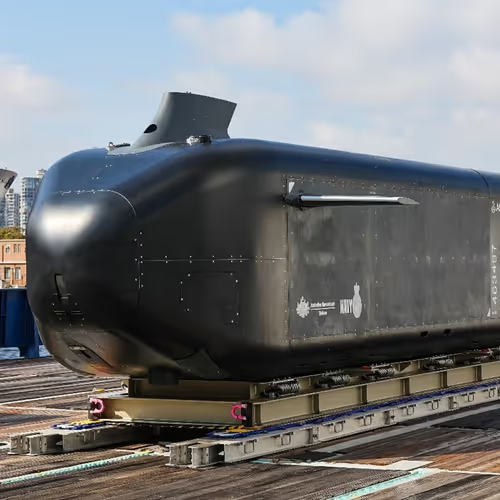
Ghost Shark XL-AUV Payload Bay Seen For First Time
By Thomas Newdick, The WarZone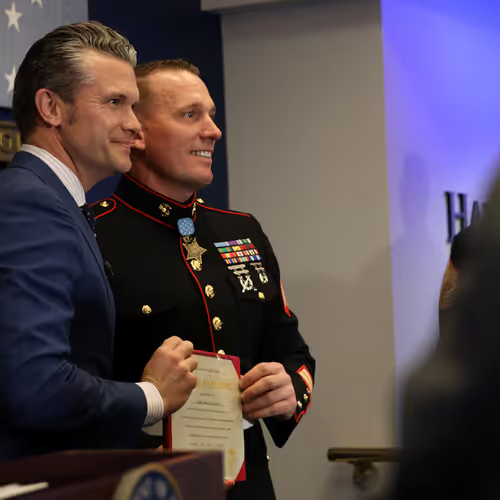
Dakota Meyer Tapped As Barracks Task Force Senior Advisor
By C. Stassis, MC Times