
Caught Between Scylla and Charybdis
Published Sept. 17, 2024 • Read time: 7m
Caught Between Scylla and Charybdis: Canada’s Liberal Government, U.S. Defense Agreements, and Policy Dilemmas
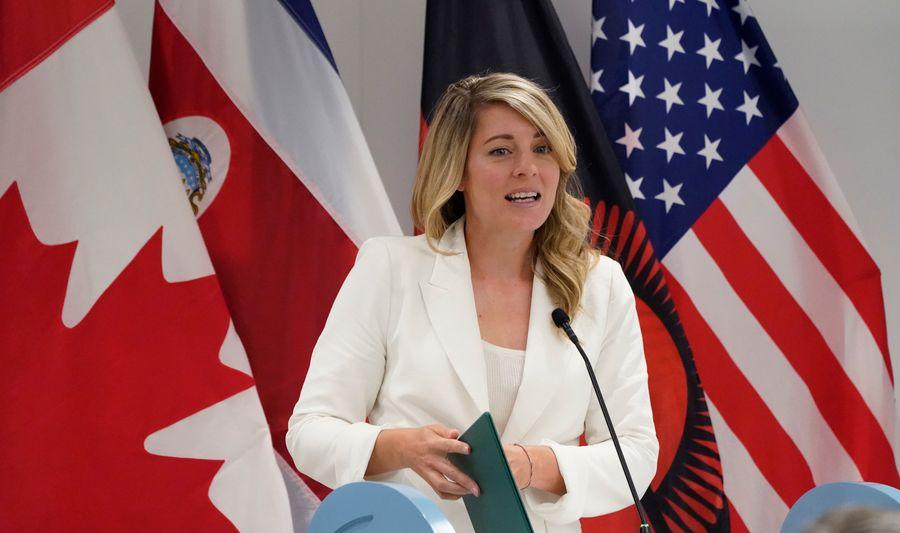
The Liberal Party of Canada, under Prime Minister Justin Trudeau, is facing an increasingly untenable dilemma, caught between its international defense commitments and its domestic political priorities. On one side is Canada’s deeply integrated defense relationship with the United States, cemented through treaties like the Defense Production Sharing Agreement (DPSA). On the other side are the party's ethical commitments, shaped by public opinion and foreign policy objectives, which Foreign Minister Mélanie Joly has emphasized in recent government pronouncements. Joly’s clear stance against military exports to Israel, underscored by her decision to block the sale of Canadian-made ammunition destined for Israel via the United States, exemplifies this tension. While the Trudeau government seeks to uphold its political and ethical values, particularly in the face of international conflicts, these actions risk undermining Canada’s treaty obligations with its closest ally. This article argues that the Liberal government’s foreign policy choices, particularly Joly’s recent embargo on arms to Israel, have placed Canada in a difficult and perhaps irresolvable position, threatening to erode its standing as a reliable defense partner – with potentially long-term consequences for its U.S. relations.
Canada-U.S. Defense Production Sharing Agreement: A Pillar of Cooperation
Since 1956, the Defense Production Sharing Agreement (DPSA) has stood as a cornerstone of Canada-U.S. defense cooperation, symbolizing a deeply integrated industrial base. This agreement allows Canadian firms to access the American defense market, and vice versa, without many of the bureaucratic and legal obstacles that typically come with cross-border arms trade. By participating in this defense production partnership, Canada ensures both its economic and strategic ties to its southern neighbor.
This relationship goes far beyond simple economic transactions. The DPSA allows Canada to be seen as a reliable partner in the broader Western defense framework, contributing to the collective security of NATO and Western allies. In a global environment where alliances and trust matter, maintaining this relationship without interruption is vital for Canada’s defense sector, both economically and geopolitically. Any deviation from these commitments could have significant knock-on effects, straining not only economic ties but also long-standing defense collaborations.
However, the Liberal government's decision to block the sale of ammunition from Quebec-based General Dynamics to the U.S. government, due to its potential use by Israel in its conflict with Hamas, places this essential partnership at risk.
Political Pressures and Ethical Commitments
The Trudeau government’s foreign policy, particularly under Foreign Affairs Minister Mélanie Joly, has often leaned toward a progressive and human-rights-centered approach. This ideological stance is rooted in the Liberal Party’s broader political ethos, one that values diplomacy, humanitarianism, and a commitment to multilateralism. However, this ethos is being tested as the Israeli-Palestinian conflict escalates, leading to difficult policy decisions regarding arms exports.
Canada’s decision to impose an embargo on military exports to Israel since January of this year is a reflection of the pressure the Liberal government faces from domestic political constituencies, as well as from international human rights advocates who are critical of Israeli actions in Gaza. Joly has made it clear that no weapons or weapon components manufactured in Canada would be allowed to reach Israel, a stance that aligns with the party's political base but puts it at odds with longstanding international defense obligations.
The dilemma is clear: blocking arms exports to Israel, even indirectly through the United States, appeases certain progressive factions within Canada while raising serious doubts about Canada’s reliability as a defense partner, particularly in the eyes of the United States. This has led to concerns from experts like defense procurement specialist Philippe Lagassé, who has highlighted the potential violation of the DPSA and warned that such actions could lead the U.S. to reassess the terms of its defense cooperation with Canada.
Scylla and Charybdis: A Geopolitical Dilemma
The Liberal government’s current predicament can be likened to the ancient Greek metaphor of Scylla and Charybdis, a situation where two equally dangerous choices loom large, and any decision threatens harm. On one side, the government is pressured by its political commitments and ethical concerns, particularly in relation to the human toll of the Israeli-Palestinian conflict. On the other, it risks severely damaging a critical defense partnership with the United States, one that has been carefully nurtured for decades and that is essential for Canada’s security and economic interests.
Choosing to prioritize human rights concerns and political optics over treaty obligations may satisfy the Liberal government’s base and silence some critics, but it does so at the expense of the country’s broader strategic interests. The U.S. is Canada’s largest defense partner, and the integrated defense industrial base that the DPSA establishes is central to Canada’s ability to maintain a modern and competitive military.
Moreover, Canada’s actions could have wider consequences, not only in terms of defense but also in its overall bilateral relationship with the United States. In a time of increasing American protectionism and isolationist tendencies, particularly under past administrations, Canada has worked hard to maintain a stable and cooperative relationship with Washington. The Biden administration, while more globally focused than its predecessor, is still operating in an environment where American interests are paramount. Any perceived weakening of Canadian reliability in defense matters could lead to the U.S. reevaluating the terms of the DPSA or, at the very least, becoming more cautious about granting Canada certain exceptions or access to sensitive defense technologies.
The Costs of Political Ideals
The costs of this policy decision extend beyond the immediate diplomatic tension with the U.S. and Israel. For Canada’s defense industry, particularly companies like General Dynamics, the uncertainty surrounding export permits and government intervention in defense deals creates a business environment fraught with unpredictability. For a country with a relatively small defense industry compared to larger powers like the U.S. or France, maintaining stable and reliable access to foreign markets is crucial for sustaining industrial growth and technological innovation. The potential for long-term economic damage to Canada’s defense sector, should U.S. defense contracts dry up or be diverted elsewhere, cannot be underestimated.
In addition, Canada’s credibility as a participant in multilateral defense and security alliances like NATO could be called into question. If Canada is seen as prioritizing its domestic political calculations over its international defense commitments, this could weaken its standing within these alliances. Other allies, particularly those in Europe who have strong ties with both the U.S. and Israel, may begin to question Canada’s reliability as a defense partner, further isolating Ottawa on the global stage.
Finding a Path Forward
The Liberal government’s current course of action presents significant challenges, and resolving this tension will require careful diplomatic maneuvering. On the one hand, Canada cannot afford to undermine its longstanding defense relationship with the U.S., especially as global security threats evolve, and cooperation becomes even more critical. On the other, the government must navigate the domestic and international political pressures that come with its stance on Israel and the Israeli-Palestinian conflict.
One potential solution could be a recalibration of Canada’s export control policies, finding a middle ground that allows the government to uphold its ethical commitments without jeopardizing its international defense obligations. This might involve establishing clearer guidelines for military exports that strike a balance between human rights considerations and Canada’s treaty commitments, ensuring that Canada’s defense industry is not left in the lurch.
At the same time, diplomatic efforts to reassure the U.S. of Canada’s continued commitment to the DPSA and its role in the North American defense industrial base will be critical. Engaging in high-level discussions to reaffirm the importance of the bilateral defense relationship, while also explaining the domestic political pressures at play, may help mitigate some of the fallout from this decision.
Conclusion
The Liberal government in Canada is indeed caught between a Scylla and Charybdis, where either course of action threatens serious consequences. However, navigating this political and diplomatic minefield will require more than simply choosing one side over the other. It will require a nuanced approach that balances political ideals with treaty obligations, one that acknowledges the complexity of Canada’s international relationships while maintaining a commitment to its ethical principles.
Andrew Latham, Ph.D., a tenured professor at Macalester College in Saint Paul, Minnesota. He is also a Senior Washington Fellow with the Institute for Peace and Diplomacy in Ottawa and a non-resident fellow with DefensePriorities, a think tank in Washington, DC.

The Army’s AI Cyber Defenders Need a Proven Stand-Down Order
By Gleb Tsipursky • RealClearDefense
After the Silence
By Chase Skylar DeMayo • RealClearDefense
Defense Chip Procurement Needs a Recovery Test
By Percy Yixuanchen Yu • RealClearDefense
FORTRESS America Must Measure Missions, Not Megawatts
By Burak Oktenli • RealClearDefense
After the Midterms, the Right Strategy Against Iran
By Lance Gordon • RealClearDefense
After the Silence
By Chase Skylar DeMayo • RealClearDefense
Underwater Arms Race Puts U.S. Naval Supremacy at Risk
By Tom O'Connor, Newsweek
New Facilities To Pump Out Upgraded F/A-18E/F Super Hornets
By Trevithick, WarZone
U.S. Navy Expands Tomahawk Warhead Production
By Naval News Staff, Naval News
SSN(X) Attack Boat Will be a Swift, Lethal Mothership for Undersea Drones
By USNI N.