
Deterring a Cornered Rat: Making Putin Think Twice About the Use of Nuclear Weapons
Last updated 08:26 AM EDT • Read time: 5m
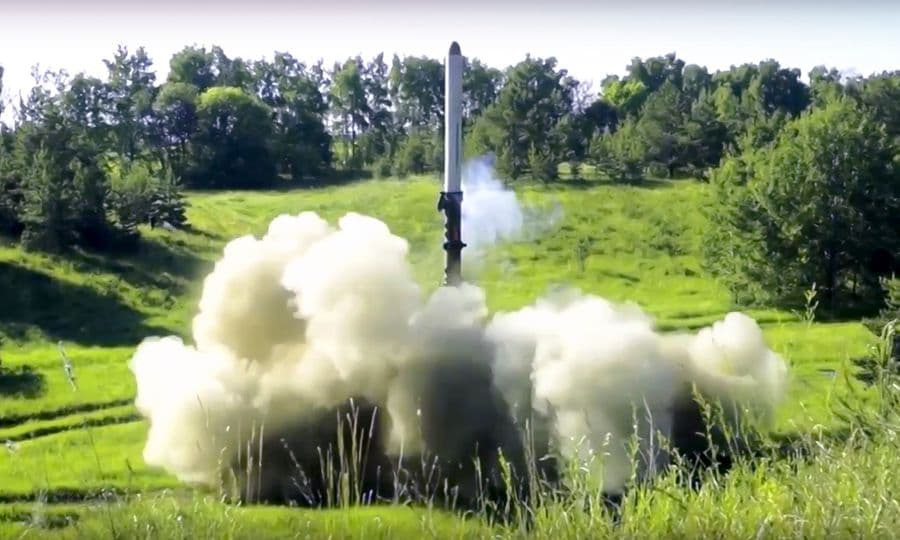
I first argued in 2017 that there is a clear imbalance between NATO and Russia regarding non-strategic or tactical nuclear weapon arsenals. I referred to this as NATO playing chess without a queen. While this imbalance still exists, the US has since bridged the gap with the deployment of the low-yield Submarine Launched Ballistic Missile (SLBM), announced in the Trump administration’s 2018 Nuclear Posture Review. This missile provides a flexible option by increasing not only the swiftness of a response, but also the effective penetration through enemy defences. In addition, the low-yield SLBM aids deterrence by signalling to the enemy that the US has options outside those that would ensure a strategic nuclear exchange resulting in mutually assured destruction. It is this signalling that needs to be enhanced to ensure President Vladimir Putin is deterred from executing an ‘escalate to de-escalate’ strategy, i.e. using a non-strategic nuclear weapon strike against Ukraine to end the war on his terms.
In September, Putin threatened nuclear use with the statement that he would use “all weapons systems available” to defend the “territorial integrity” of Russia. This by extension implies that he would use nuclear weapons to defend the territories he has illegally annexed in Ukraine (Kherson, Zaporizhia, Donetsk, Luhansk, and Crimea). This screams desperation, in light of Putin’s consistent military failures and his recent partial mobilisation, conscripting thousands of Russians to fight in his disastrous war. This desperation is dangerous as Putin is resembling more and more, a cornered rat who will go down fighting viciously. The world is facing a nuclear crisis where miscalculation and opaque messaging could result in nuclear weapon use. If this occurs, there may be nothing to stop escalation to the point of global nuclear war. Deterrence is more important than ever.
In a memo to President Joe Biden, respected nuclear strategist, Matthew Kroenig outlines his recommendations regarding deterring Putin from using nuclear weapons in Ukraine. Kroenig aptly states that nuclear use by Russia “could advance the Kremlin’s military aims, undermine US interests globally, and set off a humanitarian catastrophe unseen since 1945”. Kroenig proposes issuing deliberately vague threats of dire consequences to deter Putin from using nuclear weapons and being prepared to follow through with conventional military strikes on Russian forces if this deterrence fails. While I agree there is merit in this approach, I respectfully disagree with Kroenig who I admit I admire a great deal. Responding to a nuclear attack with conventional weapons is like bringing a knife to a gun fight. It is inadequate and will not deter the offending party.
Although there are no treaty obligations in place with Ukraine, the US must be prepared to defend the current nuclear order, particularly in such close proximity to NATO allies. The US must signal clearly to Putin that any nuclear attack on Ukraine will be regarded as an attack on NATO allies and will result in parallel escalation. For example, if Russia attacks military bases in Ukraine with non-strategic nuclear weapons, the US will respond by attacking military bases within Russia with non-strategic nuclear weapons. This threat must be clear and outline that the US is prepared to use low-yield SLBMs or Dual Capable Aircraft (DCA) based in Europe armed with the B61 tactical nuclear weapon. The US could go a step further and specify a list of targets within Russia that they would strike. These targets would not include nuclear command and control centres or strategic nuclear weapons in order to mitigate the risk of escalation towards a strategic nuclear exchange.
The reality is that a US nuclear response does indeed risk retaliation to the point of strategic nuclear war, but once these weapons are used, the genie is already out of the bottle. To allow Putin to get away with using nuclear weapons in Ukraine would be to allow a total collapse of the nuclear taboo that has held fast since 1945. Allowing this would embolden adversarial nuclear states and send the message that they may be able to achieve their strategic geopolitical ambitions through nuclear use. Putin is already progressing down this path by threatening nuclear use to keep the US and NATO out of the direct military involvement in the Ukraine conflict. In addition to this, the humanitarian disaster resulting from Russian nuclear weapon use will spread to NATO, as could radioactive fallout.
A conventional military response will not deter Putin, which is evident by his willingness to accept significant battlefield losses. Its scale is not significant enough to impact his calculus. It would also divert and exhaust US military assets that may be needed if China decides to use force to annex Taiwan, or if Iran decides to attack a US ally. Putin is at risk of losing everything and is demonstrating that he will stop at nothing as he destroys his own country step by step. People with nothing to lose are dangerous. The US must convince Putin and his inner circle that there is indeed more to lose. Escalation can be carefully calibrated with clear signalling. This is the only way to deter a man like Putin.
Adam Cabot has a Masters in International Relations from Monash University, Australia and is currently researching nuclear strategy. He has vast experience in the International Security field.
The Unfinished Reform
By Mark W. Castillon • RealClearDefense
Winning the Data Advantage
By Turin Pollard • RealClearDefense
The Pentagon’s Quantum Race Needs a Warfighter’s Scorecard
By Burak Oktenli • RealClearDefense
The F/A-XX and the AIM-260 Reclaim the Perimeter
By Bruce Allen Lubbering • RealClearDefense
Iranian Cyber Operations
By Michael Groen • RealClearDefense
Winning the Data Advantage
By Turin Pollard • RealClearDefenseThe F/A-XX and the AIM-260 Reclaim the Perimeter
By Bruce Allen Lubbering • RealClearDefenseWinning the Data Advantage
By Turin Pollard, RealClearDefenseThe F/A-XX and the AIM-260 Reclaim the Perimeter
By Bruce Allen Lubbering, RCD
F-22 Pilot Directs CCA in Flight as ‘Airborne QB’
By Stephen Losey, Air & Space Forces