
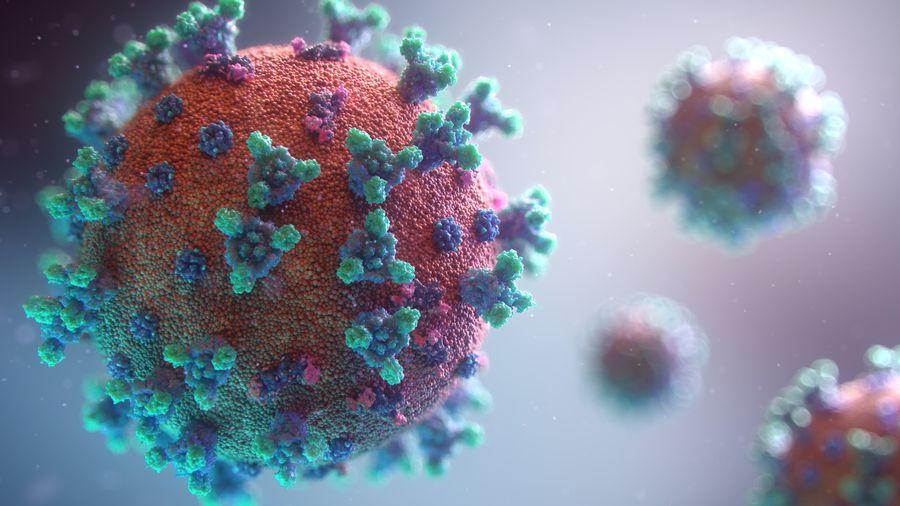
DoD's Role in Preparing for the Next Pandemic
Published Feb. 3, 2024 • Read time: 13m
Objects in Mirror Are Closer Than They Appear:
The Department of Defense Role in Preparing for the Next Pandemic
After nearly four years of reacting to SARS CoV2, better known as COVID 19, the pandemic seems to have faded into the past for most Americans. Yet, the growing world population, increased mobility, and a changing climate all point to more frequent pandemic events. Now is the time to evaluate governmental performance in COVID 19 response and start preparations for the next pandemic.
To avoid the institutional inertia, chaos, and human tragedy that characterized the early months of the COVID 19 response, the U.S. government should consider three key changes: (1) designate, empower, and resource a single lead for pandemic response; (2) leverage the extensive experience within the Department of Defense (DoD) to build national pandemic response plans; and (3) plan and conduct exercises designed to ensure that senior leaders are familiar with the plan, understand the roles of other agencies, and are prepared to make critical decisions in a timely fashion.
COVID 19 Response Score Card
A quick look at the nation’s response to COVID 19 reveals a mixed collection of actions and results that underline the need to create a better approach. In the positive column, is the well-publicized and unprecedented rapid development of highly effective vaccines and therapeutics in Operation Warp Speed. Also on the positive side is the Department of Defense response, including U.S. Northern Command’s organization and execution of the military augmentation of the overwhelmed public healthcare system, and the Department’s logistical planning assistance to Health and Human Services (HHS) and the Centers for Disease Control and Prevention (CDC) as they contemplated the herculean task of vaccinating a nation of 330 million.
As Allies' Capabilities Grow, They Need To Work With U.S. on Nuclear Signalling
President Kennedy: MAD & the Lessons of Berlin and Cuba
The Pope of FEMA
Over-Feminization of Journalism and Modern Woke Reporting
On the negative side of the ledger are the government’s lack of detailed planning prior to the pandemic, the revolving door of lead agencies, the slow and uncoordinated initial response to the growing threat, poor public outreach, the lack of sufficient domestic stockpiles of personal protective equipment for healthcare workers, and insufficient domestic capacity to produce the needed supplies including the vaccines themselves. All of these must be specifically addressed before the next pandemic infection.
In early 2020, the lead, and the weight of effort shifted from organization to organization. HHS acted as the designated lead early in the pandemic, but it struggled to coordinate a nation-wide response. The Federal Emergency Management Agency (FEMA) also took a turn in the lead, but it had never led a response across all ten of its regions simultaneously. Eventually, the Department of Defense was assigned a lead role, but this was not a planned engagement. The rotating lead designation and disjointed interagency effort, reflective of decades of disaster response and subsequent legislation, cost time and resulted in an inefficient and ineffective early action. More importantly, it undermined the trust of the people in its government’s ability to deal with the pandemic. To avoid repeating past mistakes, roles, and responsibilities in fighting the next global outbreak should be established and codified today.
The score card clearly highlights that a whole of government approach to pandemic activities must have a designated lead with the capability to orchestrate the various contributing agencies, spearhead international collaboration, and facilitate data sharing. Once a “lead” is codified, the pandemic approach can be divided into two categories: preparation and response. Preparation includes actions taken well before a threat is even identified and includes stockpiling of materials and equipment, identifying supply chain choke points, and planning for the response. Response occurs after a disease has been detected and determined to be a pandemic threat and includes development of disease-specific countermeasures and policies, surging of the healthcare system, and the distribution of equipment and supplies.
“In Support of a Lead Federal Agency”
To prepare for the next pandemic and speed governmental response, there must be a pre-designated lead agency empowered with appropriate authorities, and sufficiently resourced. The July establishment of a permanent Office of Pandemic Preparedness and Response (OPPR) represents a significant move in the right direction. OPPR is a permanent office in the Executive Office of the President, charged to: (1) coordinate the Administration’s domestic response to public health threats that have pandemic potential or may cause significant disruption; (2) strengthen domestic pandemic preparedness; and (3) drive and coordinate federal science and technology efforts related to pandemic preparedness. However, to be successful, this nascent office must be fully empowered and vested with the appropriate breadth and depth of authorities needed to direct a whole of government response, and it must be included in the National Response Framework.
OPPR should be the lead for coordinating whole-of-government preparedness activities and when a pandemic is detected, guide all response efforts. Since OPPR is a White House office, there is risk that it may be perceived as a political entity, creating the potential for inconsistent Congressional funding. To avoid this, policy makers may consider embedding OPPR in an existing organization or giving it a hybrid designation that avoids the perception of politicization that is inherent in its status as a White House office.
Regardless of the ultimate home for OPPR, it must able to direct a disparate array of federal agencies, and provide coherent guidance to state, local, and tribal entities. No one agency has the necessary capabilities and expertise to plan or respond alone. HHS, for example, has medical expertise and is a natural fit for coping with a public health crisis, but it lacks the skills necessary to plan and train for a multi-department national-level response; FEMA has extensive experience in coordinating Federal responses to disasters, but it lacks medical expertise and tends to be regionally focused; and DoD has expertise in conducting theater-wide efforts and has unparalleled planning, training, and logistics capability, but it lacks experience in pandemic response and public health. OPPR must be empowered and prepared to harness the strengths of each and direct their actions.
A complete review of all standing policy and law governing future pandemic response is also necessary. These must be adjusted to ensure that the authorities granted, and language used is unambiguous. To use military terminology, in order to succeed any guidance must ensure whole-of-government unity of command and unity of effort. This is not the case today, where standing guidance is riddled with ambiguous or conditional language – “coordinate” instead of “direct,” “should” instead of “will,” etc. This is an area in which the military, accustomed to writing unambiguous orders for distribution across a large, distributed joint force, can lend assistance.
The current national crisis plan, known as the National Response Framework, directs the designation of a lead federal agency for the effort, but the creation of OPPR creates the potential for confusion. The National Response Framework must be revised to clearly delineate and specify authorities and provide clear guidance in policy and laws governing pandemic response. For example, the 2006 Post-Katrina Emergency Management Reform Act assigns responsibilities and authorities to FEMA that will stand in conflict if OPPR has a mandate to lead. There are numerous other examples of conflicting guidance that must be resolved to streamline the nation’s response. Policy inconsistencies must be corrected.
There is no perfect single department for the execution of a pandemic response, hence the proposal for a hybrid approach. Each has strengths and weaknesses, but OPPR must be given clear authority to direct the multi-department effort to maximize the government response's effectiveness. In dealing with a future health crisis, this designated lead must take advantage of the strengths of each of the agencies that it leads.
Leveraging a Military-Enabled Approach to Planning for the Next Pandemic
The Department of Defense provided invaluable assistance during the government response to COVID 19. It is masterful in responding in a crisis, has significant medical capacity, and perhaps most importantly, is unmatched in large-scale logistical efforts with an unparalleled ability to plan and exercise. The Department of Defense's unique skill sets suggest it should play a key supporting role to OPPR in both categories.
The U.S. military planning process, codified in Joint Publication 5.0, outlines a deliberate approach for the development of plans. It walks planners through the full process of linking national level strategic guidance to detailed specific tasks for individual units, and includes assessments of risk, resource limitations, and logistical choke points. This same approach would be valuable as the OPPR contemplates preparation for the next pandemic. Based on DoD’s deep-seeded planning expertise, including a heavy emphasis on logistical support and the development of branch and contingency plans, it should play the key role in directing a whole of government planning effort. The DoD planning process also generates a list of capability and capacity gaps from which a prioritized list of acquisition, training, and preparatory activities can be created. Although DoD is not positioned address these gaps, the department is clearly the right organization to partner with OPPR and lead the planning effort needed to identify them.
“The More You Sweat in Peace, the Less You Bleed in” …the Next Pandemic
A plan on the shelf is not sufficient to win a battle. The plan must be exercised, and individuals at all levels must be trained. Rather than wait for the next crisis to lend experience to the nation’s interagency leaders, the new OPPR, assisted by DoD, should conduct high-level interagency tabletop exercises. Perhaps no other organization is better postured than DoD to lead a planning effort, and the military’s experience at conducting large exercises designed to train high-level decision-makers is unmatched. A military-enabled tabletop exercise approach is needed to prepare leaders to defeat the next pandemic adversary. Although the specific decision and actions will likely not reside within defense lanes, OPPR should consider allowing DoD to run whole of government tabletop exercises.
“Amateurs Talk Strategy, Professionals Talk Logistics”
All of the planning and exercising in the world will not prevent the next pandemic. It will require a response, and the same frontline healthcare workers that bore the brunt of the burden in the fight against COVID 19 will again be the blunting force in the next pandemic. They can’t fight alone. They must be supported by (1) a healthcare system that can surge to meet the demand of a nation-wide outbreak, (2) a nation that has stockpiled and is able to produce the materials they need, and (3) a logistical system that is able to deliver materials to the right place at the right time despite pandemic conditions.
On the first point, the Department of Defense can provide some of the healthcare surge capacity that will be needed. Although not experts in pandemic response, the U.S. military’s healthcare providers are well trained and equipped, and they are flexible. DoD’s medical personnel can augment the civilian healthcare system, rapidly deploying to meet spiking demand at pandemic hotspots that threaten to overwhelm local capacity.
On the second point, the nation must do better at ensuring adequate materials are available to medical professionals. At the outset of COVID 19, public health officials found themselves faced with the fact that U.S. stocks of personal protective equipment were rapidly depleting and there was almost no domestic manufacturing capacity. The U.S. government must stockpile key medical equipment and materials, as just-in-time delivery of materials produced overseas will not meet the demands of the next pandemic. These stockpiles should be sufficient to meet demand until domestic production can be ramped up. To ensure the availability of necessary stocks in a sustained response, the U.S. government should incentivize domestic production of personal protective equipment and other high-demand goods.
On the third point, distribution of that medical material, tests, and vaccines under restrictive pandemic conditions must be examined and planned for. Logistics in crisis is an area in which the Department of Defense excels. The U.S. military possesses tremendous capacity to move materials and it has extensive expertise in logistical planning and execution. As it did in the response to COVID 19, the government should leverage this expertise and capacity in future pandemic responses.
When the Inevitable Occurs
When the world confronts its next pandemic, the nation’s leaders will be faced with a fearful population, and as fears multiply, people respond in unpredictable and often counterproductive ways. Fearful populations become susceptible to rumors and mis-, or even dis-information. A rapid, well-orchestrated response is needed to calm frayed nerves, ensure trust in the government, and inoculate society against misinformation. Today, as the vast majority of the American people would like nothing more than to put COVID 19 in the rearview mirror, organizations such as OPPR must be resourced and empowered to plan for the next pandemic. They must be given clear and unambiguous authorities. They must train those that will respond, from front line healthcare workers to the nation’s leaders. They must harness the strengths of every agency that the government can bring to bear, and they must weave those strengths into a coordinated national response designed to maximize its effectiveness while maintaining public trust. To fail in this endeavor is to fail the American people.
Major General Pete M. Fesler, U.S. Air Force, retired is a former Deputy Director of Operations for the North American Aerospace Defense Command (NORAD). During his 27-year career, he flew the F-15C and F-22, commanded at the Squadron, Wing, and Headquarters level and served in multiple positions on Joint, Service, and Combatant Command staffs. While at NORAD and U.S. Northern Command, Pete led the Commands’ COVID 19 continuity of operations efforts where he worked extensively with global and U.S. interagency partners. Pete holds multiple positions in the defense sector and is a Stellar Advisor for Stellar Solutions, Inc.
Major General Scott F. Smith, U. S. Air Force, retired, is the former Director, Readiness and Training, Air & Space Operations, Headquarters, USAF. Over the span of nearly 33 years, Scott commanded at the Squadron through Combined Joint Task Force levels and held a number of senior staff positions, including Deputy Chief of Staff for Operations, Joint Force Command Brunssum (NATO), Senior Military Assistant to the Director of OSD Net Assessment and Inspector General, Air Mobility Command. He currently works in the defense industry and is a Stellar Advisor for Stellar Solutions, Inc.
Rear Admiral Martha Herb, U. S. Navy, retired, is the former Director of the Inter-American Defense College and Reserve Deputy Commander of the Navy Installations Command. Martha deployed to Afghanistan where she was the Director of the Secretariat of the Military Technical Agreement Branch for ISAF. Martha is a licensed Therapist and currently works as a CEO of a Counseling LLC, while maintaining a position as a Stellar Advisor for Stellar Solutions, Inc.

A Sweet American Original
By Greg Maresca • RealClearDefense
South Korea's OPCON Debate Is a Test of Alliance Readiness
By Daewon Cho • RealClearDefense
When Does Peacetime Access Become Wartime Capability?
By Alp Cenk Arslan • RealClearDefense
The Missing Seats at the Table
By Dennis T. Cosgrove • RealClearDefense
We Exported Our Arsenal Manufacturing, Now We Must Rebuild It.
By Justin Fulcher • RealClearDefense

Sign of the Times: CCAs Dominate a Major Fighter Conference
By Bill Sweetman • The Strategist (ASPI)
Marines Want Naval Strike Missiles With Double The Range
By The WarZone
U.S. Navy Targets 79 New Cutter-Based FF(X) Frigates
By A. Servaes, Global Defense
The Hegseth Grenade: A Sea Change at Newport
By Robert C. Rubel, CIMSECSign of the Times: CCAs Dominate a Major Fighter Conference
By B. Sweetman, ASPI