
Nuclear Threats and Putin's War Against Ukraine
Last updated 06:18 AM EDT • Read time: 24m
I have been writing about Russia’s nuclear doctrine and threat for more than 15 years, but I have never had to do it during a debate concerning whether Putin would use nuclear weapons in the near term. Both the U.S. and the U.K. government have warned that Putin may employ chemical and biological weapons against Ukraine. Moreover, I have never seen greater disconnects within an administration concerning: 1) views about Putin; 2) the desirability of cutting our nuclear deterrent and changing our declaratory policy; and 3) the risk of nuclear escalation and a Third World War.
In Congressional testimony on March 8th, we heard from senior intelligence officials in response to questions from Rep. Michael Turner (R-OH):
- The DNI, DCIA and DDIA said the nuclear threat to the U.S. from Russia and China was increasing.
- CIA Director William Burns said, "…Russian doctrine holds that you escalate to deescalate, and so I think the risk would rise, according to the doctrine.”
- DIA Director Lieutenant General Scott Berrier said Putin has “invested in tactical nuclear weapons….I believe that he thinks that [these niche weapons ] gives him an asymmetric advantage.”
- He also observed concerning Putin’s nuclear threats that “I also believe that when he says something we should listen very, very carefully, and maybe take him at his word.”
On March 17th, General Berrier wrote, “As this war and its consequences slowly weaken Russian conventional strength, Russia likely will increasingly rely on its nuclear deterrent to signal the West and project strength to its internal and external audiences.”
For over two months prior to his invasion of Ukraine, Putin and his government were threatening nuclear war. Just before he started the war, Putin staged a major nuclear exercise where he showcased his new nuclear superweapons. On February 8th, President Putin personally raised the specter of nuclear war if Ukraine joined NATO. On the day Putin launched his full-scale invasion, he appeared to threaten a large nuclear strike against NATO (i.e., a response “never seen in history.”) The situation got so bad that France’s Foreign Minister felt compelled to respond to this threat by reminding Putin that, “…the Atlantic alliance is a nuclear alliance.”
Putin’s current focus on World War III rather than on the limited nuclear strikes that are in his military doctrine reflects the fact that President Biden keeps signaling concern about nuclear escalation to World War III. Putin is willing to use nuclear weapons in circumstances no Western leader would consider, but he does not want World War III. Writing in Foreign Affairs, Christopher Bort observes, “Putin also knows that in the back of his opponents’ minds lurks a fear of escalation to nuclear conflict, which limits their willingness to challenge him militarily.” Fear of World War III has resulted in the Biden administration rejecting most forms of deterrence relevant to Ukraine.
The Secretary General of NATO Jens Stoltenberg recently said, “We strongly believe it’s reckless and irresponsible the way Russia is speaking about nuclear weapons.” Secretary of State Antony Blinken said Putin’s “Provocative rhetoric about nuclear weapons is the height of irresponsibility.” Putin has been making nuclear threats since 2007. What we may see at some point in the Ukraine crisis is more like an ultimatum than a threat. The Putin government is not likely to call it an ultimatum to preserve the option of backing down.
President Putin’s stated his reasons for ordering his nuclear forces to “high combat alert” were "unfriendly economic actions," "illegitimate sanctions," and "aggressive statements" by NATO officials. Putin characterized sanctions as “akin to an act of war.” This is a vastly different rationale from what any Western leader would state as the reason for a nuclear alert.
Putin is paranoid and surrounded by yes men, and, thus, lives in a world of ideological fantasy. Putin often sounds crazy, but he is not. According to former Russian Foreign Minister Andrei Kozyrev, Putin's invasion of Ukraine was "rational" but "wrong and immoral," and it was the result of views held by Putin and the Russian elite that President Biden was “mentally inept” and that the European Union was “toothless.” He added that if you believe this “…and your goal is to restore the glory of the Russian Empire (whatever that means), then it is perfectly rational to invade Ukraine.”
The Biden administration has done nothing in response to Putin’s nuclear alert and says it does not know what “special combat duty alert” (its translation from the Russian, which differs from the version on the Kremlin web-site) means. According to the BBC, “Special alert is the highest level of alert for Russia’s Strategic Missile Forces (RVSN).”[1] Former DIA intelligence officer Rebekah Koffler has said, “He is right now threatening a nuclear escalation….He is escalating the conflict into the nuclear domain in order to deescalate – that is topple Kyiv's regime quickly.”
The Pentagon claims it can’t confirm the reports of enhanced Russian nuclear activities. It says it is confident in our nuclear deterrent posture. DNI April Haines indicated that while the declaration of a nuclear alert was “extremely unusual….we have not observed force-wide nuclear posture changes that go beyond what we have seen in prior moments of heightened tension during the last few decades.” However, there is no real precedent to Putin’s full-scale invasion of Ukraine. His 2008 invasion of Georgia was not even close, and there was no announced alert of nuclear forces during this short war. Moreover, Putin’s 2014 invasions of Ukraine were limited and covert.
Vladimir Isachenkov, writing for the Associated Press, reported on March 1, 2022, that:
Russia’s Northern Fleet said in a statement that several of its nuclear submarines were involved in exercises designed to “train maneuvering in stormy conditions.” It said several warships tasked with protecting northwest Russia’s Kola Peninsula, where several naval bases are located, would join the maneuvers.
In the Irkutsk region of eastern Siberia, units of the Strategic Missile Forces dispersed Yars intercontinental ballistic missile launchers in forests to practice secret deployment, the Defense Ministry said in a statement.
The U.K Express reported that 2-3 Northern fleet nuclear ballistic missile submarines were seen by local residents as having gone to sea. Interfax reported that Yars ICBMs were field deployed in an exercise that the Russian Defense Ministry said, “Over 1,000 servicemen and about 100 pieces of hardware…” were deployed.[2]
Neither the U.S. nor NATO has increased its nuclear alert status. A higher alert would improve the survivability of our nuclear forces and show resolve. Absent action, we could lose the entire U.S. heavy bomber force, the entire NATO tactical nuclear capability and half of the U.S. ballistic missile submarine force to a small Russian nuclear attack. Keep in mind that STRATCOM commander Admiral Charles Richard has just said, “Today’s nuclear force is the minimum required to achieve our national strategy.” Far from matching Putin’s nuclear exercise, the Biden administration even delayed a routine ICBM test. Putin is unlikely to be impressed. Calling him names will not discourage his use of nuclear threats.
Russian Nuclear Doctrine and First Use of Nuclear Weapons
Russian nuclear doctrine has involved the first use of nuclear weapons going back to the Soviet period. In June 2020, Russia made public a Presidential directive on nuclear deterrence. It is now clear that the most alarming Russian press reports over the last two decades, including those in the state media, which indicated a lower Russian nuclear first use threshold than made public in official documents, were accurate. Noted Russian journalist Pavel Felgenhauer observed:
The Kremlin is constantly playing the deterrence game by trying to scare the West. But this situation has two dangerous ramifications. First, the nuclear threshold is becoming lower: in any serious skirmish, the Russian Navy would either need to go nuclear or risk being sunk. And second, while the Russian leadership believes it has surpassed the West militarily thanks to its dazzling superweapons, Moscow's threshold for employing military force in conflict situations may also drop further.”
Paragraph 19 of President Putin’s June 2020 decree states:
19. The conditions specifying the possibility of nuclear weapons use by the Russian Federation are as follows:
- arrival of reliable data on a launch of ballistic missiles attacking the territory of the Russian Federation and/or its allies;
- use of nuclear weapons or other types of weapons of mass destruction by an adversary against the Russian Federation and/or its allies;
- attack by an adversary against critical governmental or military sites of the Russian Federation, disruption of which would undermine nuclear forces response actions;
- aggression against the Russian Federation with the use of conventional weapons when the very existence of the state is in jeopardy.
It is clear that the Russian nuclear weapons use threshold in the 2010 and 2014 versions of their military doctrine (which is contained in paragraph 19d) was a deception. Paragraph 19 has two objectives: 1) to deter effective use of U.S. conventional strike capability because of fear of escalation; and 2) to allow the use of Russia’s nuclear capability in a wide variety of circumstances. For example, the reported Russian false flag operation involving chemical weapons would justify nuclear weapons use against Ukraine under 19(b). In 19(c), the use of the formulation “nuclear forces” rather than “strategic nuclear forces” in the provision related to non-nuclear attacks on Russian nuclear and command and control facilities allows a Russian nuclear response to conventional and cyber-attacks on a vast number of Russian facilities because dual capability (conventional and nuclear capability) is almost universal in Russian[3] air, naval and military units. The Russians are trying to use the threat of nuclear escalation to negate our conventional and cyber capabilities.
There is likely an unannounced change to paragraph 19d). The new (December 2021) joint military doctrine with Belarus returns to the earliest version of Putin's doctrine, which allowed for the first use of nuclear weapons in a conventional war. According to noted Russia scholar Roger McDermott, it reads, “At the same time, the participating states consider it possible to use the nuclear weapons of the Russian Federation in response to the use of nuclear and other types of weapons of mass destruction against them, as well as in response to large-scale aggression using conventional weapons in situations that are critical for the security of any of the participating states.”
Paragraph 4 of Putin’s decree is also very interesting. It states the role of nuclear weapons is:
…to guarantee the sovereignty and territorial integrity of the state and to deter a potential adversary from aggression against the Russian Federation and (or) its allies in the event of the emergence of an armed conflict by preventing the escalation of military activities and ending them on conditions acceptable to the Russian Federation and (or) its allies.
This confirms previous reports in the Russian media, including state media. In light of what Putin has said about what constitutes attacks on both Russian sovereignty and territorial integrity, it implies a very low nuclear use threshold, including pre-emptive strikes. Not all of Russian nuclear doctrine is in the Putin decree. In September 2014, General of the Army (Ret.) Yuriy Baluyevskiy, who developed the 2010 revision of Russia’s nuclear doctrine when he was Deputy Secretary of the Russian National Security Council and was certainly involved with the original version, stated that the “…conditions for pre-emptive nuclear strikes…is contained in classified policy documents.”[4]
Central to Russian nuclear strategy is the idea of "escalate to deescalate" or "escalate to win.” This was announced officially in 2003. The idea is that Putin launches a small low yield/low-collateral damage nuclear attack, his victims do not retaliate, and as a result, Russia wins. In 2017, then-Defense Intelligence Agency Director Lieutenant General Vincent Stewart affirmed that Russia is "…the only country that I know of that has this concept of escalate to terminate or escalate to deescalate but they do have that built into their operational concept, we've seen them exercise that idea and it's really kind of a dangerous idea…"[5]
In 1999, Colonel General Vladimir Muravyev, then-Deputy Commander of the Strategic Missile Force, described the "de-escalation" by nuclear attack concept: "…the deterrent actions of strategic forces…[involve] strikes with both conventional and nuclear warheads with the goal of deescalating the military conflict," and Russian forces "…should be capable of conducting 'surgical' strikes…using both highly accurate, super-low yield nuclear weapons, as well as conventional ones…” This is the core of Putin’s nuclear first use strategy.
The Number of Russian Nuclear Weapons
In the current crisis, Russian Deputy Foreign Minister Sergei Ryabkov warned about a Ukrainian conflict becoming a new Cuban missile crisis. During the Cuban missile crisis, the U.S. had over 25,000 nuclear weapons. Hans Kristensen of the Federation of American Scientists writes that at the time, “The Soviet Union had about 3,350.” There is no mystery why Russia backed down.
We have no recent official unclassified USG numbers for the Russian nuclear stockpile. Russia today probably has from over two to four times as many active nuclear warheads as the U.S. Most of these are nonstrategic. Ambassador Robert Joseph has observed that we are “Second to One.”
In December 2017, Bill Gertz reported, “Russia is aggressively building up its nuclear forces and is expected to deploy a total force of 8,000 warheads by 2026….The 8,000 warheads will include both large strategic warheads and thousands of new low-yield and very low-yield warheads to circumvent arms treaty limits and support Moscow’s new doctrine of using nuclear arms early in any conflict.” In August 2019, then-Deputy Assistant Secretary of Defense for Nuclear Matters Rear Admiral (ret.) Peter Fanta confirmed the Gertz story stating that, “The Russians are going to 8,000 plus warheads.”[6] In February 2021, then-Vice Chairman of the Joint Chiefs of Staff General John Hyten said Russia had “thousands low-yield … and tactical nuclear weapons that Russia is building and deploying…” I believe these are the best available numbers.
Russian expert Sergei Rogov has noted that the number of Russian strategic nuclear warheads could be around 6,000. A December 2019 statement by Russian Strategic Missile Force Commander Colonel General Sergei Karakayev concerning Russian reductions in strategic nuclear weapons from Cold War levels[7] implied that Russia has over 3,300 strategic nuclear warheads.[8] In March 2021, a German publication said it had obtained a German Defense Ministry document which stated Russia has about 6,375 nuclear warheads ready for use.
My estimate of the number of Russian tactical nuclear weapons is over 5,000. This is based on Russian press reports like Pravda.ru which in 2014 said, “Russia, according to conservative estimates, has 5,000 pieces of different classes of TNW [tactical nuclear weapons] - from Iskander warheads to torpedo, aerial and artillery warheads!” The official Russian claim that it has reduced its tactical nuclear weapons 75% from Cold War levels equates to about the same number. Mr. Rogov has noted that assessments of Russian nonstrategic nuclear weapons range between several thousand and over 10,000.
Dr. Philip Karber, President of the Potomac Foundation, has stated that roughly half of Russia's 5,000 tactical nuclear weapons have been modernized with new sub-kiloton nuclear warheads for air defense, torpedoes and cruise missiles. Dr. Karber’s source is under Chatham House rules, but the source is a very good one.
In 2019, Lt. Gen. Robert P. Ashley, Jr., then-Director of the Defense Intelligence Agency, in an important speech at the Hudson Institute, stated that, “…during the past decade, Russia has improved and expanded its production complex, which has the capacity to process thousands of warheads annually.” There is no plausible reason for such an expansion unless Russia plans to build back toward Soviet nuclear force levels.
According to Hans M. Kristensen and Matt Korda of the Federation of American Scientists, “We estimate that [U.S. nuclear forces consist of] approximately 1,800 warheads are currently deployed, of which roughly 1,400 strategic warheads are deployed on ballistic missiles and another 300 at strategic bomber bases in the United States. An additional 100 tactical bombs are deployed at air bases in Europe.” They have also written that, “Approximately 230 tactical B61 bombs of all versions remain in the stockpile.” (Emphasis in the original). They also say that the number of U.S. low-yield Trident warheads was under 25.
Modernization of Russian Strategic Nuclear Triad
The Director of National Intelligence’s 2022 report on the Global Threat Assessment states, “We assess that Russia will remain the largest and most capable WMD rival to the United States for the foreseeable future as it expands and modernizes its nuclear weapons capabilities and increases the capabilities of its strategic and nonstrategic weapons.” (Emphasis in the original). U.S. strategic modernization begins in about a decade and the Air Force is not saying when the F-35 will become nuclear-capable.
Russia has been modernizing its Cold War legacy strategic nuclear force since 1997. The 2018 Nuclear Posture Review report states that, “In addition to modernizing ‘legacy’ Soviet nuclear systems, Russia is developing and deploying new nuclear warheads and launchers. These efforts include multiple upgrades for every leg of the Russian nuclear triad of strategic bombers, sea-based missiles, and land-based missiles. Russia is also developing at least two new intercontinental range systems, a hypersonic glide vehicle, and a new intercontinental, nuclear-armed, nuclear-powered, undersea autonomous torpedo.”
Russian modernization is never ending. Russia has somewhere between 20 and 25 active strategic nuclear modernization programs finished or underway. This does not count most of the new hypersonic missiles. Depending on what delivery system carries them, most of them could be classified as strategic or nonstrategic.
In December 2021, Russian Defense Minister General of the Army Sergei Shoigu said the share of modern weapons in the strategic nuclear force was 89%. The comparable U.S. number is zero. He said that in 2022 Russian strategic nuclear forces would receive 21 Yars, Avangard and Sarmat ICBMs, a Borei class ballistic missile submarine and two Tu-160 heavy bombers. Since the Sarmat has not yet been tested, the probability of IOC in 2022 is low. However, short of an economic collapse of Russia, it will ultimately be deployed in very large numbers. The Avangard is their new OPERATIONAL intercontinental-range hypersonic missile.
In addition to the Sarmat and Avangard, in December 2020, General Karakayev said that the development of new ICBMs "…will begin in the short-and mid-term perspective.” In December 2021, he confirmed previous press reports that, “A new road-mobile missile system is being designed.”[9] This will replace one of the new Russian ICBMs, the Yars. In December 2019, General Karakayev stated that Russia will complete its nuclear modernization by 2024. They won’t make this date but once again, short of an economic collapse, they will complete their modernization before we even begin ours late in this decade. Russia’s completing modernization just means they go on to their next generation of systems.
In December 2019, Putin was told that Russia planned to deploy 20 regiments of the Sarmat by 2027.[10] They won’t make this date but this is still alarming. It does not suggest intent to comply with the New START Treaty or any subsequent arms limitation agreement. According to the Russian Ministry of Defense, the “…Sarmat will be able to carry up to 20 warheads of small, medium, high power classes.”[11] Thus, 20 regiments adds up to between 2,400 and 4,000 warheads on the Sarmat force alone. It will also carry the Avangard hypersonic glide vehicle.
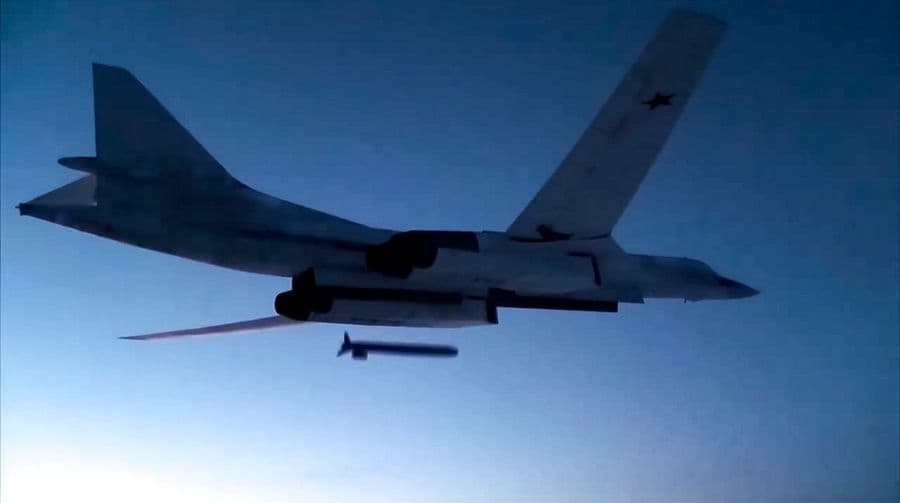
Russia has long been modernizing its Tu-95 and Tu-160 bombers. Russia has a program to build at least 50 Tu-160M2 bombers. In December 2020, Russian Deputy Defense Minister Alexey Krivoruchko said that the Tu-160 force will be increased by more than 50% by 2027.[12] He added that, “…further expansion of the fleet of aviation complexes [Tu-160M2] is expected to be achieved within the framework of the new state armament program for 2024-2033.”[13] (Production of additional Tu-160s violates a Russian commitment not to produce more Tu-160s under the 1991-1992 Presidential Nuclear Initiatives.) The Tu-160 will carry a variety of weapons including long-range stealth nuclear cruise missiles and hypersonic missiles. He also said that work was underway on promising cruise and hypersonic aircraft missiles. They are way ahead of us in hypersonic missiles and ours will not be nuclear.
In January 2021, state-run Ria Novosti reported that the Russian Defense Ministry plans that the new Pak DA stealth bomber will enter service by the end of 2027.[14] This is probably very optimistic, but it will happen at some point in time.
The sixth Russian ballistic missile submarine will be operational this year. The U.S. will not have six Columbia class ballistic missile submarines until 2035. The Russians reportedly plan at least 12 of their new Borey class ballistic missile submarines. According to its builder, the Husky “5th generation” nuclear missile submarine is not currently being funded, but it has not been cancelled.[15]
In November 2020, President Putin stated, “Work on the Poseidon system [nuclear-powered, nuclear-armed drone submarine] is going well. We are on plan in building a global range nuclear engine.” According to Russian press reports, the Poseidon carries a 100-megaton warhead, possibly salted with cobalt to intensify radioactive fallout.[16] This is a terror weapon and, as such, can't be used consistent with international law. Russia reportedly will have 30 deployed Poseidons by 2027.
The Russian program to develop the Burevestnik nuclear-powered nuclear-armed cruise missile is currently a disaster area due to repeated flight test failures. However, they may eventually solve the technical problems.
An Atlantic Council publication by Matthew Kroenig, Mark Massa and Christen Trotti, on Russia’s new “novel” nuclear systems, the “Sarmat, Avangard, Kinship, Brevetting, and Poseidon") maybe pursued a means of obtaining a real or perceived strategic superiority over the United States within the New START framework.”
The Development of New Types of Nuclear Weapons
Senior Russian officials and Russian press reports during the Bush administration said that Russia was introducing new and improved nuclear weapons. For example, in 2005, Russian Defense Minister Colonel General Sergei Ivanov asserted, “We will develop, improve and deploy new types of nuclear weapons.”[17] According to Colonel General Vladimir Verkhovtsev, then-chief of the Defense Ministry’s 12th Main Directorate, Russia’s nuclear weapons organization, the newly developed and manufactured nuclear munitions will have “improved tactical and technical specifications....”[18] Senior U.S. officials have said that Russia is developing new types of nuclear weapons. The Russians are staging yield-producing nuclear tests, which explains what is going on.
Conclusion
As STRATCOM Commander Admiral Richard has pointed out, we now face two major nuclear threats – Russia and China. For the foreseeable future, the Russian threat will be the largest.
Putin’s nuclear strategy and weapons development represent a very serious threat. Putin has shown increasing willingness to take risks. Christopher Bort of the Carnegie Endowment for International Peace has pointed out the lack of any real response to Putin's aggression encouraged his faith in the Russian military and a belief that the U.S. and NATO, because of fear of nuclear escalation, would not intervene against him.
The decline in U.S. nuclear capabilities as a result of six decades of bad policy has contributed to this perception. Dr. Keith Payne has aptly characterized U.S. policy as “The Great American Gamble.” We have lost the gamble and Ukraine and NATO are paying the price.
The repeated suggestion that a no-fly zone against Russia in Ukraine would lead to “World War III” is questionable at best. Putin clearly now knows how bad his Army and Air Force are. He is now reportedly firing his generals. His threat to widen the war has no credibility. He is not going to take on NATO’s 30 nations or even the United States alone when he can’t defeat Ukraine or must resort to nuclear or other forms of WMD to do so. Putin may introduce nuclear weapons, but he will start with small low-yield attacks. If we don't respond in kind, Putin may escalate. Weakness with Putin is more escalatory than strength. In light of the consequences, a massive nuclear strike against NATO will get Putin nothing. He could lose Russia and Ukraine. A small nuclear strike in Ukraine is much more likely, particularly if we continue to do nothing to deter it.
Covid 19 has given us a very small taste of what a war with weapons of mass destruction (WMD) would be like. Despite that, White House Press Secretary Jen Psaki, after stating Russia might use chemical or biological weapons in Ukraine, refused to characterize this as a “red line.” The next day President Biden said that Russia would pay a "severe price" if it used chemical weapons (he ignored biological weapons). He repeated his mantra about no U.S. troops in Ukraine, which of course, has nothing to do with what we might do to deter Russian chemical and biological weapons use.
From a deterrence standpoint, the Biden administration has made many mistakes. The Ukraine war could and should have been deterred. Russian use of low-yield nuclear weapons, chemical or biological weapons can and should be deterred. Deterrence is not a nice word. Putin’s threats must be matched by counter threats. An enhanced deterrent alert, possibly in conjunction with Britain and France, would be a good idea. A nuclear firepower display similar to Putin’s February 19th nuclear exercise might also be useful. A serious deployment of 5th generation combat aircraft to Eastern Europe is in order. If Putin can’t beat the Ukrainian Air Force, he is not likely to take on ours or NATO’s.
Dr. Mark B. Schneider is a Senior Analyst with the National Institute for Public Policy. Before his retirement from the Department of Defense Senior Executive Service, Dr. Schneider served in a number of senior positions within the Office of Secretary of Defense for Policy including Principal Director for Forces Policy, Principal Director for Strategic Defense, Space and Verification Policy, Director for Strategic Arms Control Policy and Representative of the Secretary of Defense to the Nuclear Arms Control Implementation Commissions. He also served in the senior Foreign Service as a Member of the State Department Policy Planning Staff.
Notes:
[1] “Putin orders nuclear forces on high alert,” BBC Monitoring Newsfile, February 27, 2022, available at https:// dialog. proquest.com/professional/professionalnewsstand/docview/2633376339/fulltext/17EA228366720F5 5BD/5?accountid=155509&accountid=155509&site=professionalnewsstand&t:ac=17EA228366720F55BD/1&t:cp=maintain/resultcitationblocksbrief&t:zoneid=transactionalZone_975ba590a7ce66.
[2] “Army; Yars missiles redeployed in course of patrolling mission in Irkutsk region - Russian Defense Ministry,” Interfax, March 2, 2022, available at https://dialog.proquest.com/professional/professionalnewsstand/ docview/2634822687/fulltext/17EC66513515EB64F1C/9?accountid=155509&accountid=155509&site=professionalnewsstand&t:ac=17EC66513515EB64F1C/1&t:cp=maintain/resultcitationblocksbrief&t:zoneid=transactionalZone_99844f676d7f7d
[3] Alexander Mladenov, “Best in the Breed,” Air Forces Monthly, May 2017, p. 51
[4] “Russia classifies information on pre-emptive nuclear strikes – military,” BBC Monitoring Former Soviet Union, September 5, 2014, available at https://dialog.proquest.com/professional/professionalnewsstand/docview/ 1560021754/fulltext/17EE0756B6D35B395AE/1?accountid=155509&accountid=155509&site=professionalnewsstand&t:ac=17EE0756B6D35B395AE/1&t:cp=maintain/resultcitationblocksbrief&t:zoneid=transactionalZone_3a53fe1b0b25b4
[5] “S Armed Services Hearing on Worldwide Threats,” Political Transcript Wire, May 23, 2017, available at https: //dialog.proquest.com/professional/professionalnewsstand/docview/1902238886/fulltext/1738266AFAE364AFE88/1?accountid=155509&site=professionalnewsstand&t:ac=1738266AFAE364AFE88/1&t:cp=maintain/resultcitationblocksbrief&t:zoneid=transactionalZone1741ce58604
[6] “082319 Crane Naval Submarine Warfare Center Symposium on Strategic Nuclear Weapons Modernization and Hypersonics with Deputy Assistant Secretary of Defense for Nuclear Matter Peter Fanta,” mimeo
[7] “U.S. to seek ways of leveling capacities of Russian strategic nuclear forces - Gen. Karakayev,” Interfax, December 17, 2018, available at https://dialog.proquest.com/professional/professionalnewsstand/docview /2157713172 /fulltext/1778D9FCBCF24B968F0/1?accountid=155509&site=professionalnewsstand&t:ac=1778D9FCBCF24B968F0/1&t:cp=maintain/resultcitationblocksbrief&t:zoneid=transactionalZone_178281e9c12
[8] “FACTBOX – Strategic Missile Forces Day in Russia,” Sputnik, December 17, 2018, available at https://dialog
.proquest.com/professional/professionalnewsstand/docview/2157472585/fulltext/170A13075F1754EEEB6 /1? accountid=155509&site=professionalnewsstand&t:ac=170A13075F1754EEEB6/1&t:cp=maintain/resultcit
ationblocksbrief&t:zoneid=transactionalZone_1713baf472d
[9] “Defense Industry; Russia takes account of buildup of U.S. missile defenses in Europe as it develops new strategic missiles - Defense Ministry,” Interfax. December 17, 2021, available at https://dialog.proquest.com/professional/ professionalnewsstand/docview/2610760541/fulltext/17D34DC672A73B30988/9?accountid=155509&site=professionalnewsstand&t:ac=17D34DC672A73B30988/1&t:cp=maintain/resultcitationblocksbrief&t:zoneid=transactionalZone_17dcf5b342b
[10] “Russia plans to finalize tests of new Sarmat ICBM in 2021 - National Defense Control Center (Part 2),” Interfax, December 24, 2019, available at https://dialog.proquest.com/professional/professionalnewsstand/docview/ 233005 8625/fulltext/16EA95F44AC53E23FA3/115?accountid=55509&site=professionalnewsstand&t:ac= 16EA95F44AC 53E23FA3/6&t:cp=maintain/resultcitationblocksbrief&t:zoneid=transactionalZone_16f43e5c4d1.: “Russia to Finish Testing New Sarmat ICBM in 2021 – Military,” Sputnik, December 24, 2019, available at https://dialog proquest.com/professional/professionalnewsstand/docview/2330046793/fulltext/16EA95F44AC5 3E23FA3 /198?accountid =155509&site=professionalnewsstand&t:ac=16EA95F44AC53E23FA3/10&t:cp=maintain /resultcitationblocksbrief&t:zoneid=transactionalZone16f44002.;7f. State-run Ria Novosti also reported 20 planned regiments of the Sarmat. “Highlights of Russia's arms procurement programme for 2018-2027,” BBC Monitoring Former Soviet Union, December 30, 2019, available at https://dialog.proquest.com/professional/ professionalnewsstand/docview/2331240824/fulltext/16EE61E9B4F3E41099/9?accountid=155509&site= professionalnewsstand&t:ac=16EE61E9B4F3E41099/1&t:cp=maintain/resultcitationblocksbrief&t:zoneid =transactionalZone16f809d68c8
[11] “Guaranteed defeat of enemy infrastructure: how the Sarmat ballistic missile will enhance the combat potential of the Strategic Missile Forces,” RT, December 16, 2019, available at https://www.tellerreport.com/news/2019-12-16---guaranteed-defeat-of-enemy-infrastructure--how-the-sarmat-ballistic-missile-will-enhance-the-combat-potential-of-the-strategic-missile-forces-SkxuY8bHRB.html
[12] “Russia Defense Ministry Expects Modernized Tu-160 Bombers to Be Supplied to Troops in 2021,” Sputnik, December 30, 2020, available at https://dialog.proquest.com/professional/professionalnewsstand/docview/ 2473441557/fulltext/1769A5 EFABA7C05F9C6/6?accountid=155509&site=professional newsstand&t:ac=17 69A5EFABA7C05F9C6/1&t:cp=maintain/resultcitationblocksbrief&t:zoneid=transactionalZone_17734de29b0
[13] “Aviation; Delivery of profoundly modernized Tu-160M strategic bombers to forces to begin in 2021 - Russian deputy defense minister,” Interfax, December 30, 2020, available at https://dialog.proquest.com/professional/ professionalnewsstand/docview/2475314885/fulltext/1769A5EFABA7C05F9C6/13?accountid=155509
&site= professionalnewsstand&t:ac=1769A5EFABA7C05F9C6/1&t:cp=maintain/resultcitationblocksbrief&t:
zoneid=transactionalZone_17734e8d853
[14] “Article reviews plans for new Russian strategic bomber,” BBC Monitoring Former Soviet Union, January 21, 2021, available at https://dialog.proquest.com/professional/professionalnewsstand/docview/2479392993 /full text/1769 A79EFA8618361E8/1?accountid=155509&site=professionalnewsstand&t:ac=1769A79EFA861 83 61E8/1&t:cp=maintain/resultcitationblocksbrief&t:zoneid=transactional Zone_17734f8bbf2
[15] “Russian shipbuilder wants more '5th gen' submarine development,” BBC Monitoring Former Soviet Union, September 2021, available at https://dialog.proquest.com/professional/professionalnewsstand/results/ 17AF8E611F84CA834B6/1?accountid=155509https://dialog.proquest.com/professional/professionalnewsstand/docview/2440868339/fulltext/17AFE03A76C2DE74243/1?accountid=155509&site=professionalnewsstand&t:ac=17AFE03A76C2DE74243/1&t:cp=maintain/resultcitationblocksbrief&t:zoneid=transactionalZone_17b988274c7
[16] Lynn Berry, “Russian TV leaks file on top-secret new nuke,” Dublin Independent, November 13, 2015, available at https://dialog.proquest.com/professional/professionalnewsstand/docview/17327 48463/fulltext/172BEA0E A561 B8BD23D/1?accountid=155509&site=professionalnewsstand&t:ac=172BEA0EA561B8BD23D/1&t:cp=maintain/ resultcitationblocksbrief&t:zoneid=transactionalZone_173591fbaf9
[17] Alexei Berezin, “Moscow Emphasizes Quality of its Nuclear Potential,” Ria Novosti, January 13, 2005, available at http://www.ghana.mid.ru/nfr/nfr331.html
[18] “Nuclear Munitions to be Improved and Revitalized --Russian Federation Ministry of Defense,” Ria Novosti, September 4, 2009, (Translated by World News Connection.)
Is It Déjà vu All Over Again: The 2012 Report on Global Zero
By Peter Huessy • RealClearDefense
As Private Investment Pours Into Defense, the Clock Is Ticking
By Elaine McCusker • RealClearDefense
The First Test of Peace Lies in Ukraine's Borderlands
By Dennis T. Cosgrove • RealClearDefense
The VFW’s Gambling Addiction Victimizes Veterans
By Jack Yoest • RealClearDefense
Superintelligence Exposes a Gap in the Law of Delegated Authority
By Sue Ghosh Stricklett • RealClearDefense

When Your Navy is too Small, the Bill Comes Due Bigly
By CDR Salamander
Quo Vadis MCU?
By Marine Corps Compass Points
When the Network Goes Dark, Who Controls the Battlefield?
By Jonathan K. Corrado • RealClearDefense
Air Force Should Buy 250 Blended-Wing Tankers, as 2027 Demo Looms
By A&SF Mag.
Long Deployments to Be Navy Standard For Next Couple Years
By Mongilio, USNI News