
Congress Should Examine One of the Army's Overlooked Safety Risks
Published July 31, 2026 • Read time: 4m
Congress has made its defense priorities unmistakably clear: protect the warfighter, reduce preventable losses, and maintain readiness in an increasingly dangerous world. Yet one of the Army's most persistent safety risks receives remarkably little attention - not on the battlefield, but during the recovery of disabled tactical vehicles.
Vehicle recovery is an indispensable part of military operations. It is also among the most hazardous and least modernized functions supporting ground forces.
Department of War safety data and Government Accountability Office (GAO) analyses show that ground vehicle incidents contributed to 3,751 noncombat accidents across the military between 2010 and 2019 resulting in 123 deaths. Although towing operations are not always reported as a separate category, recovery incidents consistently involve some of the most dangerous conditions soldiers face: heavy equipment under tension, degraded visibility, uneven terrain, and significant time pressure.
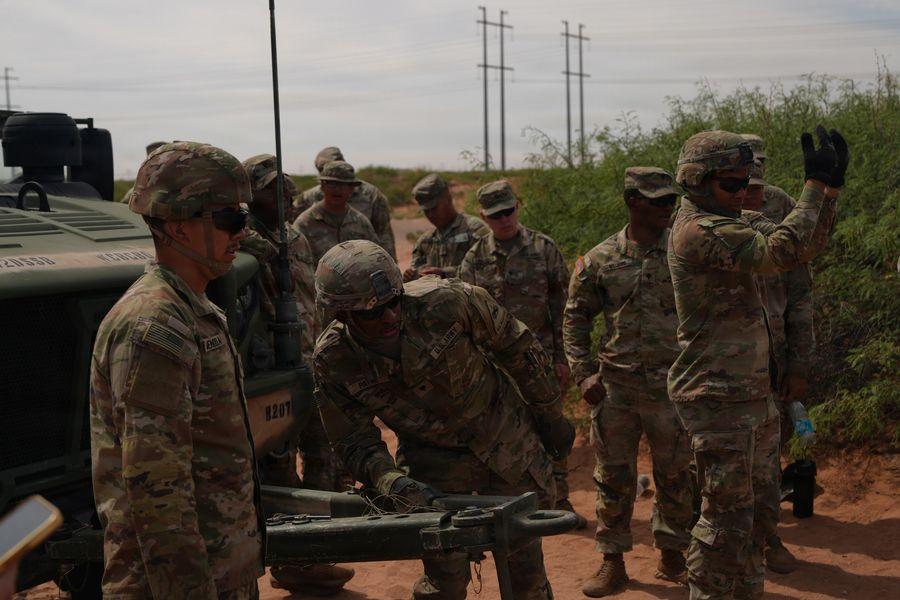
The recovery phase often becomes the most dangerous moment of a vehicle incident. Soldiers must maneuver multi-ton vehicles while manually connecting recovery equipment in environments where a single mistake can have catastrophic consequences.
Recent events underscore the challenge. In 2025, four U.S. soldiers died during a NATO exercise in Lithuania after a recovery vehicle became trapped in a swamp. Other training accidents have involved loss of control during vehicle-to-vehicle towing, leading to rollovers and severe injuries. Across training installations and multinational exercises, similar patterns continue to emerge difficult terrain, hazardous recovery operations, and preventable risks.
Despite these realities, the U.S. Army still relies on legacy tow bar systems that have changed little in decades. Many require multiple soldiers to manually lift, align, and secure heavy equipment before recovery can even begin. These labor-intensive procedures increase exposure to injury, extend recovery times, and heighten the risk of secondary accidents.
Modern alternatives already exist. Commercially available articulating tow bar systems allow for faster deployment, reduced weight, single operator use and compatibility across multiple vehicle platforms. Demonstrations and early field evaluations indicate they can shorten recovery times, reduce physical strain, and improve safety without sacrificing operational capability.
The challenge is not technological. It is institutional.
Congress should examine whether the Army's acquisition process is effectively evaluating and fielding available safety improvements. The U.S. Army Tank-automotive & Armaments Command (TACOM), which oversees much of the Army's ground systems procurement, deserves particular attention.
Industry stakeholders have raised concerns that qualified vendors with validated technologies face unnecessary barriers to entry, while legacy systems continue to dominate procurement decisions despite available alternatives. Whether those concerns prove justified is precisely why congressional oversight is warranted.
This is not an allegation of misconduct. It is a call for transparency. When safety-critical equipment fails to evolve despite commercially available improvements, lawmakers should determine whether acquisition processes deliver the best value to taxpayers and, more importantly, the greatest protection for service members.
Congress has several tools at its disposal.
It should require the Pentagon to report on the Army's current tow bar inventory, lifecycle costs, modernization plans, and recovery-related safety data. It should direct open, competitive evaluations of commercially available recovery systems and ensure procurement decisions are supported by measurable performance and safety outcomes. A GAO review and targeted oversight hearings could help determine whether existing acquisition practices encourage innovation or unintentionally impede it.
Where modern systems demonstrate meaningful operational advantages, Congress should also support rapid fielding authorities and targeted funding to accelerate deployment.
The Army has invested heavily in modernizing combat vehicles, precision weapons, and battlefield communications. Yet a fundamental enabler of mobility and force protection has received comparatively little attention.
Future conflicts will demand dispersed operations, rapid maneuver, and resilient logistics. Recovering disabled vehicles quickly—and with fewer soldiers exposed to unnecessary danger—will be essential to maintaining combat effectiveness.
Congress should not wait for another fatal accident to ask whether better equipment is available. The risks are well understood, the technology exists, and the oversight mechanisms are already in place.
Ensuring that safer, more effective recovery systems reach the warfighter is more than a procurement issue. It is a force protection imperative—and a measure of whether the defense acquisition system can adapt when lives depend on it.
James Durso is a regular commentator on foreign policy and national security matters. Mr. Durso served in the U.S. Navy for 20 years and has worked in Kuwait, Saudi Arabia, and Iraq.
image: U.S. Army Soldiers assigned to Bravo Company, 142nd Division Sustainment Support Battalion, 1st Armored Division, compete in a timed training event at Fort Bliss, Texas, June 11, 2026, to determine which team can complete vehicle recovery procedures the fastest. During the event, Soldiers raced to properly position and hitch a Joint Light Tactical Vehicle to a recovery asset, reinforcing technical proficiency, speed and accuracy under pressure. The competition strengthened teamwork, readiness and proficiency in battlefield recovery operations. (U.S. Army photo by Spc. Garret Kimmel)
End the Jones Act Waiver
By Mark H. Buzby • RealClearDefense
Prediction Markets Are Becoming a New Frontline for Military Operational Security
By Yang Yunke • RealClearDefense
Can Robots Bring Maneuver Warfare Back?
By Ayeza Areej • RealClearDefense
Buy Smarter, Fly More
By Jeff Kojac • RealClearDefense
Stop Gutting the Conventional Army
By R.D. Hooker, Jr. • RealClearDefense

Hung Cao Facing Contentious Confirmation To Become Navy Secretary
By Konstantin Toropin • Associated Press
U.S. Marines Expand M27 Rifle Contract
By Inder Singh Bisht
Kadena AFB Gets First F-15EX Eagle IIs
By Emily Ryan Miller, Defence BlogHung Cao Facing Contentious Confirmation To Become Navy Secretary
By AP
Fair Winds, Peacoat and Desert Camo: Navy Makes Big Changes to Seabag
By MTimes