
Flat Budgets Threaten To Leave the Army Lost at Sea
Published Dec. 19, 2024 • Read time: 6m
Just weeks ago, a report from the Government Accountability Office (GAO) sounded the alarm on the Army’s Pacific pivot: only 40 percent of the Army’s watercraft fleet is ready for operations in the Indo-Pacific. Should a conflict erupt in the Indo-Pacific, only a handful of the Army’s watercraft fleet—an aging, shrinking, and increasingly overworked force—will be available for theater-wide logistics, leaving both the Army and the rest of the Joint force stranded onshore.
U.S. Army Pacific Commander Gen. Charles Flynn routinely promoted the U.S. Army’s ability to serve as the “linchpin force” in the Indo-Pacific—touting the Army’s unique ability to provide staying power, logistical support, and missile defense for the Navy and Air Force. But with readiness rates like this, the grim reality is that a significant portion of this crucial capability could be immobile and stranded onshore should conflict with China break out.
Though operations on the high seas are typically the Navy’s prerogative, the Army has long-operated its own fleet of watercraft to support Army and other joint operations. These watercraft are key asset used to move supplies, equipment, and personnel through deep ocean—a capability Army leadership is viewing as increasingly important as they’ve shifted their focus and energy towards the Indo-Pacific and the threat of China.
In the last six years, the Army’s watercraft fleet has been halved—from 134 vessels to just 70. Given the abysmal readiness rates, “usually fewer than half the vessels in the fleet are available at any given time.” This marks a dramatic decline from the thousands of watercraft the Army operated during the Cold War. Given these readiness challenges, the actual available fleet is likely just a handful of these watercraft, with Army officials noting that “usually fewer than half the vessels in the fleet are available at any given time.” The report concludes that the number of available Army watercraft is “insufficient to support INDOPACOM’s most stressing operation plan,”—a finding which could mean disaster in a future Indo-Pacific contest.
Furthermore, the Army’s watercraft fleet is old, increasing maintenance and operation costs. Just ask the Navy—older ships are harder and more costly to keep in working order. The Army’s fleet of heavy lifters, consisting of Logistics Support Vessel (LSV) and Landing Craft Utility (LCU) craft, have an average age of 30 and 32 years respectively, and are rapidly pressing up against the end of their useful service lives. According to Army data, of the 23 of the 26 craft are expected to reach the end of their services lives by 2032.
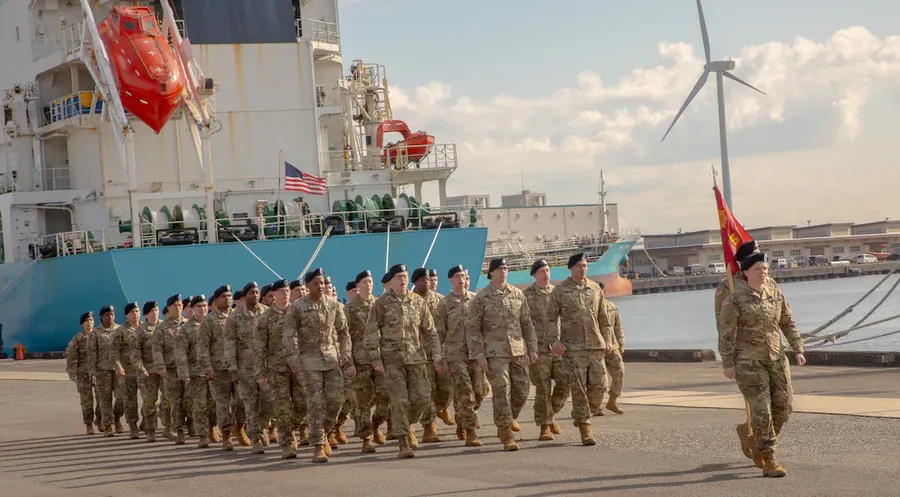
In addition to growing costs, working the aging and shrinking fleet harder is largely to blame for the sharp decline in readiness. The GAO reports “that requirements for watercraft use in combatant command plans for the Indo-Pacific theater are under development and expected to increase.” It’s true—the Army is using these watercraft more than ever. Gen. Flynn has been clear that “Watercraft in this region [the Indopacific] plays an enormously important role,” and a recent emphasis on Indo-Pacific operations has made these watercraft invaluable. Last year, numerous formations saw deployments in multiple regional exercises last year, and earlier this year, the Army activated a new watercraft formation based forward in Japan.
The clock is ticking to rapidly build and field replacements, but the Army’s plan has seen slow progress. The Army’s next watercraft—the Maneuver Support Vessel (MSV) Light—is planned to be much faster than its predecessors, though with a smaller transport capacity. Reported mechanical setbacks and cost growth have slowed the adoption of the platform and continue to threaten to delay full-rate production. Despite the pressing need for watercraft, the Army is currently on track to procure just 13 of these watercrafts, and has yet to even move forward with plans for a MSV (Heavy) variant to replace the aging larger LSVs, citing budgetary concerns.
Without real budgetary growth, the Army has been forced to sacrifice capabilities to stay afloat. Over the past decade, the Army has seen the least real growth among the three services, which has begun to materialize in program cancellations. President Biden’s Fiscal Year 2025 budget request did little to remedy this, requesting a topline figure of $185.8 billion for the Army—barely $500 million (.2 percent) greater than last year’s request of $185.3 billion. Providing the Army with virtually no growth against continued inflation means that next year’s request amounts to an effective $3 billion cut to the Army’s funding, squeezing accounts and forcing Army leadership to make “hard choices” on which capabilities to maintain. History seems doomed to repeat itself, as the GAO analysis notes earlier efforts to shrink spending led to budget cuts in the Army’s watercraft program, which are responsible for subsequent divestment and the sorry state of the fleet today.
Furthermore, the budget caps levied on the FY 2025 budget request are limiting the Army’s ability to bounce back. While the Army’s FY2024 budget request projected at least four watercraft undergo modernization efforts in FY 2025, the FY 2025 request was changed to request funds for just two, delaying modernization and pushing further funds to the outyear projections of 2026 and 2027.
Meanwhile, China, the Pentagon’s “pacing threat,” is not waiting for the Army to catch up. According to latest Pentagon report on Chinese military developments, China continues to rapid expand its sealift capability and is increasingly training to incorporate civilian roll-on/roll-off vessels to transport multitudes of heavy military equipment across sea zones. Chinese military shipbuilding, military spending, and expansion of sealift capabilities continue on their consistent upward trajectories while the Army gets is stuck counting ships.
To ensure that the Army can remain the linchpin of the force in the Indo-Pacific, it must be given the resources to succeed. This starts with securing real budgetary growth to modernize and expand the Army’s watercraft fleet, including accelerating the full-rate production of the Maneuver Support Vessel (Light) and developing a heavy variant to replace aging Logistics Support Vessels. Additional investments should focus on increasing the fleet’s size and addressing readiness shortfalls through enhanced maintenance programs for aging vessels until MSV production reaches scale.
Integrating uncrewed systems, such as unmanned surface vessels (USVs), will likely prove critical to field more transport capacity in contested environments. While the Army’s early tests show promise, these systems remain experimental and should serve as a supplement to—not a replacement for—the Army’s ability to transport heavy equipment and personnel ship-to-shore at scale.
If the Army truly wants to provide these critical capabilities to the Joint Force, it can’t afford to be stranded on the shore. To reverse this decline and address the growing strategic imperative, the next administration must prioritize boosting the Army’s budget to accommodate these essential watercraft investments. Providing the Army with real budgetary growth is not just about modernization—it’s about ensuring that America’s forces are equipped to meet the challenges of a rapidly evolving Indo-Pacific theater.
Cole Spiller is a Research Associate at a D.C.-based think tank, where he researches defense strategy, budgets, and military readiness.
After the Midterms, the Right Strategy Against Iran
By Lance Gordon • RealClearDefense
The Color Revolution Came Home
By Emzari Gelashvili • RealClearDefense
When Access Becomes the Fight
By Richard Byno • RealClearDefense
What the 2026 Midterm Results Mean for U.S. Strategic Competition with Rivals
By Dean Chen • RealClearDefense
Measurable by Design: Project Meridian
By Alex Willard • RealClearDefense
New USAF Force Design Bets on Technology
By Stephen Losey, Air & Space Forces
DoD Pushes $450M in Loans To Bolster U.S. Space Companies
By Hitchens, BrDefense
The U.S. Navy Needs a New Battlecruiser. Will It Get One?
By Sadler & Ouellette, NatInt
U.S. Army Rehearses Rapid HIMARS Rocket Launcher Deployment
By Global Defense N.
Coding Commander's Intent into Unmanned Systems
By Thomas Baumstark, Proceedings