
Take the Money and Go
Last updated 09:12 AM EDT • Read time: 4m
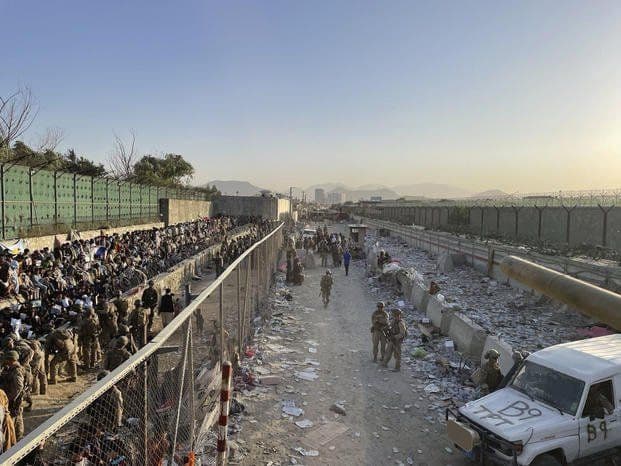
Private Military Contractors (PMCs) are going through an existential reckoning with their conscience since the wars in Iraq and Afghanistan ended. On one hand, they were contracted by the U.S. government to support the war effort. On the other, they volunteered for the money in traditional military roles– protection, training, etc. They didn’t return to a hero’s welcome because they volunteered—not out of patriotism, but for cash. As a former Blackwater employee, I’m here to help. If you’re wondering where you fit in the war as a PMC, it’s as a profiteer. As a mercenary. As a small cog in the military industrial complex focused on profiting off war instead of winning it.
Mr. Fine’s article in Providence magazine hints at moral injury, which is the psychological, social and spiritual impact of events involving betrayal or transgression of one's own deeply held moral beliefs and values occurring in high stakes situations. I’ve experienced these situations and talk about them in my book, Girls, Guns, and Greed. The act of pulling a trigger aimed at a vehicle and seeing people violently die was hard in the moment. Reconciling with my humanity in the days, weeks, months, and years after was harder because I volunteered for it. It got easier once I realized I never had the moral high ground.
Most contractors haven’t taken a hard look in the mirror because they’re afraid of what they’d see—a person who took an inflated salary to do a military mission. We weren’t invested in helping the locals or the war. We don’t get to hang the U.S. flag over our shoulders like an Olympic athlete, claim patriotism, or feel bad about the fall of Afghanistan. We’re no different than Erik Prince or Dick Cheney.
Many in the Blackwater community cling to the bear paw as a symbol of accomplishment. I understand why. We volunteered for a difficult job at a difficult time and executed it with little guidance or oversight. We put our lives on the line to protect diplomats in a country where the population hated us. It was dangerous and we lost great men. Alas, that’s what we got paid for. This is hard to face which likely why the Blackwater community has lost more people to suicide than in combat.
It's reasonable Mr. Fine feels bad that the people he trained were hunted down and killed after the fall of Afghanistan. But the outcome was inevitable. He likely formed a bond with them over time and cared for them on a personal level. This is the paradox of being a PMC. Military members complete their deployment and wait for their next orders to another location. In contrast, PMC’s go back to the same place. They bond with those they train over “multiple deployments,” as he states. He says he “was ready to put Afghanistan, the mission, and the people behind” him when he left. Based on his reaction, I posit, he never made the clean break service members are forced to.
Mr. Fine seems to be speaking out of both sides of his mouth when he states he was there for the money knowing there was no chance the Afghani military couldn’t survive, but its collapse shocked him. A look at recent history shows when ISIS invaded Iraq in 2014, the standing military and police force of 60,000 was overwhelmed by 1,500 ISIS troops. Our political and military leaders failed us in Afghanistan in and Iraq. I’m no psychiatrist, but I encourage Mr. Fine to take the money and stop looking back. It’s over. Rub some dirt on it and press on.
Going to Afghanistan for the money, then questioning the morality of the exit, feels disingenuous–like owning a burger stand and feeling bad that your customers got diabetes. The hard reality is guys like him (and me) are mercenaries. We never had the moral high ground. We don’t deserve it now. The sooner we realize this, the quicker we can move on. Take the money and go.
Morgan Lerette is the Author of Guns, Girls, and Greed: I was a Blackwater Mercenary in Iraq. He served in the US Air Force Security Forces, US Army as an Intelligence Officer, and worked for Blackwater in Iraq for eighteen months in 2004-2005.

Eight Months of Epic Fury and Still No Internal Alternative
By Stephen D. Cook • RealClearDefense
The Readiness Cliff: Pacific Lessons Drawn from the Middle East
By Brian McSorley • RealClearDefense
The Pentagon’s Real Modernization Problem Is Time, Not Technology
By Bruce Allen Lubbering • RealClearDefense
The World His Mother Opened
By Carlo J.V. Caro • RealClearDefense
Wake Island Lessons for Expeditionary Advanced Base Operations
By Brian J. Dunn • RealClearDefense
Wake Island Lessons for Expeditionary Advanced Base Operations
By Brian J. Dunn • RealClearDefense
U.S. Navy Expands Unmanned Mine Hunting
By Global Defense News
MRF-SEA Will Maintain Continuous Presence in the Philippines
By Mahadzir, USNI News
Space Force Weighs Proliferated Cislunar Satellite Constellation
By C. Albon, A&SF
America-Class Amphibs Enable New Ship-to-Shore Attack Strategies
By Warrior M.