
The Wrong War
Last updated 07:14 AM EDT • Read time: 6m
Rethinking U.S. Strategy Against the Houthis
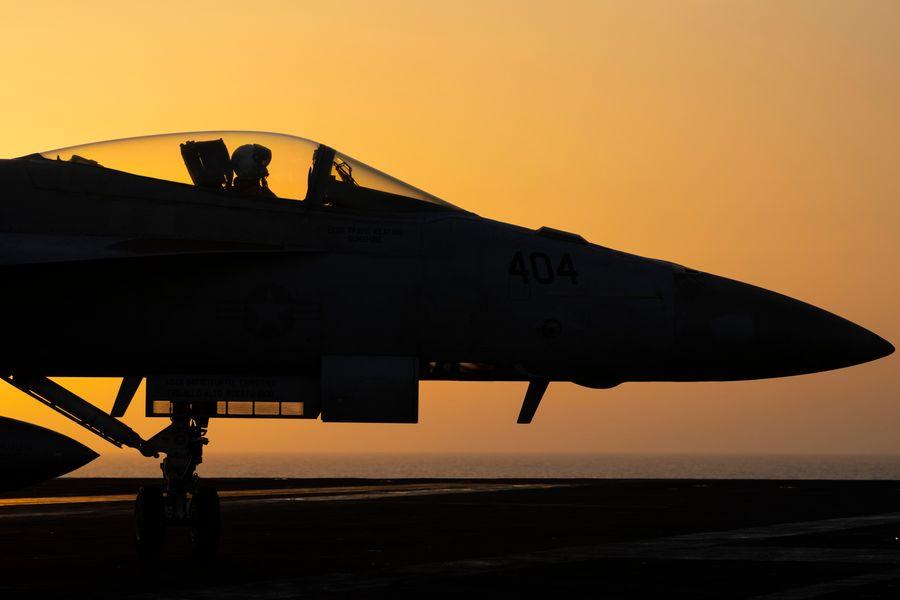
Since January 2024, the United States, Britain, and Israel have launched airstrikes against Yemen’s Houthi rebels in response to their attacks on commercial shipping and U.S. military aircraft near the Red Sea. One U.S. aircraft carrier narrowly avoided a missile strike—though an F-18 jet was lost in the maneuver—and the Houthis have sunk two cargo vessels, thus far disrupting 15% of global maritime trade that transits this critical corridor.
Major shipping companies have rerouted, avoiding the Red Sea entirely, while Europe lacks the naval capacity to secure these waters on its own. Airstrikes have failed to deter the Houthis, and with the group resuming attacks in July, it seems evident that President Trump’s peace deal with them in May is in tatters. The U.S. must now pursue a broader strategy, targeting Houthi enablers like Iran and China, revitalizing diplomacy, and preparing a coordinated military response if necessary. Most importantly, President Trump must punish the Houthis for welching on the peace deal and to signal new repercussions unless they respect their agreement.
The Houthis, a Zaydi Shiite movement, emerged in the 1990s amid persecution by former Yemeni President Ali Abdullah Saleh. They rose to prominence in Yemen’s 2004 north-south conflict, championing anti-corruption and social justice. But the 2003 U.S. invasion of Iraq radicalized them, inspiring their infamous slogan: “God is great, death to the U.S., death to Israel, curse the Jews, victory for Islam.” Backed by Hezbollah and supplied by Iran, the Houthis seized Yemen’s capital, Sanaa, in 2014 and demanded greater political power.
Saudi Arabia and the UAE intervened in 2015, hoping to dislodge them from southern Yemen. But their campaign failed, producing famine, civilian casualties, and accusations of war crimes. The U.S., implicated through arms and intelligence support, became a lightning rod for Houthi propaganda, bolstering their narrative of foreign oppression and resistance.
Today, the Houthis claim to defend Zaydism against a Saudi-backed Sunni regime, fight inequality, and oppose U.S. and Israeli influence. These shifting, often contradictory aims complicate diplomacy. But what is clear is that airstrikes and ground operations have not and likely will not work. The Houthis are resilient, decentralized, and increasingly self-reliant, having developed domestic weapons production and the capacity to deploy drones, missiles, and sea mines.
The U.S. must stop fighting the wrong war. Solely targeting the Houthis misallocates military and political resources. Key Houthi strength lies in Iran and China acting as external enablers.
While weakened by U.S. and Israeli strikes in summer 2025, Iran still supplies weapons, logistics, and tactical advice to the Houthis. It does not control them, but it empowers them. President Trump’s military pressure has rattled Tehran. Now is the time to raise the cost. Washington should warn Iran that continued support for Houthi aggression will provoke targeted strikes against Iranian arms networks and naval assets in the Gulf. It is vital to target Tehran’s current vulnerabilities without committing U.S. troops to another ground war.
China’s role is equally alarming. The Houthis are using Chinese-made weapons, reportedly in exchange for sparing Chinese vessels. Chinese components have enabled the production of hundreds of drones and cruise missiles. Worse, a Chinese firm is allegedly supplying satellite imagery to guide Houthi attacks, one of which nearly struck a U.S. aircraft carrier.
The Trump administration must take three decisive actions. First, it should publicly condemn China’s complicity, calling out Beijing’s hypocrisy as a supposed “responsible stakeholder.” Because Chinese military doctrine is steeped in claims of moral authority, reputational damage could incentivize restraint. Second, the U.S. must expand sanctions on Chinese companies aiding Houthi production. As with past coercive tools, Beijing will weigh costs and benefits; a higher price tag could change the calculus. Third, the U.S. should signal that any future Houthi attacks risk triggering more forceful, multilateral military reprisals—not only against the Houthis but against those enabling them.
Diplomacy remains essential. Trump’s earlier deal with the Houthis—brokered with Omani help—proves that negotiation is possible. But it must be grounded in reality. The U.S. should clarify what the Houthis actually want, be it territorial control, political inclusion, or economic reforms, and seek a deal that secures maritime trade while addressing core grievances. Oman’s neutral stance and credibility make it the ideal broker. But diplomacy must be backed by coercive credibility: If talks fail, the U.S., Europe, and Israel must be ready to coordinate a more punishing campaign, ideally led by European navies to share burdens and demonstrate global resolve. Additionally, with nascent U.S. overtures recognizing Somaliland as an independent country, access and relations with that country could serve a vital counterbalance against the Houthis the regions due to potential basing and intelligence operations. Such cooperation between Washington and Hargeisa could help keep the straits around Bab el-Mandeb safe from attacks emanating from Yemen, while also putting more pressure on al-Shabaab in Somalia, as they have been known to coordinate and cooperate with the Houthis.
Precision airstrikes (i.e., targeted against launch platforms, drone production sites, and missile infrastructure) can degrade Houthi capabilities without deepening U.S. entanglement. But the message must be unmistakable: Further Houthi escalation will result in strikes on higher-value leadership and logistics nodes. If paired with diplomacy, this calibrated pressure may compel the Houthis to reconsider the costs of aggression, especially given Iran’s weakened posture and China’s rising exposure.
The United States cannot afford miscalculations in the Red Sea region. Fighting the Houthis with airstrikes alone is like mowing the grass without pulling out the roots. Ground wars are unwinnable, and decapitation strikes alone are unsustainable. But a 4-pronged strategic approach of (1) pressuring Iran, (2) exposing China, (3) reviving diplomacy through Oman, and (4) preparing for multilateral escalation, can reverse Houthi momentum, restore Red Sea security, and reassert U.S. leadership in a region where strategic confusion has reigned for too long.
Failing to act decisively will not just embolden the Houthis, it will accelerate maritime insecurity, strain alliances, and further erode American credibility in the eyes of both friends and foes.
James Farwell, J.D., is a senior fellow at the Sympodium—Institute of Strategic Studies and has advised U.S. Special Operations Command and U.S. Strategic Command. His books include Information Warfare (Marine Corp U. Press, 2020) and Persuasion and Power (Georgetown U. Press, 2011).
Lieutenant Colonel Jahara “FRANKY” Matisek, Ph.D., (@JaharaMatisek) is a U.S. Air Force command pilot and fellow at the U.S. Naval War College, and is also a research fellow at the Defense Analyses and Research Corporation, European Resilience Initiative Center, and the Payne Institute for Public Policy. He has published two books and over one hundred thirty articles on strategy, warfare, and international security.
The views expressed are those of the author and do not reflect the official position of the U.S. Air Force, U.S. Naval War College, Department of Defense, or the U.S. government.
2949 Marine Prisoners, Hostages, and Peacetime Governmental Detainees Since Our Corps' Founding
By Jon Couch • RealClearDefense
America Must Win the Biotech Race Against China
By Rob Maness • RealClearDefense
How Digital Twins Can Strengthen Naval Readiness Before a Crisis Begins
By Carl Napoletano • RealClearDefense
The Uninsured Sky
By Joe Sandri • RealClearDefense
Counterterrorism and the Growing Convergence in Homeland Security and Homeland Defense
By Austin Doctor • RealClearDefense
How Digital Twins Can Strengthen Naval Readiness Before a Crisis Begins
By Carl Napoletano • RealClearDefense
F-16s Build on Iran Combat Lessons to Prepare for China Threat
By Rebecca Grant • Lexington Institute
U.S. Aircraft Evacuated From Second U.K. Base Due to Iran Threat
By Holliday, et al, WSJ
US Marine Corps Acquires Textron’s Ripsaw M3 Uncrewed Ground Vehicles
By DPost
U.S. Navy’s First San Antonio Flight II USS Harrisburg Completes Sea Trials
By GDN