
Xi and Beyond
Last updated 02:26 PM EDT • Read time: 4m
More ambitious, more educated and more engaged — the CCP powers into the second century.
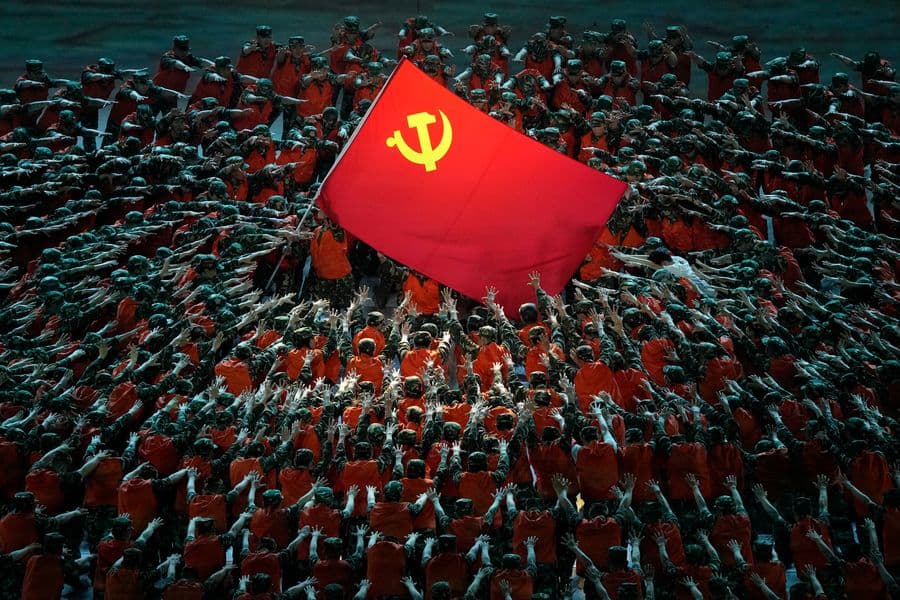
After more than four decades of reform and opening up, the centenary celebrations of the Chinese Communist Party (CCP) were an opportunity for the Party-state to proclaim the success of “socialism with Chinese characteristics”. President Xi Jinping’s speech on 1 July made no bones about China’s future and the centrality of the CCP – “China’s success hinges on the Party.”
China’s new confidence and its approach to the world is thanks to the CCP. The “rejuvenation” of China is repeated 24 times in Xi’s speech. In practice, though, what does this rejuvenation mean? China will continue to pursue development, domestically and abroad, in its own way – that is, “socialism with Chinese characteristics” – but the Party-state will be front and centre in this approach. As I have argued elsewhere, China’s development approach is typified by being state-led – not just economically, but socially, too. It involves an array of stakeholders from both the central state as well as the local level. And now, pivotal to that development is the Party, for it is the Party that has led and will further lead China in its rejuvenation, according to Xi.
The centenary celebrations in Tiananmen Square and Xi’s speech demonstrated a confident China, one that wants to be seen as a nation that will stand up to bullies and rightfully assert its power to do so. Simultaneously, Beijing also wants to be seen as an advocate for peace and peaceful development. While those aims are not dichotomous, they do suggest that Beijing has struggled to find the right balance between assertive – cue Wolf Warrior diplomacy – and being seen as a friend, empathic and committed to “a people-centred philosophy of development … [that] safeguard[s] social fairness and justice”.
As Xi notes, the complexities in the international environment will surely challenge China in its attempt. Nonetheless, this quest to strike the right balance between assertive China and peaceful China is not something that Australia will likely benefit from in its bilateral relations. It seems clear that Beijing is firmly sticking to its approach, where “sanctimonious preaching” – think of Australia’s role in initiating the WHO enquiry into the origins of Covid-19 – is unwelcome. To guard against the bullies of the world, China must have a strong military. And as Kurt Campbell, White House Coordinator for the Indo-Pacific, noted last week, China is seeking to “cut Australia out of the herd”.
Recentralisation of power under President Xi Jinping means Chinese Communist Party (CCP) membership will be even more important (Jean-Marc Ferré/UN Photo/Flickr)
The CCP is the largest governing party in the world with some 95 million members. With the recentralisation of power under Xi Jinping, Party membership will be even more important. Yet, membership to the Party has slowed since Xi came into power. This is largely the result of additional criteria being put in place to recruit “quality” candidates, for example, younger and more educated individuals. By 2019, those with academic degrees made up just over 50 per cent of Party membership, compared to just under 35 per cent for those who identified as workers and farmers, the CCP’s traditional support base.
Figures released by the CCP in 2019 showed that only 8.4 per cent of its members worked for the Party and government. However, anyone in a position of authority – whether in the military, universities, educational institutions or state-owned enterprises – will almost certainly be a Party member. And this coincides with the mandatory and rapid institutionalisation of Party cells in civil society organisations and private enterprises. Efforts to formalise control of these sectors indicate that CCP membership, while increasingly difficult to attain, will nonetheless be critical when scaling the career ladder, irrespective of the sector.
As the CCP enters its second century, its role in Chinese society, politics and the economy will be greater than in the previous decades of reform and opening-up. That will have spill-over effects as Beijing seeks out ties and engagement with other nations to fulfil its Chinese Dream.
Jennifer Hsu is a Research Fellow in the Public Opinion and Foreign Policy Program. She is currently working on a project which explores the intersections of Australia’s multiculturalism and foreign policy. Prior to joining the Institute, Jennifer was a Policy Analyst with China Matters. After completing her PhD at the University of Cambridge in Development Studies, she researched and taught in development studies, political science and sociology in universities in North America and the UK. Jennifer is also a Visiting Fellow at the Social Policy and Research Centre at the University of New South Wales. Her research expertise broadly covers state-society relations, state-NGO relations, civil society and the internationalisation of Chinese NGOs, and she has published widely in these areas.

U.S. Navy Shipbuilding: The Good, the Bad and the Ugly
By Brent Ramsey • RealClearDefense
The Services Do Not Need a Four-Star Autonomous Warfare Command
By Steven Wills • RealClearDefense
Honor Them While There Is Still Time
By Jeffrey Rosales • RealClearDefense
From Siberia to Fairford: How Operation Spider’s Web Has Changed the Rules of Airpower
By Frank A. Rose • RealClearDefense
Faster Simulations, Better Defense Decisions
By Rut Lineswala • RealClearDefense
U.S. Navy Shipbuilding: The Good, the Bad and the Ugly
By Brent Ramsey • RealClearDefense
Hegseth Barred Trans Troops. Military Boards Are Rejecting Those Orders.
By NYT
Closing the Sea: Lessons from Ancient Mediterranean Blockades
By DeCasien, CIMSECFrom Siberia to Fairford: How Operation Spider’s Web Has Changed the Rules of Airpower
By Frank A. Rose • RealClearDefenseFaster Simulations, Better Defense Decisions
By Rut Lineswala • RealClearDefense