
Intolerable Risk
Last updated 06:48 AM EDT • Read time: 6m
Putin’s Nuclear Saber-Rattling Bodes Ill for an Indo-Pacific Confrontation
Vladimir Putin’s nuclear brinksmanship defined the Ukraine War from the commencement of hostilities and with his threat that any intervening power would suffer "severe" and "unprecedented" consequences. Mr. Putin has sharpened his nuclear threats since, raising the alert level of Russian nuclear forces last week and assaulting several Ukrainian reactors to raise the risk of a meltdown or radiation leakage. Notwithstanding the chance that Mr. Putin may deploy nuclear weapons, the US and allies’ reaction bodes ill for Sino-American competition: China can use nuclear brinksmanship far more effectively than Russia.
Russian nuclear brinksmanship fits within the Russian military's escalate-to-terminate doctrine. Unlike its Soviet predecessor, Russia has insufficient conventional forces to defeat NATO in a broader conflict. Russia's intervention in Ukraine intensifies its insecurity. The overwhelming majority of Russian ground combat power has been committed to Ukraine, making even limited NATO escalation dangerous for Russia's strategic position in the Eastern Mediterranean, Black Sea, or Baltic, and in the northern seas where NATO is now conducting a 30,000-man exercise including elements of the 2nd Marine aircraft wing.
Thus, Russian doctrine builds in nuclear use as a signaling tool. By threatening to use or using nuclear weapons in a limited military capacity, Russia believes it can show its resolve to NATO, raising the stakes of any limited NATO intervention to potentially catastrophic levels. Under this logic, Russian nuclear threats are not irrational. Indeed, they demonstrate clear strategic rationality: Mr. Putin and the General Staff recognize their relative weakness and understand the need to raise the risks of intervention. In turn, Russia identified NATO weapons shipments as possible military targets, increasing the odds of horizontal escalation.
Of course, NATO is highly unlikely to escalate. At most, it will continue arms shipments, deploy forces across the Atlantic Alliance's eastern flank, and improve air defenses in Poland, Romania, and the Baltics. Putin's blood price will be paid in Ukrainian and Russian lives, not those of NATO soldiers.
Nevertheless, the results of Putin’s nuclear brinksmanship will hold lessons for the Chinese Communist Party and all the more so because of Mr. Biden’s failure to remind Russia of the US policy of extended nuclear deterrence.
The parallels between Taiwan and Ukraine are clear to even the casual observer of international events: both are Western-aligned states beyond the West's formal defense perimeter and clear targets of authoritarian predation for historical-ideological, domestic-political, and geostrategic reasons.
However, the similarities end there. Ukraine has significant strategic depth. It is over 600,000 square kilometers. Its 44 million population is dispersed in large settlements, most numbering in the hundreds of thousands, the largest into the millions. It has a 900,000-man pool of veterans from eight years of war in Donbas. This does not count those veterans of paramilitary units in 2014-2015 or those Ukrainians who purchased military equipment on their own initiative. Ukraine's strategy, as commonly described, trades space for time, forcing Russia to disperse its mass against multiple points and thereby diluting the strength of Russia's offensive.
Ukraine has bet that, as Russian casualties mount, the mud sets in, and Western sanctions pressure cripples the Russian economy, Putin will either reduce his maximalist territorial demands or face a revolution. Western military aid is simply a final flourish: the more anti-tank and portable anti-air missiles Ukrainian soldiers and volunteers have, the more Russian tanks they can kill as the enemy advances on Kyiv, Kharkiv, Mariupol, and perhaps Odesa.
Taiwan lacks all of Ukraine's geographical advantages. It is a small country, slightly over 36,000 square kilometers. Its 24 million population is packed into a handful of massive cities. The country's east is too small to act as a national redoubt. Moreover, even if Taiwan adopted the asymmetric "porcupine" strategy, US defense analysts advocate, it would still require American support to survive after a conflict's opening days. In the best case, Taiwan would field enough anti-ship and anti-air missiles to prevent the PLA Navy from crossing through the Luzon and Miyako Straits with enough force to pressure Taiwan’s east, thus enabling American resupply.
Taiwan’s importance to American strategy and global economic relevance make US intervention likely. The same can be said of Japanese intervention. Unless China can make a threat so overwhelming as to break US resolve.
Even moderate nuclear coercion seems to have spooked the Biden administration. Poland understandably requested that the US handle its proposed MiG-29 transfer to the Ukrainian Air Force. The United States refused, almost certainly out of fear that Putin would make good on his nuclear threats. Poland, although one of NATO's more capable members, is a small power. The United States is the only NATO member with enough military capabilities and political leverage to execute a transfer and prevent Russian reprisal. Russia’s strike against NATO arms shipments close to the Ukrainian-Polish border resulted in a feeble response: American capitulation in the face of Russian nuclear bullying.
Indeed, Russia’s attempts to capture Ukrainian nuclear reactors, including the infamous Chernobyl plant, the Zaporizhzhia nuclear plant – the largest reactor in Europe – and the experimental reactor at Kharkiv's Institute of Technology allow him to raise the nuclear temperature without overtly deploying weapons. US ambiguity about nuclear deterrence inclines policymakers to accept severe limitations on the exercise of US military power.
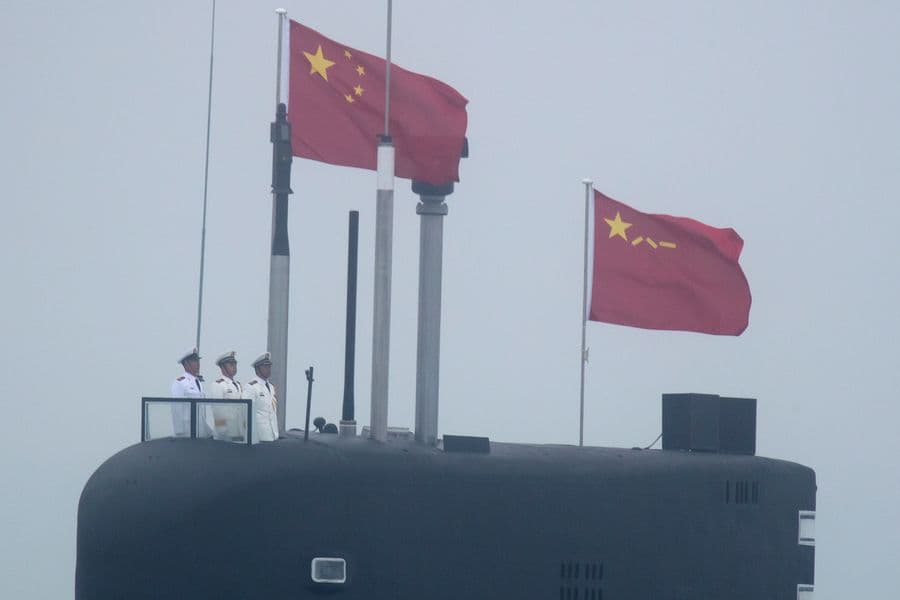
China's nuclear arsenal remains far smaller than its American or Russian counterparts by around a factor of ten. But it is expanding. Last year, the Pentagon estimated that China would field a 700-warhead nuclear force by 2027. Satellite imaging detected 250 new missile silos in western China. And the PLA Navy is deploying new, more advanced nuclear-powered ballistic missile submarines to bolster its second-strike capabilities. Moreover, China need not be capable of unleashing a backbreaking nuclear strike to influence American strategy. A liberal democracy like the United States has a limited casualty tolerance outside of situations the body politic regards as truly existential. And even if the US public sees a cross-strait conflict as existential, the American political class may ignore public pressure, deem the public insufficiently educated, or consider capitulation an honorable or prudent alternative to conflict.
Thus, the CCP and PLA may deem a nuclear ultimatum or even a demonstrative nuclear detonation in the western or central Pacific a reasonable choice if that is the cost of breaking American resolve and isolating Taiwan.
There are military actions the United States can pursue to mitigate a Chinese nuclear threat, from building more and better missile defenses and integrating extant capabilities into a comprehensive network to improving undersea detection technology to hunt and kill Chinese SSBNs. However, the question hinges upon political will, not military might. The Biden administration has been unwilling to appear even publicly aggressive towards Putin's Russia beyond its imposition of economic sanctions and limited arms transfers. If the same is true of a China that assaults Taiwan, the US' Indo-Pacific position is lost.
Seth Cropsey is founder and president of Yorktown Institute. He served as a naval officer and as deputy Undersecretary of the Navy and is author of Mayday and Seablindness.

ICE Is Not a Four-Letter Word
By Meda Parameswara Reddy • RealClearDefense
The U.S. Can Draw Down in the Middle East Without Going Blind
By Cudi Zerey • RealClearDefense
America Needs a Joseph Directive
By Jeff Ballabon • RealClearDefense
Partnering Decides Whether Flexible Military Construction Can Work
By Matt Russell • RealClearDefense
Eight Months of Epic Fury and Still No Internal Alternative
By Stephen D. Cook • RealClearDefense

GE Aerospace to Supply Engines for Two US Navy Flight III Destroyers
By Defense Post
U.S. Air Force Asks Industry for New Cruise Missile for Ukraine
By Michael Peck, DNews
First Flight II San Antonio-class Amphib Completes Builder’s Trials
By Mongilio, USNI N.
LGM-35 Sentinel ICBM on Track for 2030
By Kris Osborn, Warrior Maven
On American Destroyers, Avoid a Self-Inflicted Wound in Spain
By Defense News