
U.S. Must Counter Collective Nuclear Blackmail
Published June 18, 2022 • Read time: 10m
Social, economic and security challenges aplenty have marked what is becoming a tumultuous 2022. The most significant of all the problem sets may be the emergence of a new norm in nuclear doctrine – blackmail. That approach is in stark contrast to the notion of Mutually Assured Destruction, where major powers – United States, the USSR, and China – viewed atomic attack as truly a last resort. The United States must now seriously consider its options to counter a new collective nuclear blackmail.
New Paradigm
For decades, the U.S. nuclear policy and posture has been to deter and, if necessary, defend against missile attacks on the U.S. homeland, our territories, and our allies. In an environment of Mutually Assured Destruction, presidential administration after administration assumed that the Soviets, and later the Russians and Chinese, believed what we believed – that a strategic nuclear exchange was suicidal for all parties and, therefore, highly unlikely.
The Mutually Assured Destruction premise rests squarely on a balance of power. Originally limited to two nuclear clubs – NATO and the Warsaw Pact – the antagonists had sufficient offensive and defensive capability to make a first strike foolhardy. Enhanced defensive capabilities have been offset by the development of Multiple Independently-Targeted Reentry Vehicles. China’s nuclear capability remained comparatively small as the Warsaw Pact dissolved and NATO expanded. The lineups changed, but the cataclysmic calculus was still the same zero-sum standoff.
As Allies' Capabilities Grow, They Need To Work With U.S. on Nuclear Signalling
President Kennedy: MAD & the Lessons of Berlin and Cuba
The Pope of FEMA
Over-Feminization of Journalism and Modern Woke Reporting
Nuclear-capable Israel, India, and Pakistan were regional outliers in the global equation. A limited exchange in the Middle East or South Asia would be horrific, but not directly threaten the United States. North Korea has emerged as a rogue nuclear state willing to threaten US territory. Significant investment in the missile defense of Guam, Hawaii and the continental United States was oriented to the DPRK, with some consideration of expanding Chinese long-range weaponry, both nuclear and conventional. However, for the major powers, the United States, Russia, and China, Mutually Assured Destruction remained intact.
The 2018 U.S. Nuclear Posture Review presaged a shift in doctrine when the authors described a Russian philosophy involving “the threat of nuclear escalation or even first use of nuclear weapons [that] would serve to de-escalate a conflict on terms favorable to Russia.” Putin’s ill-conceived invasion of Ukraine has included just such threats as Russian forces have suffered substantial setbacks or may even face defeat. Putin first explicitly raised the nuclear option to deter outside intervention, and since has hinted of the use of tactical nuclear weapons to force capitulation or punish intervention from or expansion of the NATO alliance.
In a recent interview with The Financial Times, Harvard University national security analyst Graham Allison stated, “If Putin is forced to choose between losing on the one hand in Ukraine and escalating the level of destruction, there’s every reason to believe he will escalate the level of destruction.” And Dr. Henry Kissinger recently noted that not just the United States, but the entire world has yet to come to grips with how it would respond to Russia using nuclear weapons in Ukraine. When asked what our response should be, he stated “One thing we could not do, in my opinion, is just accept it. Because that would open a new method of blackmail.”
Dangerous Bedfellows
Putin’s threats are, no doubt, emboldened by his evolving strategic relationship with China’s Xi Jinping. These strange bedfellows tied the knot formally just 20 days prior to the invasion of Ukraine in a joint statement that made clear the signatories’ opposition to the shared objective of the United States and its allies of a free-and-open Indo-Asia-Pacific Region. The document codified Russia’s support to China regarding Taiwan.
Russia and China have been joined by fragile arranged marriages with each other in the past, but this iteration seems different. After the conclusion of the Beijing Olympics, Putin did not hesitate to launch his special military operation (read: invasion) into Ukraine. Despite nearly universal condemnation, Xi stands by his man, loyalty that will require reciprocation in the future.
Xi has left no doubt about his willingness to resort to a military option to reclaim Taiwan, and it would be naïve to expect the Chinese to refrain from nuclear coercion in such circumstances. With Russian backing for a move against Taiwan or aggression in the volatile South China Sea, the potential for nuclear coercion is exceedingly high.
Those concerns may seem hypothetical, but the new relationship already has practical manifestations. During President Biden’s recent visits to South Korea and Japan, joint patrols of Russian and Chinese aircraft penetrated the respective countries’ Air Defense Identification Zones in an unprecedented expression of collective military power and intent.
When North Korea conducted its first nuclear test in October 2006, the United Nations Security Council, including members China and Russia, quickly condemned the test and passed a resolution imposing significant sanctions. In contrast, the newly minted strategic partners both vetoed further sanctions considering an unprecedented series of North Korean missile tests in the first half of 2022. This first-ever rejection of sanctions marks the emergence of an unholy trinity implicitly willing to hold the world order at risk by threatening, and perhaps executing, limited nuclear attack.
Arsenal of Autocracy
The arsenal of the autocratic alliance is individually impressive and collectively daunting. The Russian threat – a wide array of air and sea launched stealthy cruise missiles and hypersonic missiles, such as the Avangard system – currently present unmet challenges to U.S. detection and interception in a regional conflict or if directed at the homeland. China has a smaller but growing nuclear arsenal with advanced delivery systems like the DF-41 ICBM and submarine-launched SL-3, both with multiple warheads. The North Korean threat is limited in numbers but includes submarine-launched missiles and ICBMs, and another nuclear weapon test is expected soon. Kim Jong-un can now credibly threaten South Korea, Japan, Guam, and the U.S. mainland and, therefore, cannot be treated as an outlier by our nuclear doctrine. All three countries have pursued increased capability in recent years through outsized investment in research and development and relentless test programs.
Deterring and Defending in the New Environment
We have witnessed the indirect cost of failed deterrence in Ukraine. Tens of billions of dollars poured into the fire in an attempt to turn back Putin’s objectives. The message for the future must be that we must demonstrate credible resolve early to deny the potential ambitions – ideological, territorial or otherwise – of authoritarian leaders who may hold partners, allies and the U.S. homeland at risk.
Creating a leak-proof defense against a full-scale strategic ballistic missile attack from either Russia or China is neither feasible nor affordable, but the United States must have systems capable enough to deter and stop atomic extortion. That will require significant investment in missile defense.
For example, the President’s 2023 budget allocates more than $800 million for the defense of Guam. The Department of Defense is spending another $1.6 billion on the Missile Defense Agency’s (MDA) Next Generation Interceptor program, a significant upgrade to its Ground-based Midcourse Defense against ballistic missiles.
But Congress must view these investments as just a start. Missile defense of the United States in the era of nuclear blackmail requires modernization to meet new threats and expanded geographic coverage, recognizing that the defense of the homeland begins with the regional defenses of the combatant commands. MDA must be robustly resourced and staffed with the wide variety of expertise to meet this challenge, and regional defenses, especially in the Indo-Pacific, be bolstered as well to play their part.
Unfortunately, there is no single “silver bullet” solution to these challenges. The threats – ICBM’s, cruise missiles, hypersonic missiles – are so different in nature and capability that they each require defensive countermeasures that may be applicable only, or at least primarily, to that particular threat.
MDA, Congress, and the Administration have made a series of excellent judgements with respect to the Next Generation Interceptor program. Of particular note and value was the recent Biden Administration decision to extend the competition between two industrial teams deeper into the acquisition process to developmental test and engineering. This philosophy, if continued, will ultimately yield a more capable final design, and will hopefully allow an improved shot doctrine, wherein fewer interceptors will be needed against an increasingly sophisticated incoming ICBM.
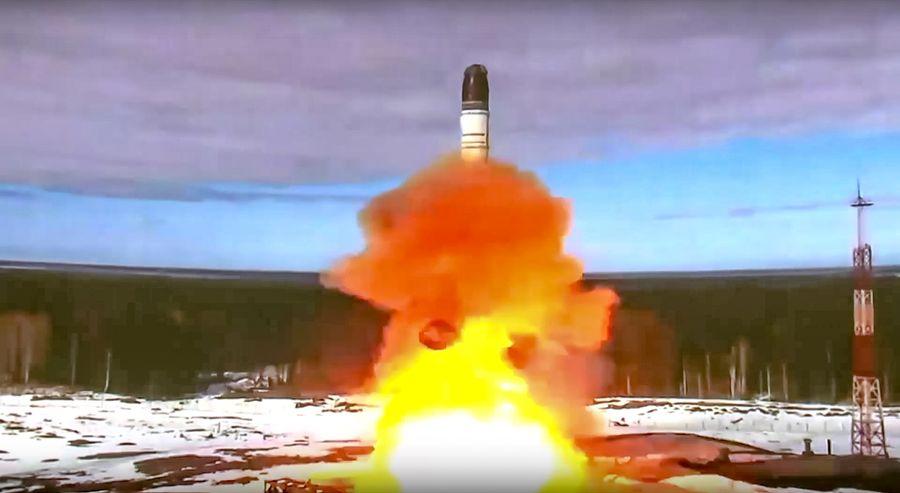
While our defense against rouge nations’ ICBMs and perhaps a “one off” ICBM threat, such as Russia’s new Sarmat ICBM, which features as much as ten or more independent re-entry vehicles, is making steady progress, our defenses against stealthy, long range cruise missiles and hypersonic threat systems are severely lacking. Russia’s conventional and nuclear cruise missiles, for example, can be launched from exceptionally long distances and are virtually invisible until impact. The United States requires the capability to detect a launch far from our shores, most likely with an elevated radar and/or infrared sensor, with the capability to pass target quality data along to potential engagement systems. These include such systems as Aegis-equipped ships, joint fighter aircraft equipped with airborne electronically scanned array radars capable of tracking stealth, and finally, land-based systems like PATRIOT and THAAD.
It is possible that this detection and tracking role could be performed by what former Undersecretary of Defense for Research and Engineering Mike Griffin called a “space sensing layer” of multiple satellites in multiple orbits as part of a defense against hypersonics. While the field of regard to detect incoming cruise missiles would be limited to one or two thousand miles from U.S. borders, the area to be surveilled to detect incoming hypersonic missiles is global. While the initial launch of a hypersonic missile would be detected just as we now detect ICBM launches, once the missile enters its glide phase it becomes much more difficult to track. A capable space sensing layer would take a handoff from satellites detecting the initial launch and use radar, improved infrared, or a new emerging technology to track the missile and cue a layered defense of destruct mechanisms, perhaps including a directed energy weapon and an improved ground interceptor.
All of this must be commanded and controlled through a single and completely joint data sharing and display system that connects commanders in the combatant commands with the commander at NORAD/NORTHCOM, as well as with the national command authority. As the decision time available versus a hypersonic missile is severely constrained, this command-and-control system could benefit greatly from the application of artificial intelligence to both provide more time for a decision as well as improve the quality of whatever that decision might be.
None of this implies a need for a start-from-scratch solution set. Much of this work is already ongoing, but in a siloed and uncoordinated fashion. What is desperately needed is policy guidance to knit all these disparate solution threads into a coherent unity of effort.
Never during the Cold War did leaders on either side of the Iron Curtain flippantly and casually discuss the use of nuclear weapons, of any kind or size, as the Russian leadership is doing now. Allowing Russia, China, or North Korea to hold a Sword of Damocles of nuclear blackmail over our heads will make the chill of that war seem very warm by comparison.
The authors are both retired USAF general officers. Lieutenant General Dan “Fig” Leaf has served on active duty as the deputy commander of U.S. Pacific Command. His many articles and essays include “An urgently practical approach to the Korean Peninsula,” which won the Oslo Forum’s first-ever Peacewriter Prize in 2017. Major General Howard “Dallas” Thompson is a former Chief of Staff at NORAD and NORTHCOM. He has been widely published for many years on the subject of missile defense, including ICBM’s, cruise missiles, and recently hypersonic threat systems.

Batteries Can Power a Win for America in Super Intelligence
By Manisha Singh • RealClearDefense
Poland’s Fighter Fleet Is Growing: Can Its Training System Keep Up?
By Bruce Allen Lubbering • RealClearDefense
Why Iran is Not Vietnam
By Kevin Brown • RealClearDefense
Closing the Missile (Defense) Gap
By Jason Camilletti • RealClearDefense
Part of a Larger Secret, Hidden World
RealClearDefense
Closing the Missile (Defense) Gap
By Jason Camilletti • RealClearDefense
U.S. Navy Prepares for Third Zumwalt Hypersonic Upgrade
By C. Johnston, Naval N.
Pearl Harbor Hero Doris Miller Will Stay Namesake of CVN-81
By Mongilio, USNI News
Navy CCA Plans Will Not Wait For F/A-XX Next Generation Fighter
By The WarZone
Navy’s Shipbuilding Plan Would Require Massive Hike in Appropriations
By BrDef