
Implications and Responses to Putin's Tactical Nuclear Weapons Drills
Published May 25, 2024 • Read time: 9m
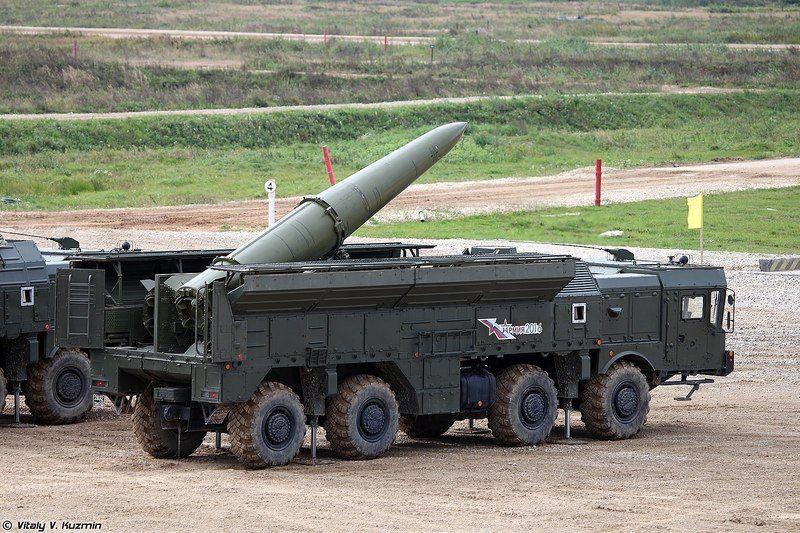
Russian President Vladimir Putin is afraid. Despite its 5- to-1 advantage in population, superior indigenous military technology, and abundant energy exports, Russia is unable to defeat Ukraine in a conventional war of attrition, even when Western supplies are at their nadir. After two winters of unsuccessful aerial bombardment against Ukraine’s electrical infrastructure, which predictably has failed to subdue Kyiv, Putin has decided on a strategy of threatening a sharp escalation with tactical nuclear weapons in order to end the war in Ukraine. Without Western help, Ukraine would be completely exposed to a Russian nuclear volley or the threat of attack.
Putin’s 2024 electoral victory was primarily an endorsement of his decades-long policy of ensuring the stability of jobs and pensions, although media claims that there has been an increase in Russian support for his war strategy is undermined by the obvious persisting army manpower shortage. His regime has so far suffered a military insurrection, and is crucially constrained by a mass dodging of conscription by the under-35 urban population cohort, which will only worsen with time. Furthermore, Moscow is faced with a closing window of opportunity of a few months before U.S. and NATO munitions and F-16s shift the balance back to Kyiv. Without an end to the war, economic sanctions will erode Russia’s economy before Putin completes his six-year term. Paradoxically, if Russia’s new defense minister, Andrey Belousov, rehabilitates the Russian army’s sense of corporate identity, and there follows another humiliating battlefield defeat, it could move to depose Putin.
Moscow is very likely contemplating a nuclear-enhanced equivalent of Germany’s March 1918 Kaiserschlacht Offensive, which was Berlin’s last desperate gamble to end the First World War in France before U.S. industrial power came to bear. When that effort failed in July to convince Paris and London to make peace, the German army’s morale plummeted and it disintegrated within three months, despite never having been defeated decisively. Kaiser Wilhelm fled to exile in neutral Holland, and Germany capitulated. Both AJP Taylor’s study of Hitler’s diplomacy, and CIA interrogator John Nixon’s meetings with Saddam Hussein, suggest that the foreign policies of dictator are remarkably ad hoc, indicating there is still time and opportunity to explicitly caution Putin against further escalating his method of aggression in Ukraine.
Typically, great powers do not seriously consider the use of nuclear weapons, even in costly wars, for two reasons. First, adversaries often have allies that neutralize any nuclear advantage, defaulting to a conventional war to resolve the conflict. This was the case of the invasions by North Korea in 1950, North Vietnam in 1965, China and USSR in 1969, Egypt and Syria in 1973, China and Vietnam in 1979, and China and Taiwan in 1954 and 1958. If Putin believes that NATO is reluctant to risk a war with Russia, he may take the opportunity to exploit the deterrence vacuum by launching a single catastrophic nuclear volley against Ukraine, after which he will agree to non-use. Kyiv is likely to submit to major concessions in this instance.
Second, the demonstrated use of nuclear weapons would lead to rapid regional proliferation, undermining the nuclear monopoly and freedom of action enjoyed by the great powers. Russia has been historically obsessed with a German bomb, just as China is with Japan, and Israel with Iran, and they go to great lengths to avoid provoking nuclear weaponization. This disincentive accounts for the cases of non-use by the US in Korea in 1950 and 1953, Vietnam in 1954 (Dien Bien Phu) and 1968 (Khe Sanh), against Iraq in 1991 or 2003, the UK against Argentina in 1982, and India and Pakistan in 1987, 1990, 1993, 1999, 2001-2002, and 2019.
However, because a Russian defeat in Ukraine may well lead to the further disintegration of the regime and of territorial Russia, given the unfair imposition of the burden of war on minority groups, Putin is likely considering extreme measures to return to the status quo ante. NATO allies of Ukraine, especially Germany, have decided to deal with the dilemma of whether to confront Russia now or later, by resolving to block Putin from ending the costly war with Ukraine. Russia has fallen prey to an entrapment strategy, ensnared in a war it cannot win and which it cannot abandon without critical loss of domestic support. The U.S. exercised this against Japan’s campaign in China in the late 1930s, and against the USSR in Afghanistan in the 1980s. A non-war variant of entrapment was used by the U.S. against Iraqi President Saddam Hussein in 1991, and then applied to Iraq through a no fly zone until 2003.
NATO has just three options to deal with a Russian nuclear attack. First, abandon Ukraine after the first Russian nuclear volley. Even if no Ukrainian cities are hit, Kyiv will immediately surrender, and Moscow will likely provide an honorable peace including occupation only up to the Dniepr River, and demilitarization of Western Ukraine, along the lines of the 1955 Austrian State Treaty. The immediate effect of this would be a cascade failure of U.S. extended deterrence to its allies, and prompt nuclear weapons programs in Sweden, South Korea, Japan, Poland, Romania, Greece, Turkey, and Vietnam, and a secondary wave of proliferation by Germany, Italy, Spain, Saudi Arabia, Indonesia, and Thailand. Given the history of accidental cross-border missile launches, such as that by India into Pakistan in March of 2022, the world will become a much more dangerous place.
For the second option, it has been argued elsewhere that NATO should equip Ukraine with its own nuclear weapons. This is unwise given Kyiv’s lack of matching technical and tactical competence with nuclear weapons as compared with Russia. Also, it would lead a breakdown in the Cold War bargain between the great powers not to share nuclear weapons with other countries: imagine a sudden delivery of fifty Russian warheads to any of Iran, Egypt, Syria, Brazil, Indonesia, South Africa, Algeria, or Cuba. Ukraine would likely lose this nuclear war, surrender, and NATO would be reverted back to the dangerous world of option one.
The third option is for a declaration by NATO that it will provide extended nuclear deterrence to Ukraine. A Russian artillery-launched nuclear attack from within Ukraine will expose all Russian forces within Ukraine (including Crime and the Donetsk) to nuclear retaliation by NATO. Despite widespread rhetoric to the contrary, a retaliation consisting only of high-precision conventional weapons will fail in its military effect, as it always has, and may even encourage Moscow to launch a second nuclear volley. NATO may launch its nuclear-armed cruise missiles and air-dropped stand-off weapons within Ukrainian airspace, to minimize the incentives for a Russian strike against NATO territory. Any attack from Belarus or a Russian third-party ally like Iran, will expose Russian and indigenous military targets located there. Any nuclear missile attack from surface or sub-surface units of Russia’s Black Sea, Baltic or Northern Sea Fleets, should provoke both the use of nuclear torpedoes and depth charges, as well as a complete blockade of Russia’s Arctic maritime oil and gas exports. Any attack from within Russia by mobile theatre missiles should be met by a proportional nuclear response against military targets within Russia. Any Russian attack by aircraft-delivered nuclear weapons should face a commensurate attack on their airfields. Relying on missile interception is foolhardy, as a single high altitude detonation will impair all radar reception, and will revert NATO back to option one, culminating in a Ukrainian surrender.
In conjunction with a public declaration of its extended deterrent to Ukraine, NATO should immediately begin its own visible and deterrence-enhancing tactical nuclear weapons drills. These must include dispersal of combat aircraft, putting to sea key nuclear delivery platforms, delegation of command responsibility, and rehearsing country heads of state in NATO-directed exercises. Failure to make an open declaration backed by actual preparation will delay NATO’s response to a Russian first nuclear strike on Ukraine, because of the expected paralysis during negotiations among its members in Bruxelles. Russia will exploit this delay and likely forswear any further nuclear weapons use but having demonstrated its willingness to conduct a nuclear attack, will have significant advantages in subsequent negotiations that will likely lead to NATO’s abandonment of Ukraine, with all of the negative global consequences outlined above in option one.
One advantage of a public NATO declaration is that it will make explicit the extreme political costs of nuclear escalation to the Russian people and military, constraining Putin’s regime. What is needed is a modification of U.S. President John F. Kennedy’s October 22, 1962 declaration, along the lines of “that any nuclear missile launch would be regarded as an attack requiring automatic retaliation against the source of the attack, regardless of where. This is not to cause escalation, but to make unequivocally clear the immediate and severe penalties of a nuclear attack.” Battlefield detonations, unless aimed at moving columns, will likely be ground-bursts, which will throw-up and rain-down large amounts of radioactive earth, which will be carried by the prevailing winds over Russia’s prime agricultural lands, as well as all of Eurasia and the northern hemisphere. Given the proximity of army and airbases to cities in Russia and Europe, loss of life of only a limited tactical nuclear exchange, could total millions. Once cities are destroyed, nuclear war will probably escalate to the strategic level, to include North America, and China may seek to take advantage of the U.S.’s distraction to attack Taiwan, or take advantage of Russia’s exposed Far Eastern Amur region. Paradoxically, it is the declared anticipation of these high costs to Russia, which are most likely to constrain Putin from initiating nuclear weapons use in the first place. In contrast, a subdued Western response, desperate to avoid any confrontation with Moscow, even at the cost of abandoning Ukraine, may simply postpone a showdown with Putin in the Baltic or Poland, for a few years.
Dr. Julian Spencer-Churchill is associate professor of international relations at Concordia University, and author of Militarization and War (2007) and of Strategic Nuclear Sharing (2014). He has published extensively on Pakistan security issues and arms control, and completed research contracts at the Office of Treaty Verification at the Office of the Secretary of the Navy, and the then Ballistic Missile Defense Office (BMDO). He has also conducted fieldwork in Bangladesh, India, Indonesia, and Egypt, and is a consultant. He is a former Operations Officer, 3 Field Engineer Regiment, from the latter end of the Cold War to shortly after 9/11.
Operation Epic Fury and the Illusion of Victory
By Stephen D. Cook • RealClearDefense
Previewing The Shenzen Summit: A Critical View
By Stephen Blank • RealClearDefense
How to Win Without Military Victory
By Kevin Eyer • RealClearDefense
We Keep Funding ‘Shared Infrastructure.’ Nobody Has Defined It.
By Frederick Gale • RealClearDefense
Congress Must Reauthorize Section 702 of the Foreign Intelligence Surveillance Act
By Bryce G. Poole • RealClearDefense

Five Takeaways From Navy Nominee’s Rocky Hearing
By Seligman & Weisgerber, WSJ
U.S. Air Force Taps Anduril for Containerized Launcher
By Global Defense News
Time To Say Goodbye to the NMESIS and NSM
By Marine Corps Compass Points
HII and U.S. Navy Break Ground on Shipyard Complex
By George Allison, UKDJ
Rare U.S. Air Force Spy Plane Spotted Over the Black Sea
By D. Malyasov, Defence Blog