
Grand Strategy for a New Century
Last updated 02:09 PM EDT • Read time: 8m
The leading state sponsor of terrorism decapitated. A Latin American dictator moonlighting as a drug dealer incarcerated in Manhattan. What do these events have in common with tariffs, Greenland, AI, frank discussions with European Allies, and destroying drug running boats in the Caribbean?
For one, the news cycle churns at a dizzying pace under Trump 47. Yesterday’s “bombshell” story fades into distant memory, avoiding placement into a coherent framework. The next headline emerges, and the media scrambles to cover it all.
But here’s a stab at explaining all these seemingly disparate events. America has finally crafted a workable grand strategy for the first time in nearly four decades. All the hubbub represents the marshaling of our national resources to secure America’s most important interests. As Secretary Rubio elegantly laid out in Munich a few weeks ago, America has adopted a strategy suited for the century we are in. Not the one we just left.
The World We Live In
To begin at the end, World War II is over. The diagnosis extends to its Cold War progeny. Given the passage to a new era, it’s long past time to refashion the implementing structures fostered by the West’s Post-War strategy.
But first, America, the West, and the rest of the Free World should take pride in the bipartisan, multinational grand strategy crafted in the latter part of the 20th Century. Together with its Allies and Friends, the United States led the rebuilding of war torn nations, isolated the Evil Empire, demonstrated resolve and advocated for a better political philosophy. Cold War strategy focused attention, applied collective resources, strengthened shared values, created supporting systems and eventually triumphed.
We won by isolating the Soviet Union and revealing the emptiness of its political ethos. It could not contend with the Reagan build-up nor the Pope’s moral authority in Poland. Solidarity won. The Berlin Wall was torn down. The Soviet Union collapsed, and the Free World was victorious!
Unfortunately, all good things come to an end. Over time afterwards, America’s Allies morphed into dependents, and its foes twisted international institutions to suit purposes unaligned with founding principles. At the outset of President Trump’s second term, the view from Washington revealed a global landscape scattered with friends who stayed at the party too long and foes who were paying attention.
The results? Friendly nations enjoyed lopsided trade imbalances made possible by the U.S. adhering to free trade principles which were not exactly reciprocated. All while living under the umbrella of American-provided security, which enabled those same friends to spend richly on social welfare while allowing defense capabilities to atrophy. Inevitably, dependency devolved into an infectious, self-loathing spiritual decay.
It could be credibly asked in January 2024, what exactly would we all sacrifice or fight for together as we did in the last century? Hard to say with confidence.
The domestic view greeting Mr. Trump appeared equally, if not more alarming. He inherited a government that would not enforce its borders. Could not muster the moral courage to confront the bad actors who stampeded into the country. Flagrantly tossed away resources, aimlessly accumulated debt, and was confused by resulting inflation. Saw AI and the enterprises of the future not as opportunities, but as threats to be regulated and controlled. Suffocated energy production in pursuit of fantasy. Attempted to sacrifice its culture and collective memory of past achievements at the altar of DEI. And substituted grievance and entitlement for hard work and persistence as the paths to success.
Meanwhile, disturbing trends of societal weakness emerged and continued to march. Factories left. The middle class was squeezed. Drug use led to increasing fatalities touching most families in the Nation. Americans became increasingly overweight, unhealthy, and medicated. And most importantly, we continued to lose hope for a better future.
In sum, not exactly a position of strength.
Judged by their actions, America’s foes were taking advantage. Russia invaded former Soviet territories and threatened European security. Iran pursued nukes, destabilized the Middle East, and built drones and missiles. Its proxies launched a medieval campaign against Israel. Tinpot dictators thumbed their noses, even in the Western Hemisphere.
And Communist China lurked behind it all. Cutting deals propping up authoritarian regimes, including Russia, Iran and North Korea, stealing technology, cornering strategic minerals, unleashing a global pandemic, exporting poisonous fentanyl, and threatening its neighbors in the South China Sea. A fine thanks for being admitted into the WTO which greatly enabled China to build its economic wealth.
Grand Strategy After the Cold War
While these crises germinated, America’s grand strategy ranged from pollyannish, to quixotic, to rambling to do lists. Both parties contributed to the drift. We simply were uninspired, unfocused and missing the luxury of having a monolithic enemy.
The first attempt at “the end of history” to craft a strategy absent the Soviet Union birthed the New World Order. Liberal democracy would be ascendant. A rules-based international order would resolve disputes. Free flowing trade and movement of people became global goods to be encouraged.
Problematically, age-old disorderliness proved too hard to suppress. Welcoming Communist China into the global economic fold brought a fox into the hen house. Places like Somalia and the former Yugoslavia preferred a self selected mess to an order imposed by outsiders. Free flowing trade exported the businesses that provided good paying jobs. Globalizing supply chains created vulnerabilities. Free flowing people meant an unsustainable stream of economic migrants. It also encouraged nefarious actors to overstay visas or commit fraud on applications with tragic consequence.
Following September 11, 2001, America’s strategic focus shifted to the Global War on Terrorism. The invasion of Iraq and Surge in Afghanistan detracted attention for a decade plus from more consequential threats and challenges. Disastrous withdrawals from both theaters created a perception of weakness. In the meantime, China was on the rise and Russia was on the move.
Along the way, America adopted climate change as a strategic threat and led from behind. Naturally, that thinking initiated an exercise in self-flagellation, undermining America’s energy independence and ceding this territory to our adversaries.
A much needed return to great power competition ensued in the first Trump Administration. Unfortunately, it was too focused on military solutions and was saddled with bureaucratic resistance and the Russia Hoax. A new approach never fully developed.
And then there was the Biden Administration. Enough said.
Trump 47
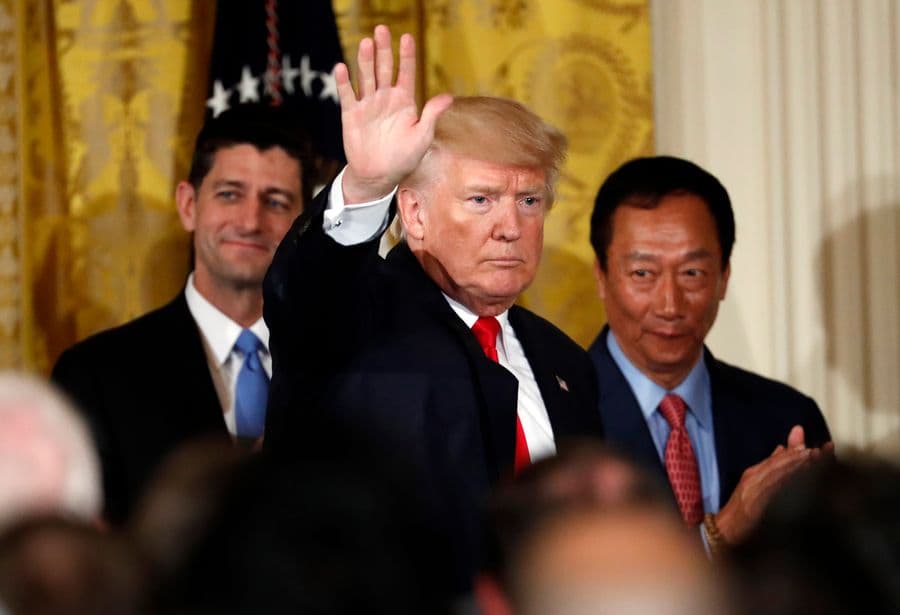
Enter Donald Trump. Having been spared twice from an assassin’s bullet, he has demonstrated a rare sense of urgency. Make America Great Again, shorthand for his approach, aims to restore the U.S. as the World’s undisputed economic leader and to re-stablish Pax Americana by leveraging all elements of national power, not just the military component.
As the President succinctly states in the newly minted National Security Strategy, we will “ensure that America remains the greatest and most successful nation in human history, and the home of freedom on earth.” Economic dominance remains indispensable to restoring hope at Home and projecting power abroad. A rededication to individual liberty offers more hope and a better alternative to autocracy.
Make no mistake. Most of the aforementioned “disparate events” are aimed squarely at Communist China. The methodology is to isolate China. Not by surrounding them with armies and diplomatic maneuvers, but by out competing them in every domain. Not a Cold War, but a Great Competition.
Economically, the U.S. competes with tariffs to re-shore critical businesses, reduce dependency on vulnerable supply chains, and rebalance trade. There is the added benefit of generating revenue for the Treasury. The U.S. competes by selling its business environment to attract enormous investments in the economic engines of the future. It also competes by establishing with its partners an independent supply of rare earth minerals.
Diplomatically, the U.S. competes by encouraging its friends to stop slouching toward “warm” collectivism and to reinvigorate the culture that made the West dominant. That means having some frank, uncomfortable discussions, but also being remindful of the beacon of freedom’s blessings. Additionally, resolving intractable conflicts around the World creates space for more productive pursuits, denies safe spaces for autocracies to flourish and elevates America’s brand.
Militarily, the U.S. competes by restoring the Warrior Ethos in a Department of War and retooling for warfare in an age of information versus industrial mass production. It also competes by refusing enemies protection of the rules-based order which they mock and in which they refuse to participate. Want to use your state to run drugs that poison Americans and get your boats blown up across the High Seas. Want to hide behind international law and negotiating agreements that are not abided by and get your regime destroyed and your nuclear program eviscerated.
And don’t expect your friends in Beijing to stand up for you. Not a part of their mercantilist bargain and empty promises.
Informationally, the U.S. competes through its prodigious efforts to dominate the AI economy and the high ground of Space. These competitive arenas are akin to dominating mass production and winning the race to the Moon in the last century.
Relentless competition from ship building to the Arctic Circle (i.e., Greenland), crypto to the Western Hemisphere, AI to the Middle East and onto energy and Europe creates multiple pressure points for China to confront. Winning these competitions creates fissures that undermine China’s bargain with its people. That is to deliver on expanding the standard of living, without which the CCP’s denial of individual freedom through harassment of its people would be far less tolerable. At some point, like the Soviets, the CCP will not be able to keep up, and the emptiness of that political bargain will be revealed.
Then, as Mr. Trump often says, we’ll see what happens.
Gregory I. Jones is a former military officer.

A Passage to the Middle East: India as a Mediator and Security Partner
By Irina Tsukerman • RealClearDefense
South China Sea is Key to Invigorate Positive U.S.–Malaysia Relations
By Brent D. Sadler • RealClearDefense
The Necropolitics of the Wasteland
By Yunus Emre Tumen • RealClearDefense
AI, Robotics, and Marines
By Gary Anderson • RealClearDefense
The Emerging SQUAD
By Muhammad Shoaib • RealClearDefense
AI, Robotics, and Marines
By Gary Anderson • RealClearDefense
AUKUS Partners Test Autonomous Maritime Systems
By Jangoulun Singsit, Naval Tech
AUKUS: USS Colorado Announced as First Submarine for SRF – West
By USNI News
Navy, Marine Corps Simulate Ship Strikes From Air and Land
By Alex Wilson, S&S
Air National Guard To Stand Up a New Special Tactics Squadron
By Patty Nieberg, T&P