
The Fourth Pillar of Xi's Global Vision
Published Oct. 22, 2025 • Read time: 6m
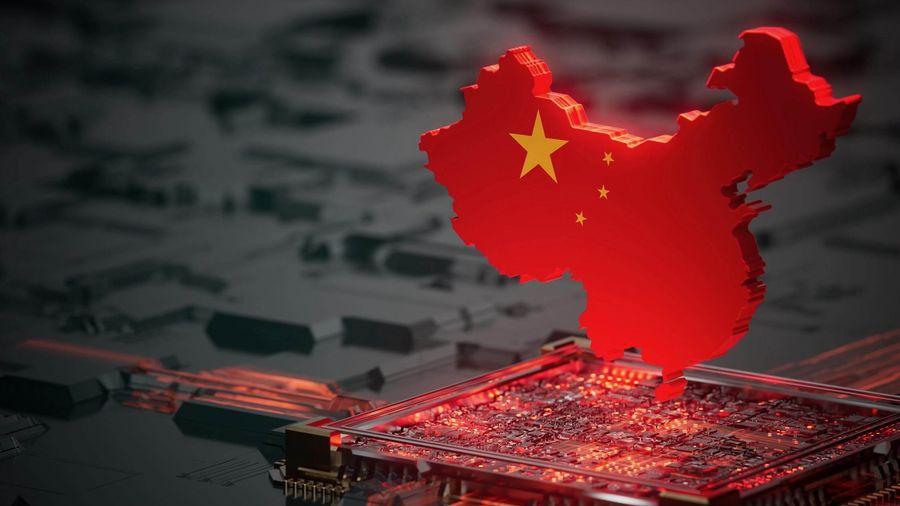
China has moved from slogan to schema. With a formal concept paper for the Global Governance Initiative (GGI), Beijing offers an architecture for multilateralism that is UN-centric in appearance yet post-Western in effect. The GGI is framed as the fourth pillar of Xi Jinping’s external vision, complementing the development, security, and civilization initiatives. Its wager is simple: if the “meta-rules” of international cooperation can be recast, the substance of global politics will follow. For liberal democracies, the strategic question is how to maintain genuinely universal rules without drifting into a binary of reflexive rejection or tacit acquiescence.
From Slogans to a Schema
The GGI ties together a set of familiar but carefully curated principles: sovereign equality, the international rule of law, multilateralism, a people-centred approach, and results orientation. Around that core, it outlines a reform agenda in domains where governance is incomplete or malleable—international finance, climate policy, trade, and, in particular, frontier technologies such as artificial intelligence, cyberspace, and outer space. The message is calibrated. It references the UN Charter and laments “double standards,” while signalling that the venue and vocabulary of rulemaking should shift. If earlier initiatives provided the theme and rhythm, the GGI aspires to be the style guide: the formatting rules for how 21st-century multilateralism should be written.
Reframing Familiar Principles
Beijing’s linguistic economy does much of the work. “Sovereign equality” is stretched beyond formal parity into a thicker shield against scrutiny of domestic practice. “International rule of law” becomes an injunction against selective enforcement—an implicit critique of sanctions, conditionality, and extraterritorial measures. “True multilateralism” is contrasted with “exclusive” arrangements, a phrase that delegitimises flexible coalitions even when they are open in practice. The GGI’s “people-centred” and “results-oriented” language sounds managerial, but it also channels debates toward concrete deliverables in new regimes where first drafts become default norms. Definitions, not declarations, carry the innovation: by adjusting the meanings of shared words, the initiative tries to reposition the centre of gravity in global rulemaking.
China’s Revised Mobilization Law and the Expanding Reach of National Defense
America Must Win the Biotech Race Against China
China’s Epic Campaign To Steal America’s Secrets
The Dual Threat: Why Beijing’s Collapse Is Just As Dangerous as Its Rise
Process Design As Power Projection
The GGI treats the process as a strategic terrain. In young regimes—such as AI safety baselines, cross-border data standards, and orbital traffic rules—the actor that sets agendas, designs mandates, and sequences deliverables shapes outcomes for a decade. This is a form of soft power, rooted in institutional design. It favours arenas where numbers, procedures, or secretariat dynamics give China leverage, and where a first-mover advantage in drafting becomes a long-term advantage in practice. Power is projected not only through vetoes or votes, but through who convenes, who chairs, and who writes the initial text around which “consensus” later accretes.
Why Will Many Listen?
The diagnosis travels well. Many states judge the current system to be under-representative, slow to deliver on development promises, and ill-equipped for disruptive technologies. There is fatigue with bloc politics and a desire for forums that elevate voice rather than amplify rivalry. For governments across the Global South, a platform that promises “more voice, faster results” is a rational wager—especially when bundled with financing, technology offers, and diplomatic cover from “choose a side” pressures. The GGI wraps these incentives in Charter-inflected language that sounds universal but is deployed with strategic specificity. It invites undecided capitals to see China’s approach not as rupture but as overdue renovation.
Likely Effects
Norm migration via sovereignty. If the GGI’s reading of sovereign equality gains ground, expect stronger resistance to sanctions, conditionality, and investigative mandates framed as interference. Monitoring regimes—from cyber attribution efforts to atrocity documentation—could be blunted as states lean on a thicker, more defensive sovereignty. The probability is medium to high because the appeal is broad and the costs of adoption are low.
Standards capture in new domains. By prioritising AI, digital governance, and space, the GGI targets regimes where committees are young and principles plastic. Early committees set benchmarks; benchmarks shape markets, interoperability, and military-civil applications. If Beijing’s preferences serve as the starting point, the downstream effects will be persistent. The probability is medium to high; this is precisely where process leverage matters most.
Venue shopping that dilutes Western leverage. “True multilateralism” rhetoric channels disputes into bodies where China has structural advantages or where numbers favour a post-Western coalition. The effect is not to build a parallel order overnight, but to move key debates into rooms with different defaults and different clerks. The probability is medium; it depends on whether others follow the choreography.
A Sceptical View—and Why It Understates the Case
One counterargument is that the GGI is branding without ballast: a wrapper that will fade without funding, partners, and pilots. The critique is not frivolous; ambitious concept papers have withered before. But it misses how global governance often evolves. Concepts seed committees; committees draft principles; principles inform procurement, lending, and standards. Movement is incremental and path dependent. Even partial uptake can shift expectations and defaults. In that sense, branding is architecture in slow motion. The initiative does not need to “win” outright to matter; it needs to tilt the style and sequencing of multilateral work just enough that tomorrow’s centre looks different from today’s.
Implications
The GGI is unlikely to spawn a fully parallel order soon. The probability that it rewrites the world’s institutional map in one stroke is low. But the likelihood that it steers the venues and vocabulary of rulemaking is medium to high. That shift matters. If the style guide changes—the terms, the sequencing, the committees—the substance follows over time. The risk for liberal democracies is symmetrical. Refusing the frame cedes initiative and agenda-setting power. Accepting it uncritically dilutes accountability and individual rights. The middle path requires resources, patience, and a willingness to let others lead where they have standing, while holding firm on core content.
The bottom line is straightforward. The GGI should be read as an effort to edit the style guide of multilateralism. The task for liberal democracies is not to mock the grammar but to insist on the meaning—equity tied to law and delivery—so that the committees, compacts, and codes that emerge become instruments of the UN Charter rather than escape hatches from it.
Roie Yellinek earned his Ph.D. from Bar-Ilan University in Ramat-Gan, Israel, and works as a strategic consultant. He specializes in the Great Power Competition (GPC) and global trends. He was previously a non-resident scholar at the Middle East Institute and is a specialist in the growing relationship between the Middle East and China, especially regarding the soft power component of Chinese diplomacy.

Iron Raven: Remembering Colonel Joseph B. Conmy, Jr.
By Louis Marano • RealClearDefense
Stand Proud of the Force
By Jay Rogers • RealClearDefense
How a Dying Agency Turned Fentanyl Into a Weapon of Mass Destruction
By Barry Angeline • RealClearDefense
The Pressure Is the Message: What Xi and Putin Faced in Shenzhen
By Emzari Gelashvili • RealClearDefense
China’s Revised Mobilization Law and the Expanding Reach of National Defense
By Muhammad Shoaib • RealClearDefense

Marine Corps Hero Under Federal Investigation
By Laporta, Burnham & Watson, CBS
A Postmortem of Maneuver Warfare in the U.S. Marine Corps
By Donald Vandergriff
U.S. Putting Weapons in Space: A Strategic Blunder?
By Ajey Lele • RealClearDefense
U.S. Senate Seeks to Exchange Shipbuilding Funds for More Munitions
By Naval News
F-35C Completes First Launch and Recovery Trials on a Ford-Class Carrier
By Navy T.