
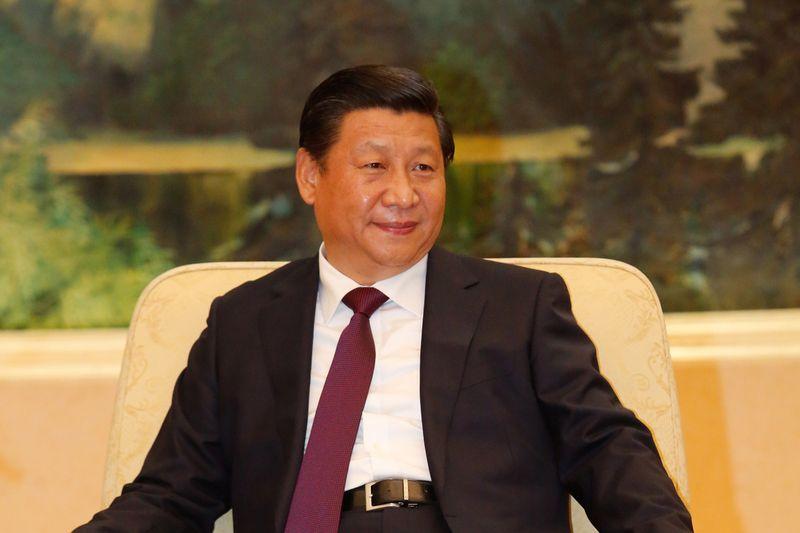
Trump-Kim Summit: China Smiles
Published June 15, 2018 • Read time: 4m
As analysts and pundits rake through the breadcrumbs dropped after the Trump–Kim summit in Singapore, one thing is for certain: the People’s Republic of China (hereafter “China”) is happy.
The relationship between China and North Korea has been described as “as close as lips and teeth”. But in the era of Xi Jinping and Kim Jong-un, things have been more snarl than smile.
North Korea under Kim has been a great vexation for Xi, and there has in the past year or two been very heated debate within Chinese academic and political circles about what should be done.
The fundamental goal, however, has never really shifted. China wants stability on the Korean Peninsula. It does not particularly care about who heads the North Korean regime, human rights, or even nuclear capabilities, so long as everything stays calm.
This is because the alternative – the horror of nuclear war itself notwithstanding – means refugees flooding across porous borders into China, which Beijing does not have the will or ability to deal with.
Possibly worse still, instability would likely mean an increase in US troops at China’ doorstep, and even pushing right up against its territory. Given the profound and visceral suspicion with which most mainland Chinese view US intentions towards their country, this would be absolutely unacceptable.
Four things in particular about this summit are pleasing to the Chinese.
First is quite simply that the meeting itself took place. The big-man brinkmanship of a few months ago has been replaced with dialogue and diplomacy, which is exactly what China has been pushing for in some form or other for years. This in and of itself is seen by the Chinese as a huge relief.
Second is that the meeting legitimises the Kim Jong-un regime. While this is something many in the West see as a negative, for China it significantly reduces the risk of regime collapse or externally enforced regime change. This is positive not only in terms of avoiding the instability such a change would cause, but also because it indirectly legitimises the Chinese Communist Party. This ever so slightly relieves deep-seated Chinese elite paranoia that the US and its allies are ultimately aiming for regime change in China.
Third is talk that UN sanctions on trade with North Korea may be rolled back. China is by far North Korea’s largest trading partner, and it was really only in 2017 that the Chinese began to clamp down on what crossed the border. It is not absolutely clear what caused this change of approach, but it is reasonable to assume that North Korea’s increased military activity, and the domestic debates around what to do about it, may have resulted in a shift in tactics.
US pressure, of course, may well have also played a role. But ultimately China does not want to put too much economic pressure on Kim Jong-un because it could cause instability or even collapse – precisely the threat that sanctions are intended to convey.
Tightening sanctions was not a risk China took lightly, and it will be a relief to be able to step back from them. There will also be some economic benefits for China.
Fourth, of course, is US President Donald Trump’s unexpected announcement that military exercises between South Korea and the US – or, as Trump described them, “provocative war games” – will cease. Chinese elites couldn’t be more pleased with this language. It exactly mirrors China’s own characterisation of the activities, and lends its narrative credibility.
For these reasons, China is pleased with the summit. It is probably going too far, however, to say that China has won.
China is still in a very uncomfortable situation with both North Korea and the US. Its domestic problems, including economic, social, environmental, and political issues, are no lighter than they were before, and the challenges posed by each of these actors separately, let alone at the same time, are extremely difficult for Beijing to negotiate.
China’s political elite know that this is only the beginning – they will not be sitting down for a nice relaxing bottle of baijiu just yet.
Dr. Merriden Varrall is Director, East Asia Program, at the Lowy Institute. Before joining the Lowy Institute, Merriden was the Assistant Country Director and Senior Policy Advisor at United Nations Development Programme China, where she worked on China’s role in the world, focusing on its international development cooperation policy.
This article appeared originally at Lowy Institute's the interpreter.
Operation Epic Fury and the Illusion of Victory
By Stephen D. Cook • RealClearDefense
Previewing The Shenzen Summit: A Critical View
By Stephen Blank • RealClearDefense
How to Win Without Military Victory
By Kevin Eyer • RealClearDefense
We Keep Funding ‘Shared Infrastructure.’ Nobody Has Defined It.
By Frederick Gale • RealClearDefense
Congress Must Reauthorize Section 702 of the Foreign Intelligence Surveillance Act
By Bryce G. Poole • RealClearDefense
Five Takeaways From Navy Nominee’s Rocky Hearing
By Seligman & Weisgerber, WSJ
U.S. Air Force Taps Anduril for Containerized Launcher
By Global Defense News
Time To Say Goodbye to the NMESIS and NSM
By Marine Corps Compass Points
HII and U.S. Navy Break Ground on Shipyard Complex
By George Allison, UKDJ
Rare U.S. Air Force Spy Plane Spotted Over the Black Sea
By D. Malyasov, Defence Blog