
Fixing the Department of Defense's SBIR Commercialization Pipeline
Published May 19, 2025 • Read time: 10m
The Small Business Innovation Research (SBIR) program is a powerful tool to commercialize technology and provides government agencies new tools to solve problems. But for a program described as “America's Seed Fund,” some companies use it more like a trough to feed on constantly versus a unique opportunity to grow. With the SBIR program expiring at the end of FY 2025, now is the time to implement reforms that will fulfill the program's original mission.
Based on my research as a staffer at the Senate Small Business Committee, I recently found, using SBIR award data with contract data from SAM.gov, that for the top 25 Department of Defense SBIR award winners from FY 2010 to FY 2024, 56 percent of their Department of Defense contracts come from SBIR awards. These companies have received SBIR awards for an average of 30 years.
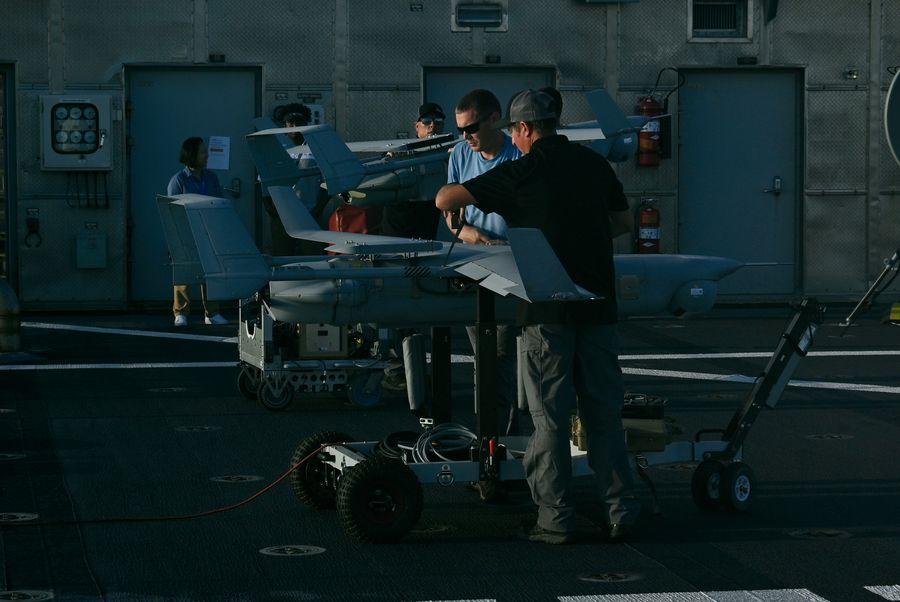
The SBIR program was founded in 1982 to improve science commercialization and increase small businesses' involvement in federal research and development. Examples of Department of Defense SBIR awardees that fit this model include Qualcomm, ViaSat, and AeroVironment. These companies received SBIR awards that allowed them to commercialize their research and become big companies. Qualcomm used an SBIR award to hire its first engineers to develop chips. ViaSat prototyped and then mass-produced satellite telecommunications technology for the Department of Defense. And AeroVironment used SBIR awards to improve its drone technology, the final result being the Switchblade UAV, which is used by the American military today.
Buy Smarter, Fly More
The Defense Department's Reorganization Problem Comes to Fightertown
America Needs To Spend More on Defense and Build More With It
The Factory Floor and the Balance Sheet
SBIR Mills and Their Flaws
Unfortunately, not all Department of Defense SBIR program awardees fit the ideal model of commercialization. Some companies have instead taken SBIR dollars for decades without growing or effectively commercializing their products. These companies, colloquially called “SBIR mills,” have collectively received billions in Department of Defense SBIR awards. Several SBIR mills received SBIR awards only a year after the program started in 1982 and never stopped. Sixteen of the top 25 Department of Defense SBIR recipients over the past 14 years had 50 percent or more of their total Department of Defense contracts come from SBIR awards. If the program is meant to find new innovative companies, why should the Department of Defense give awards to companies who have participated in the program for decades, yet even now still make most of their revenue from SBIR awards?
In contrast, companies such as Qualcomm and ViaSat have only a small proportion of their Department of Defense revenue from SBIR awards. While ViaSat depended on SBIR awards for its survival in its early years, now the majority of its Department of Defense revenue comes from normal contracts. Contemporary examples of modern companies that used the SBIR program to scale include Anduril and goTenna. Anduril received Department of Defense SBIR funding and used the awards to get a Program of Record (a program included in the Department of Defense’s Future Years Defense Program) contracts with the department. goTenna received Department of Defense SBIR awards, which led to contracts with the Department of Homeland Security.
Another problem is that some of these companies risk transferring their research to adversarial nations. In 2021, the Department of Defense released a report documenting the unauthorized tech transfer risks that SBIR awardees face, specifically from China. For example, they found an employee at the company Lynntech who was recruited to work in China as part of a state-sponsored talent recruitment program. This employee in China now conducts research in the same field for which he previously received SBIR funding.
During my time working for the Senate Small Business Committee, I found even more risks within some of these companies, some of which my boss, Senator Joni Ernst (R-IA), highlighted in a hearing and report. The highlighted company was Triton Systems, a defense manufacturer. The CEO at the time, Ross Haghighat, was appointed to the board of a Special Purpose Acquisition Company (a company created to acquire another company to bypass the initial public offering process) connected to a state-owned Chinese bank. Triton Systems spun off two companies based on research it did for Department of Defense SBIR awards. The spinoffs are a polymer startup and a water startup, which currently do major business and manufacturing in China.
Another example of a company at risk of unauthorized tech transfer is the company TDA Research. It received several SBIR awards from the Department of Defense and other federal agencies for carbon capture research. While the company was getting funds from the American government for carbon capture research, TDA Research engaged in joint research on carbon capture with Sinopec, a state-owned Chinese energy company. These cases reveal that the Department of Defense has not been thorough in ensuring SBIR awardees do not engage in activities that put sensitive research at risk of transfer to adversarial nations.
Recent Reforms to the SBIR Program
To give some credit to the Department of Defense, it has made progress in increasing the variety of companies awarded SBIR awards. In FY 2017, 20 percent of all Department of Defense SBIR awards went to 25 companies. In FY 2024, only 11 percent of all Department of Defense SBIR awards went to these companies.
There are a few reasons for this shift. One reason is the work of AFWERX, an innovation organization in the Air Force founded in 2017. AFWERX bucked norms in how SBIR programs are run. It adopted a simpler application process, opened the program up to more applicants, and helped a select group cross the “Valley of Death,” the critical gap between successfully getting SBIR awards and securing Program of Record contracts. Many promising technologies fail during this transition because of the disconnect between SBIR programs and contracting offices, leaving companies without funding.
One example of AFWERX’s pioneering approach is Open Topic awards. Historically, solicitations targeted specific technologies—for example, the Department of Defense currently seeks technologies to identify pathogens. In contrast, Open Topic solicitations allow small businesses to present their innovations directly to a branch. If the military finds these technologies useful, they can offer awards. AFWERX was the first part of the Department of Defense to release Open Topic solicitations.
Another AFWERX innovation was creating the STRATFI/TACFI program in 2021 to help companies traverse the Valley of Death. The program is a matching fund for certain companies the Air Force wants to support across the Valley of Death. SBIR funds get matched with non-SBIR government funds and private funds. Success stories include Varda testing hardware at hypersonic speeds or Starfish Space to service satellites. Inspired by the success of STRATFI/TACFI, other Department of Defense components launched similar programs, such as Army CATALYST in 2023 and Navy Catapult in 2024.
The FY 2022 reauthorization of the SBIR program standardized some of these reforms. For example, at least once a year, each Department of Defense component has to release an Open Topic solicitation. The reauthorization created due diligence programs in SBIR programs and required the Government Accountability Office to study multiple award winners.
The creation of SBIR due diligence programs in 2022 has resulted in agencies successfully identifying companies that should not receive SBIR awards. A 2024 Government Accountability Office report on SBIR program due diligence programs noted a case in which the Air Force found an applicant with a Chinese government-affiliated university and venture capital funding from a Chinese venture capital firm. As a result of these findings, the Air Force did not award an SBIR award to that company. These reforms have therefore proven both necessary and successful. However, more remains to be done to strengthen SBIR.
Reforming SBIR to Improve Commercialization
With the SBIR program expiring at the end of FY 2025, it is the perfect time to follow up on the FY 2022 reauthorization and improve the program. There are three categories of reform to consider: incentives to entry, measures to remove bad actors, and changes to improve program transparency.
For incentivizing entry, other SBIR programs should follow AFWERX’s lead and simplify their application process. To improve transitions to Programs of Record, Department of Defense components should increase the amount of money they allocate to their SBIR scale-up programs. These programs have proven effective in helping companies bridge the Valley of Death and grow technologies beyond the prototyping phase.
Next are reforms to remove bad actors in the program. To start, there should be an award limit of $75 million. The average SBIR company received $2.6 million from FY 2010 to FY 2024, with some of the SBIR mills receiving hundreds of millions in SBIR awards during the same period. If a company has received tens of millions in SBIR awards but struggles to commercialize, it is better to stop throwing good money after a bad company. Companies should be penalized in their applications if they received the majority of their revenue from SBIR awards. The SBIR program is meant to be a seed fund.
Another much-needed area of reform is the risk of adversarial tech transfer—countries benefitting from U.S. technology development by acquiring technologies created by American companies—without the consent of those companies. While the 2022 SBIR reauthorization created agency due diligence programs to minimize adversarial tech transfer risks, specifically from adversarial countries such as China, further reforms are necessary. Currently, agencies and even components of agencies evaluate foreign risk differently. Different standards can result in cases where a company that was denied an SBIR award by one agency based on foreign ties could potentially receive an SBIR award from a different agency. Standardizing the SBIR due diligence process would remove bad actors from the program.
Another useful reform would be requiring agencies to consult applicant relationships to entities on a common set of established lists of sanctioned and adversary-linked entities when checking if a company has dangerous foreign ties. Currently, agency due diligence programs don’t look at the same lists of sanctioned and adversary-linked entities. Ties could be missed if agencies do not look comprehensively at a company's potential foreign ties.
Finally, the program needs to become more transparent, including by ensuring that Open Topics are truly open. For example, the Army has an Open Topic solicitation specifically for dogs in Army units. Perhaps they want a diversity of technical options for their dogs, but having narrowly defined Open Topics violates the idea of them being open in the first place. The Government Accountability Office in its 2024 report on Open Topics discusses the practice of narrowly defined Open Topics and recommends clarifying how specific an Open Topic solicitation can be. The Department of Defense should adopt this recommendation.
Another transparency improvement would be upgrades to the Federal Procurement Data System (a database of federal contracts) to better track SBIR technology transition. Contracts based on SBIR awards should include the IDs of the SBIR awards the contract was related to. Better tracking would make it possible to check if SBIR-funded technologies entered Programs of Record.
The SBIR program is a powerful tool for defense innovation, and recent reforms have strengthened the program. Further reforms can ensure the program functions as America's seed and scale-up fund rather than a permanent subsidy for companies that have become dependent on it.
Lars Erik Schönander is a Research Fellow at the Foundation for American Innovation.

Iron Raven: Remembering Colonel Joseph B. Conmy, Jr.
By Louis Marano • RealClearDefense
Stand Proud of the Force
By Jay Rogers • RealClearDefense
How a Dying Agency Turned Fentanyl Into a Weapon of Mass Destruction
By Barry Angeline • RealClearDefense
The Pressure Is the Message: What Xi and Putin Faced in Shenzhen
By Emzari Gelashvili • RealClearDefense
China’s Revised Mobilization Law and the Expanding Reach of National Defense
By Muhammad Shoaib • RealClearDefense

Marine Corps Hero Under Federal Investigation
By Laporta, Burnham & Watson, CBS
A Postmortem of Maneuver Warfare in the U.S. Marine Corps
By Donald Vandergriff
U.S. Putting Weapons in Space: A Strategic Blunder?
By Ajey Lele • RealClearDefense
U.S. Senate Seeks to Exchange Shipbuilding Funds for More Munitions
By Naval News
F-35C Completes First Launch and Recovery Trials on a Ford-Class Carrier
By Navy T.