
The USO, Enduring Family Support, and How the DoD Budget Should Change
Last updated 07:37 AM EDT • Read time: 8m
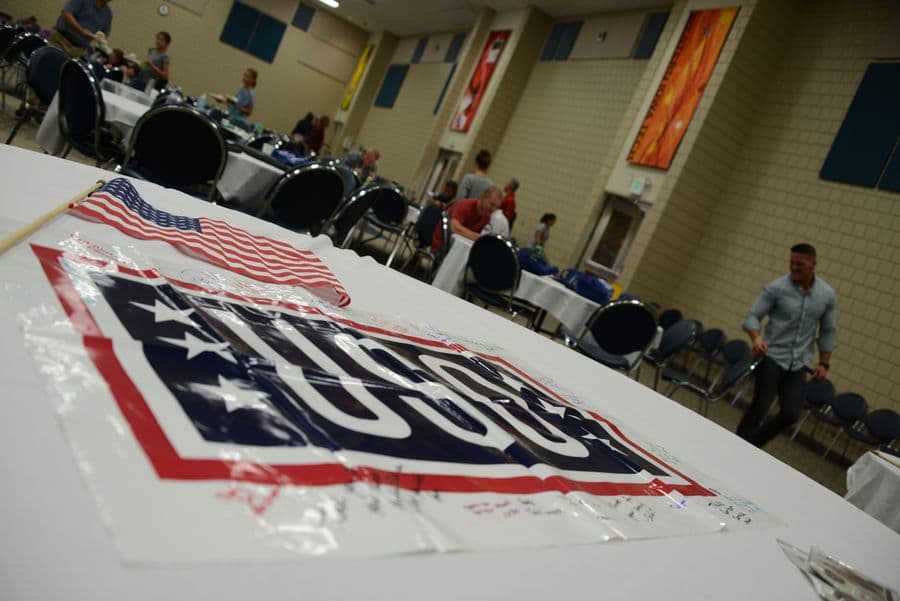
The United Service Organizations, or USO, impact 4.9 million military service members and their families every year. The USO’s mission is to provide “morale, welfare, and recreation-type services to uniformed personnel.” Every person that has traveled through a major airport in the United States has seen the signs and lounges that the USO hosts to support military members traveling away from their families, all by volunteers and largely through donations. Many people aren't aware of similar lounges in deployed locations, also supported by volunteers. Chartered by Congress as a non-profit charitable corporation, the USO receives no direct government funding. However, the President of the United States is the Honorary Chairman, and the Secretary of Defense has endorsed the USO every year since its inception in 1941. Each year, the USO requests a grant from the U.S. government of $20M. Last year, that represented approximately 10% of both the USO's support and revenue as well as its expenses. Given the historical pressures that uniformed members of the military are facing, there is a need for long-term budgeting for enduring family support through the USO.
Family support and quality of life is a key factor for military retention- 93 percent of married service members stay in the military with spousal support, compared to 44 percent without. The COVID-19 pandemic has exacerbated many of the pre-existing challenges faced by military families, such as unemployment and underemployment by military spouses, mental health resources, and education for military children. Financial strain from the pandemic has increased the number of military families experiencing food insecurity to 160,000. The PCS cycle experienced by military families throughout the service member’s career puts strain on employment, education, personal relationships, mental health, and community engagement. As the gaps grow between the American public and military families as fewer individuals volunteer for military service, the gap of understanding puts stress on employment opportunities, engagement, and resources. The lack of availability of consistent child care is a significant impediment to both military spouse employment and overall readiness, as family stressors impact the service member's focus on the military mission. Individually, the stresses placed on military families through unemployment, new schools, and mental health are significant; put together with the lack of awareness from the general public military family challenges are increasing.
The time has come to recognize organizations like the USO as an enduring capability for the long-term health and wellness of military members and their families. While Department of Defense instruction 1330.13 provides guidance for the Armed Forces Entertainment Program Policy, it fails to address the enduring nature and capabilities of the USO. The President’s budget recommends $9.2 Billion in specific funding for quality of life challenges represented by negative metrics such as domestic violence, suicide prevention, and substance abuse. However, it fails to truly invest the necessary capital in the USO to provide the enduring support that our military members and families need. Similar to any outside contractor, professional with unique experience, or company utilized to provide a capability gap for the military, the USO provides an enhanced capability that our current Morale, Welfare, and Recreation organizations aren’t funded for nor have the organic capability to organize and execute. This was highlighted by the USO during their 2021 trip with the Vice Chairman of the Joint Chiefs of Staff.
During a shift in policy requiring legal reviews to proceed, then Vice Chairman General (Ret) John Hyten placed the welfare of military members and their families ahead of restrictive policy, accepting the associated risk on his shoulders alone. Previously, USO tours were only conducted to deployed locations overseas. However, seeing the sacrifices made during the COVID-19 pandemic, the order was given to plan and execute a CONUS-based USO tour, the first in the 80-year history of the USO. Working with members of the DoD's COVID Task Force, a window of opportunity was identified to safely travel with specific mitigating protocols. The results were what the Vice Chairmen knew they would be and there was one common scene—people wept. In Guantanamo Bay, Cuba, a group of military spouses and families danced in the sun as DJ J Dayz opened the first USO tour in years. The same group laughed so hard they cried when listening to the tour’s comedian, Taylor Williamson. The families of Guantanamo Bay had been quarantined for over a year on the island due to the sensitivities of the mission there. A group of sailors on Whidbey Island, WA, locked arms with tears on their faces taking a picture with Miss America, Camille Schrier. In Miramar, a young Marine was identified in the crowd as a fan of Lauren Daigle as she performed. Brought onto the stage, they sang multiple songs together until Lauren Daigle faded to the back of the stage and the Marine finished her song solo. The crowd erupted as she finished. There wasn’t a dry eye anywhere. Preston Brust and Chris Lucas of the country band LoCash volunteer every year to support the USO—true patriots and supporters of military families. Their impact was on display in Fort Hood, TX, as they celebrated the city’s 4th of July celebration. After singing “I Love This Life” as the fireworks shown overhead, an older member of the 1st Cavalry Division came to the stage with his three young children. With tears running down his cheeks, and those of his children, he shared with the Vice Chairman and LoCash how important the day was for him, his family, and the entire community. The tour finished by quietly visiting with patients and doctors at Walter Reed. After over a week of supporting the largest USO Tour in history, the USO staff and performers were hosted by the Vice Chairman on the 4th of July at his residence on Fort Meyer-Henderson Hall. Overlooking the National Mall in Washington D.C., as the fireworks erupted to celebrate the United States' independence, there was a shared understanding of the importance of the previous week. The Vice Chairman's USO Tour in the summer of 2021 gave hope to the military community during a time when they had sacrificed so much, and needed a little back to continue on. Building off this success, the DoD should shift policies and budgets to support the USO in a greater capacity.
The DoD should change its policies to allow for and encourage CONUS-based USO concerts and tours. While performing for deployed service members is absolutely crucial, so too are the family members at home, as well as the many service members performing critical missions stateside. While it is important for data-driven decisions regarding budget, a quantitative story can't be told after a qualitative interaction. General (Ret) Hyten realized this, and that's leadership. With current modern-day business practices, a $20 million grant from the government that must be applied for every year is insufficient to support the military community considering the programming involved in the USO's mission. As the DoD plans exercise schedules, deployments, and budgets years ahead of time, so too should it plan for the enduring support that the USO provides. If the USO center in Al Asad, Iraq, can provide support to our service members after an Iranian missile attack, we in the DoD can shift our instructions to allow for easier support of our military members. The DoD should establish a baseline of $20 Million of guaranteed funding for the USO annually, increasing with inflation, to aid in creating the culture needed to promote positive human interaction. This effort will directly address the challenges of social connection during times of crisis, mental health concerns, integration into communities, and financial hardships. Support of families by enabling and enhancing organizations like the USO will create a culture of support and understanding, one in which the necessary budget meets these challenges directly. The DoD should shift to include enhanced budget support for the USO that is delivered to Congress, as well as plan to increase that budget request as required for unknown future world events.
Lieutenant Colonel Gabe S. Arrington, USAF is a national defense fellow at the Center for a New American Security in Washington, D.C, and Seminar XXI fellow at the Massachusetts Institute of Technology. Prior to his current assignment, he was the executive officer to the Vice Chairman of the Joint Chiefs of Staff.
Nathalie Grogan is a Research Associate in the Military, Veterans, and Society Program at the Center for a New American Security.
The views and opinions expressed here are those of the author and do not necessarily reflect the official policy or position of any agency of the US government or other organization.

Eight Months of Epic Fury and Still No Internal Alternative
By Stephen D. Cook • RealClearDefense
The Readiness Cliff: Pacific Lessons Drawn from the Middle East
By Brian McSorley • RealClearDefense
The Pentagon’s Real Modernization Problem Is Time, Not Technology
By Bruce Allen Lubbering • RealClearDefense
The World His Mother Opened
By Carlo J.V. Caro • RealClearDefense
Wake Island Lessons for Expeditionary Advanced Base Operations
By Brian J. Dunn • RealClearDefense
Wake Island Lessons for Expeditionary Advanced Base Operations
By Brian J. Dunn • RealClearDefense
U.S. Navy Expands Unmanned Mine Hunting
By Global Defense News
MRF-SEA Will Maintain Continuous Presence in the Philippines
By Mahadzir, USNI News
Space Force Weighs Proliferated Cislunar Satellite Constellation
By C. Albon, A&SF
America-Class Amphibs Enable New Ship-to-Shore Attack Strategies
By Warrior M.