
Pakistan is Strategically Indispensable to Washington
Published May 17, 2025 • Read time: 15m
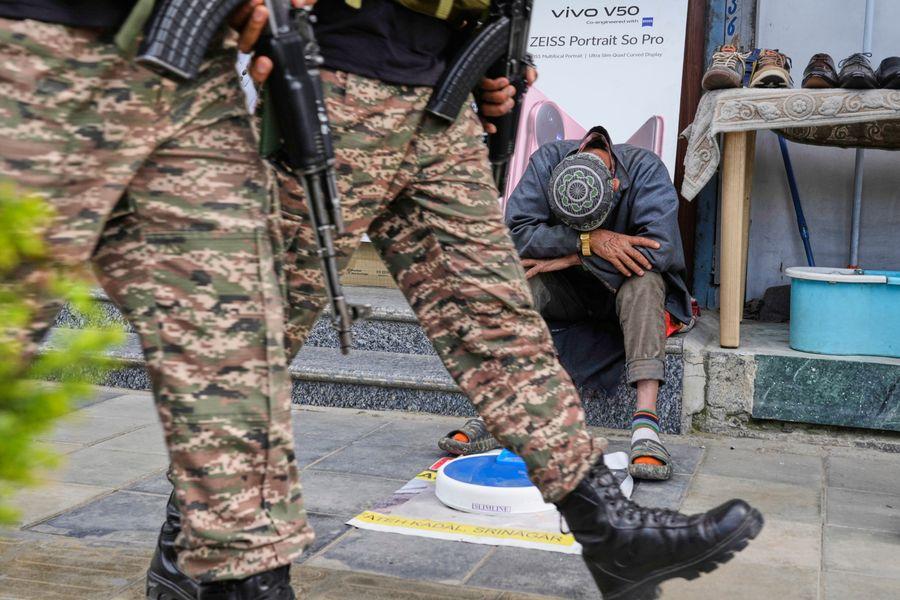
On April 22, 2025, 26 tourists and civilians were killed in a terror attack in Pahalgam as part of the interminable Kashmir insurgency, which has claimed 40,000 lives since 1987. On May 6, as part of Operation Sindoor, Indian missiles struck suspected base camps for Kashmirri insurgents in Pakistan in the cities of Muzzafarabad, Kotli and Bahawalpur. India has also escalated the armed stand-off to include the suspension of the Indus Waters Treaty, against which Pakistan responded by threatening the abandonment of the 1972 Simla Agreement. Given the centrality to Pakistan of the Punjab Rivers and the Indus, which pass through India from the Himalayas of China, the National Security Council has warned that an interruption of those waters would be an act of war. Any escalation to nuclear conflict, given that both states are most likely equipped with approximately 170 boosted fission nuclear warheads with maximum yields of 50 kilotons, would set a imitable precedent for nuclear war.
The strategic concern with India is that, of all the great powers, it is closest to consolidating domination over its neighbors in its region. Only the U.S. has ever achieved the status of regional hegemon, which it attained in the 1890s when Great Britain abandoned Canada to its fate. China, separated by the sea, Brazil, disconnected by the Andes, and as a yet non-expansionist Nigeria, all outnumber their regional neighbors in population. According to University of Chicago Professor John J Mearsheimer, in his The Tragedy of Great Power Politics, countries are tempted to start wars to conquer their own continental regions, even if there is a low prospect of success, because the security payoff is tremendous. These were the motives of the Hapsburgs, Louis XIV, Napoleon Bonaparte, Wilhelmine and Nazi Germany, the Soviet Union, and now Communist China.
The Pressure Is the Message: What Xi and Putin Faced in Shenzhen
Previewing The Shenzen Summit: A Critical View
What the 2026 Midterm Results Mean for U.S. Strategic Competition with Rivals
The Six Strategic Mistakes That Led to U, S, Defeat in Afghanistan
The U.S., which is the only country ever to have achieved continental hegemony, pays very little for the cost of its local defense because of the protection of the Oceans. In what is called a strategy of offshore balancing, Washington is then able to project power to support smaller countries draining the resources of the regional hegemonic candidates on other continents. This thereby increases the cost of any retaliation against the U.S., such as the costly Soviet backing of Cuba, Nicaragua and Grenada during the Cold War. Pakistan, a growing democracy, has repeatedly demonstrated itself to be a reliable offshore ally of the U.S. during the Cold War and the Global War on Terror. Pakistan-based U-2 aircraft overflew the USSR from bases in Peshawar and coordinated with Israel for the transfer of small arms to the mujahidin in Afghanistan in the 1980s, while India leaned significantly farther than the anti-Western Non-Aligned Movement, to cooperate with Moscow.
There are four pervasive but inaccurate Western criticisms of Pakistan. First, that it is a military-run hybrid democracy that produces an especially aggressive foreign policy and war. Pakistan has been under some form of military governance for 45 of its 78 years since Partition in 1947 (1958-1971, 1977-1988, 1999-2008), starting with the seizure of power by Army Chief Ayub Khan. Pakistan’s three military coups have been remarkably peaceful in part because they were initially supported by most Pakistanis who sought to reduce widespread corruption and inefficiency in the civilian legislature. Surprisingly, the 1947, 1965, 1971, and 1999 wars were all initiated under civilian governments or former late-stage civilianized military leaders ruling through political parties. Cross-border infiltrations from Pakistan to Kashmir are invariably lower during periods of military governance, which can more easily resist public demands for action than civilian regimes. The underlying reasons for the 1958 coup were fiscal inefficiency of the civilian regime; in 1977 it was the military’s reaction against a proposal by Prime Minister Zulfiqar Ali Bhutto to create a paramilitary force to counterbalance military influence; and in 1999 it was because, despite repeated warnings, debt-servicing was permitted by civilian financial authorities to exceed the military budget.
Compared to most military governments, Pakistan’s army typically does not seek financial aggrandizement. Critics often point-out the well-run service enterprises, such as the Fauji, Shaheen, and Bahria foundations, whose private sector investments and corporations underwrite pensions, schools and hospitals for their nine million beneficiaries in a society where most public institutions are inefficient. Pakistan’s railway and postal workers have similar charitable trusts. Pakistan’s miniscule defense budget of $10bn is a third of Canada’s, and supports the indigenous assembly or full production of tanks, aircraft, ships, submarines, missiles and enriched Uranium-235 and plutonium nuclear warheads. Pakistan’s defense has only a 16 percent share of the budget and 2.2 percent of GDP, and thus its diversion into education and health would have a negligible impact on poverty. Rather, military stabilization of Pakistan’s institutions is more likely to reduce capital flight and the brain drain, and increase foreign direct investment. Pakistan has largely kept pace economically with India, despite lacking the same economies of scale.
Contrary to the Clausewitzian dictum that war is an extension of politics and that, therefore, civilian supremacy is ideal, the optimal civilian-military balance in a cabinet depends on the nature of the strategic threat. Overly civilized decision-making can be equally dysfunctional, particularly in its failure to appreciate threats and to respond expeditiously. Pakistan’s army influence on policy, much like the disproportionate presence of military decision-makers in South Korea’s, Taiwan’s, and Israel’s civilian cabinets, is an evolution of its security competition with India, whose population outnumbers it over six-fold. Anti-colonial leftists and Hindutva rightists in the Indian independence movement militated against the creation of Pakistan.
Pakistan’s April 1948 intervention into Kashmir was under the command of British General Sir Douglas Gracey, Pakistan’s Commander-in-Chief until 1951, a veteran general against Near East Axis and Japanese armies. Kashmir is geopolitically critical because it is the headwaters of the five rivers of the Punjab (Jhelam, Chenab, Ravi, Sutlej, and Beas) and the Indus that irrigates and sustains Pakistan’s 260 million people. The formative war scare of 1949 erupted from a currency dispute through a communal riot into the deployment of India’s armored division into the Punjab with a threat from Sardar Patel to invade then defenceless Pakistan. This incident ended Indo-Pakistani trade, without resumption since. A second war scare in July of 1951 with the same Indian 1st Armored Division being deployed, led to the permanent installation of Pakistan’s military at the center of foreign policymaking. Today that influence is routinized through the institution of an annual Corps Commander’s conference, and the regularized use of the 111th Brigade for coup implementation since 1971. The Pakistan army’s outsized influence in government is a consequence and not cause of tensions with India.
The second criticism is that Pakistan is a state-sponsor of terrorism in Kashmir and elsewhere in India, and a reluctant supporter of NATO and UN operations in Afghanistan, as demonstrated by the harboring of Usama bin-Laden. There is the temptation to ignore the political science maxim that politics is local, and to exaggerate and repeat the erroneous inference that terrorism is the result of an agitated Umma uniting Takfiri militants from Afghanistan, Chechnya, Palestine, Xinjiang, Kashmir, Mindanao, Rohingya, Mogadishu and Bali. The illusion of a common front is more the amplified collective Western anxiety of the challenges of integrating Muslim immigrants, not unlike incidents of civil strife caused by leftist newcomers from the 1880s to the 1920s.
The Afghanistan-Pakistan conflict is driven by millennia-old Pashtun-Punjabi ethnic-territorial disagreements, and NATO’s systematic exclusion of Islamabad in its 2002-2021 campaign was symptomatic and a central cause of its ultimate failure. Furthermore, the scale and durability of the Kashmiri resistance to Indian occupation is strongly indicative that a withdrawal of Pakistan’s support to Kashmir, as India demands, would not end the insurgency. The progressive radicalization and Islamicization of the originally secular Kashmiri insurrection is a predictable consequence of the intensity of Indian repression. Islam’s prominence in Pakistan is due to its instrumentality in unifying Pakistan’s varied ethnic and linguistic communities, of which only half live in the Punjab.
As a developing country, with a nominal GDP per capita of $1,600 and an appalling 40 percent female illiteracy rate, Pakistan’s under-institutionalized surveillance state makes it highly porous. Despite the widespread impression of Pakistan’s 660,000-man military’s overarching domestic influence, along with its associated intelligence organisations (ISI, MI), it is a weak political player when compared with civil society in the Punjab, industrial and agricultural interests, the influential press and political party dynasties, feudal lords in the Sindh, and even civilian police (who were routinely bugging this author’s military hosts in the 1990s). In fact, the army does poorly in operations in the Punjab and the Sindh where it lacks local support, such as when it backed Army Rangers against MQM insurgents in Karachi in 1991-1996.
The third criticism is that Pakistan is a nuclear weapons proliferator to third parties, infamously exemplified by physicist A.Q. Khan, in conjunction with senior individuals of Pakistan’s army, whose unsanctioned network included Iran. In addition, the government of Prime Minister Benazir Bhutto had an official policy of exchanging centrifuge for missile technology with North Korea. However, Pakistan is now an exemplar of the moderation and maturation effect described by Kenneth Waltz that occurs when a state masters the complexity of nuclear weapon production. Islamabad has agreed to almost every U.S. initiative for safe storage and arms control measures with New Delhi. Pakistan is proceeding steadily to exploit its limited uranium reserves, but has desisted from testing thermonuclear weapons, likely in exchange for U.S. sponsored IMF financing. The U.S. and China came to an informal arrangement in the 1990s in which Beijing circumvented the Nuclear Suppliers Group to technologically maintain Pakistan’s deterrent. In exchange, Beijing agreed not to object to the U.S.’s 123 Agreement with India to supply reactor fuel, so that New Delhi can redirect its scarce fissile material to military purposes. Some U.S. observers have noted Pakistan’s restraint, as a nuclear power, in not confronting Israel over its killing of several tens of thousands non-combatants.
The fourth criticism regards disreputable human rights, which includes the 1979 Hudood Ordinances that Islamicized jurisprudence under President Zia ul-Haq, and the generally repressive governance of Pakistan’s provinces, especially Balochistan and Khyber-Pakhtunkwa, in which collective punishment is a legal instrument. Although Pakistan faces many of the same intersectional issues of state and nation creation typical of new and multi-lingual developing countries, and a burdensome layering of feudal, Sharia and Anglo-Saxon law, it is also possessed of spirited human rights advocates and a vigorous press. By comparison, at equivalent levels of development, nineteenth century U.S. and Europe industrialized with questionable democratic systems that excluded women and certain minorities, and restricted labor rights.
Pakistan’s strength is its bureaucratic tradition inherited from Muhajir talent, the English Raj, and the Mughals, which has enabled it to assimilate advanced military technology and to conduct sophisticated diplomacy. Pakistan is able to manage the complexity of maintaining good relations with all of the U.S., the EU, China, and Saudi Arabia, as well as Iran (despite the recent rocket attack). Pakistan, like Israel, had an outsized influence within the Pentagon and the U.S. Congress during and after the Cold War, because of its pragmatic and reliable leadership.
Democratic peace theory, the foundational idea propounded by U.S. Presidents Woodrow Wilson, Franklin Delano Roosevelt, and Bill Clinton, that democracies never war against each other, may no longer apply to developing countries that overcompensate for bad development policy with extreme nationalism. Indian Prime Minister Narendra Modi, a member of the paramilitary sectarian Hindutva RSS (Rashtriya Swayamsevak Sangh), and who was at one time barred from the U.S. for his facilitation of massacres in Gujarat in 2002, is implementing a broad range of policies that target India’s 200 million Muslims. This is not a salient domestic political issue in the U.S. where Hindu-Americans are influential, but it is provocative to Muslim countries crucial for dealing with China, like Indonesia. Increasing press subordination to Modi’s administration suggest that liberal democracy is not irreversible in India, as warned by Harvard professor Samuel Huntington.
Washington believes that New Delhi fits neatly into its China containment coalition. However, it is unaware that India has no intention of joining a war to defend Taiwan, has little ability to confront the Chinese PLA in the Himalayas given their relative nuclear weakness, and its oulook continues to promote neutralist ideas that justify its commitment to BRICS-led de-dollarization. When India was working on its Surya ICBM, it selected Washington D.C. as its default target, a fact that drew protests from the U.S. administration. India is also more inclined to ally with Russia, which it needs to counter-balance China, although its relations with Iran are fraying over Israel. Rather, a Sino-U.S. war over Taiwan would provide New Delhi the rare opportunity of occupying or Balkanizing an isolated Pakistan, an outcome contrary to U.S. interests.
India, following Mearsheimer’s aforementioned logic, should be willing to gamble to seize or break-up Pakistan, given the observed security payoff when it dismembered East Pakistan in 1971. The medium term priority for the U.S. should be to contain Communist China, given that the latter’s economy is four times that of India, but a longer term perspective will be needed as China’s economy will only be double India’s in 2050. India has almost half as much more arable land as China, is a net food exporter, and has a larger population with a median age a decade younger. In the longer-term India may liberalize, but at the moment it is practically adjacent to the oil-producing states of the Persian Gulf and sits astride the busy Indian Ocean commercial lanes. It is also complemented by a substantial diaspora population along the entire Indian Ocean littoral. Climate change is expected to reduce the Himalayan headwaters that feed both China’s and India’s rivers, but it is also projected to increase the monsoon rains watering India.
Pakistan is an ideal offshore balancer: sufficiently democratic to permit sensitive arms transfers, appropriately moderate in its foreign policy to qualify for financial assistance, and in constant need of external backers. Nor is there a bidding war for Islamabad’s allegiance. All of Beijing, Washington and Riyadh have counselled Pakistan to address the Kashmir dispute with restraint. Pakistan’s military has also demonstrated repeated battlefield and technical expertise.
Modi’s threat to cut Pakistan’s water supply poses an existential threat. Royal Roads University Professor Thomas Homer-Dixon in his Environment, Scarcity and Violence, showed that poor countries suffering from environmental decay usually collapse. However, militarily equipped states, like Israel which attacked Syria in 1966 and 1967 over Arab League attempts to divert key waterways, are far more likely to begin wars to avert water shortages. Given that India’s military personnel are a little more than twice Pakistan’s, based on forces required to offset Chinese deployments in the Himalayas, Pakistan enjoys a slight and temporary military superiority against India. This may embolden Pakistan to seize large defensible portions of the Punjab, as it attempted in 1965. Or it may lead to an Indian pre-emption, and a Cold Start doctrine strike to split Pakistan’s Sindh province from the Punjab, isolating Islamabad from seabound imports.
A breakthrough by either side could escalate to the use of nuclear weapons, first on major highway and railroad hubs, and eventually against politically significant cities. Neither India nor Pakistan would be easily deterred because their perceptions of escalation dominance depend to a large extent on the wishful belief that the U.S. or China would be compelled to support their allies with further nuclear strikes. The question then becomes an opaquer one of whether a devastated India or Pakistan is more politically centrifugal. In either case, the U.S. loses if China escapes any effect while Pakistan and India are reciprocally neutralized. Certainly, the community of democracies loses if India and Pakistan are devastated, with the precedent of a nuclear war feeding proliferation and now legitimizing the widespread use of nuclear weapons. For Washington, Pakistan is a dependent future hedge, and a nuclear-armed state worth engaging and reassuring to avoid nuclear escalation. Paradoxically, Washington’s interests would be well-served to advise China that protecting Pakistan affords Beijing greater benefit than conspiring to conquer Taiwan. Washington may even draw closer to Beijing as the latter moderates and if New Delhi does not. Even more paradoxical, China could win and seize Taiwan, but then be dragged into an Indo-Pakistan nuclear war that also draws in Russia and the U.S.
Dr. Julian Spencer-Churchill is an associate professor of international relations at Concordia University and the author of Militarization and War (2007) and Strategic Nuclear Sharing (2014). He has published extensively on Pakistan security issues and arms control and completed research contracts at the Office of Treaty Verification at the Office of the Secretary of the Navy and the then Ballistic Missile Defense Office (BMDO). He has also conducted fieldwork in Bangladesh, India, Indonesia, and Egypt and is a consultant. He is a former Operations Officer of the 3rd Field Engineer Regiment from the latter end of the Cold War to shortly after 9/11. He tweets at @Ju_Sp_Churchill.

Iron Raven: Remembering Colonel Joseph B. Conmy, Jr.
By Louis Marano • RealClearDefense
Stand Proud of the Force
By Jay Rogers • RealClearDefense
How a Dying Agency Turned Fentanyl Into a Weapon of Mass Destruction
By Barry Angeline • RealClearDefense
The Pressure Is the Message: What Xi and Putin Faced in Shenzhen
By Emzari Gelashvili • RealClearDefense
China’s Revised Mobilization Law and the Expanding Reach of National Defense
By Muhammad Shoaib • RealClearDefense

Marine Corps Hero Under Federal Investigation
By Laporta, Burnham & Watson, CBS
A Postmortem of Maneuver Warfare in the U.S. Marine Corps
By Donald Vandergriff
U.S. Putting Weapons in Space: A Strategic Blunder?
By Ajey Lele • RealClearDefense
U.S. Senate Seeks to Exchange Shipbuilding Funds for More Munitions
By Naval News
F-35C Completes First Launch and Recovery Trials on a Ford-Class Carrier
By Navy T.