
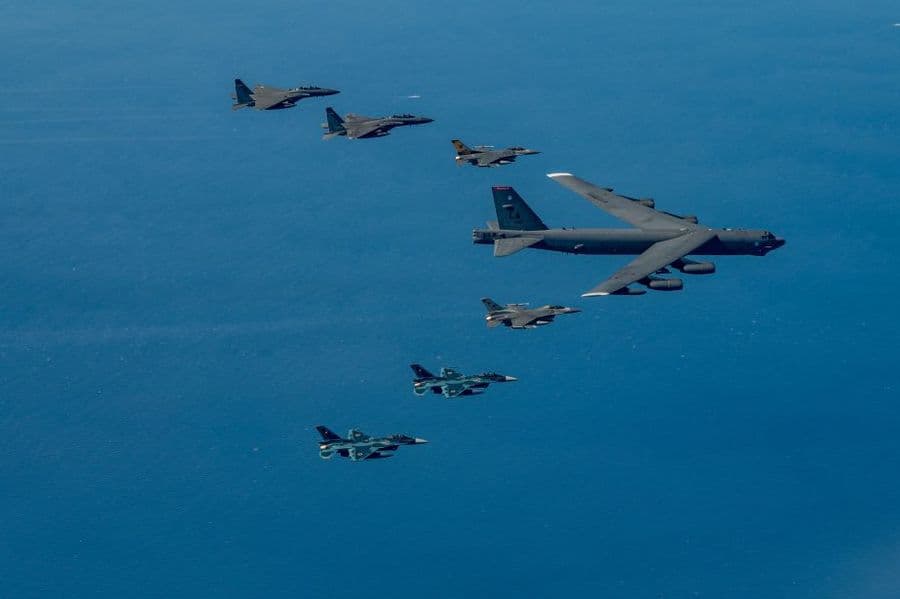
Understanding Doubts Over U.S. Extended Nuclear Deterrence in Asia
Last updated 04:25 PM EDT • Read time: 5m
The tenuous logic of trading Seattle for Seoul is being further tested by Trump administration.
It is a difficult time to be a U.S. ally.
While nebulous and difficult to measure, credibility is a key component of functioning alliances. An ally must be viewed as having both resolve and capacity to fulfil their commitments. This is especially important for “junior” alliance partners.
The difficulty with the Trump administration is that possibilities that once seemed remote are now on the table and must be factored into the security calculations of friends and foes alike. Tariffs imposed then put on pause are only one example of the credibility question. The possible demise of NATO’s collective defence commitments is another. Through NATO, the United States provides “extended deterrence” to its allies in Europe by maintaining a nuclear umbrella that included its members. Moves to explore a French option to extend nuclear coverage underscore the nagging doubts about U.S. credibility.
A key question for Asian allies and partners is whether dynamics will be transferrable from Europe to Asia, and what this might mean for the future of extended deterrence. Should Asian partners be worried?
There are some important reasons why Europe and Asia cannot be easily compared. There is no NATO-like structure in Asia, which instead has a system of bilateral alliances, including Japan, South Korea, Philippines and Australia. These allies have increasingly relied on the idea that U.S. presence and leadership would help balance the rising power of China.
There is a belief among some quarters that the Trump administration wants to strike a peace deal over the conflict in Ukraine so it can turn its attention to the main game: China. That tariffs now specifically target China might support this argument.
In Washington, there remains a general bipartisanship that China is the main competition. A revealing early priority is the focus on naval and commercial shipbuilding to compete with China’s growing maritime capabilities.
There is also an argument that the MAGA crowd have a particular disdain for Europe that does not extend to allies in Asia.
Defence Secretary Pete Hegseth’s emphasis on the theme of “peace through strength” in the Indo-Pacific provided some comfort, as the focus on deterrence and partnerships was similar to what one might have expected from the Biden administration.
Nevertheless, Asian allies may not be reassured and instead hear the louder invocation of “America first”. After all, it is not only Europe that has been torched by U.S. hostility. Canada is also the target of economic tariffs and bombastic “51st state” rhetoric. This had such an effect on public opinion in Canada that the Liberal Party’s pushback against the Trump administration might see it secure a dramatic and unexpected victory in the forthcoming election.
It is hard to imagine that any U.S. ally will think that they are immune. Cuts to USAID as well as support for Voice of America and Radio Free Asia will reduce U.S. influence and credibility across the region, leaving space for China to present itself as a responsible and trustworthy actor.
Part of the challenge is we don’t really know what Trump’s Asia security policy is yet.
And the wildcard is Trump himself. He seems primarily concerned with the optics of being a “dealmaker”. Trump might not trust Xi Jinping, but if “dealmaking” is the point then there is a possibility that the U.S. and China might come to an arrangement that could affect the broader security landscape of East Asia.
A publicly released photo by the U.S. military of the re-entry of an unarmed Minuteman III inter-continental ballistic missile over Marshall Islands (U.S. Army Space and Missile Defence Command)
Economics cannot be bracketed from security – if the U.S. looks like a less trustworthy economic partner, this is likely to bleed into how allies and partner view its credibility as a security partner as well. If Japan and South Korea, or even Taiwan, no longer feel that the U.S. nuclear umbrella extends to their defence, what effect will this have on their nuclear policies?
In South Korea, for example, domestic debates about obtaining a nuclear option have only intensified in the early days of the Trump administration even amid the local political turmoil. Japan is also assumed to have a “latent nuclear weapons capability”.
Support for U.S. extended deterrence helped contain the global proliferation of nuclear weapons. Should the credibility of this umbrella be fraying in the region, policymakers and the public alike should be alarmed.
Australia has previously been an important advocate against nuclear weapon proliferation. A key question in preparing for an increasingly uncertain future is how Australia can continue to work with regional partners to prevent proliferation as part of a broader conflict prevention agenda.
Dr. Bec Strating is Director of La Trobe Asia and Associate Professor of Politics and International Relations at La Trobe University, focusing primarily on maritime disputes and Australian foreign policy.
This article appeared originally at Lowy Institute's the interpreter.
Eight Months of Epic Fury and Still No Internal Alternative
By Stephen D. Cook • RealClearDefense
The Readiness Cliff: Pacific Lessons Drawn from the Middle East
By Brian McSorley • RealClearDefense
The Pentagon’s Real Modernization Problem Is Time, Not Technology
By Bruce Allen Lubbering • RealClearDefense
The World His Mother Opened
By Carlo J.V. Caro • RealClearDefense
Wake Island Lessons for Expeditionary Advanced Base Operations
By Brian J. Dunn • RealClearDefense
Wake Island Lessons for Expeditionary Advanced Base Operations
By Brian J. Dunn • RealClearDefense
U.S. Navy Expands Unmanned Mine Hunting
By Global Defense News
MRF-SEA Will Maintain Continuous Presence in the Philippines
By Mahadzir, USNI News
Space Force Weighs Proliferated Cislunar Satellite Constellation
By C. Albon, A&SF
America-Class Amphibs Enable New Ship-to-Shore Attack Strategies
By Warrior M.