
Before Defeating an Enemy, Be Very Certain
Published April 24, 2026 • Read time: 6m
“I’ve been saying they can’t have nuclear weapons” he said, “so I don’t like the 20 years." —President Donald Trump, Interview with New York Post
Ending a war before defeating the enemy increases the risk for renewed confrontations. That should be anticipated from the start. An adversarial regime will maintain power, and while a cessation of hostilities ideally follows ceasefire, negotiations and agreements, it is very likely temporary. Unless its leadership and high command hierarchy and arsenal are weakened, the regime is unlikely to be destabilized. This outcome is predictable given the current Iran conflict.
Because the Islamic Revolutionary Guards Corps (IRGC) oversees a lethal three-part security apparatus separate from its regular Army, it not only functions as a bulwark for the regime’s repressive control but projects its Quds Force to regional and global asymmetric and terrorist operations. Change for the Iranian people also requires more than negotiations. The IRGC also directs a ruthless domestic militia linked to suppressing public dissent; its Basij force also harshly enforces a strict morality code.
Minus a blueprint strategy purposed at dismantling the formidable power structure, regime brutality, support for global terrorism, and regional chaos will persist with existential threats to Israel— pinpointed directly to IRGCs global reach and Quds Force support to Hezbollah in Lebanon, Houthis in Yemen, Hamas in Gaza, and Islamic Jihad in the Palestinian Territories.
Ending the Conflict with Iran
Going After the Cyprus Money Laundering Hub
The Need to Remove All Fissile Material from Iran
Operation Epic Fury and the Illusion of Victory
Israel understands these dynamics all too well from its recent war in Gaza to its defensive campaign in southern Lebanon against Iran-backed Hezbollah. However, Israel’s security threats are both relentless and oddly unique; global powers impose exacting pressure and challenging limitations on its sovereignty, often inhibiting Jerusalem’s need to finish military operations and defeat its enemies. And yet today, Hamas is somewhat resilient, emboldened, and still in control. And like Hezbollah, Hamas continues to provoke cross-border attacks and endangers civilian infrastructure—embedding schools, hospitals, and residential centers with weapons and munitions storage. The group also obtains funding and training from the Quds Force.
Since the 1980s Iran has been accused of supporting militant groups and funding terrorism, promoting anti-Western propaganda, and exporting its revolutionary ideology. After the 1979 Revolution, the regime under Ayatollah Khomeini installed a despotic and theocratic regime that has continuously applied, not unlike Taliban rule in Afghanistan. Its policies are incompatible with basic human rights and freedoms. The regime commits heinous abuses against its population, while discontent and rebellion are direct challenges that are restrained with violence—arrests, torture, unfair trials, executions, and massacres.
If not defeated, the Iranian regime will also remain a threat to global security through which its illicit activities are largely financed across a multifaceted and coordinated shadow banking system. In summary, this includes money laundering, sanctions evasion, oil smuggling, weapons procurement, and links to transnational criminal networks via transit between Latin America and Africa; largely supporting proxy militias and further recruitment. This behavior will not change. Iran is still referred to as a rogue state in some political circles because it operates defiantly and clandestinely outside international law. The regime has long skirted investigations into its nuclear weapons programs and its complex proliferation of cruise and ballistic missile systems. The latter is alleged to being the largest in the Middle East and bolsters a lethal arsenal that supports global non-state actors and proxies.
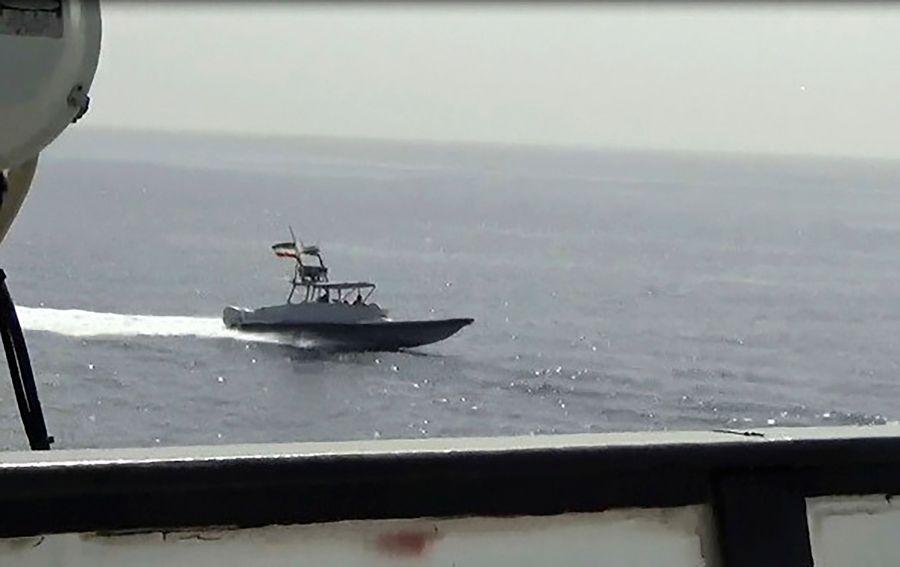
Like Hamas, the Iranian regime has sustained significant military and urban infrastructural damage, including confirmed losses of its senior leadership and command, but has shown surprising resilience and defiance. Tehran also will not yield control over the Strait of Hormuz and is prepared to wage an attritional war if necessary. Any impasse with the United States is dangerously unstable. Israel understands the Iranian regime as an existential threat not only by its nuclear programs, but by its stated goals from the Khomeini era forward that demonstrate fixed intent to annihilate the Jewish State.
Allowing the current Iranian government and its power structure to go undefeated will yield a diversionary win, yet deep-rooted causes of regional and global conflict and internal crises will remain unresolved. Lebanon must work with Israel to destroy Hezbollah. Hamas must be crushed. Iran-backed Houthis threaten Israel, Red Sea shipping, and Gulf State security, and must be made inoperative. Stabilizing Yemen requires a coordinated coalition to include powerful Gulf States. Lack of security and human rights issues plague the poverty-stricken country, which for over a decade has been engaged in an unresolved and brutal civil war.
Has the United States learned lessons from its involvement in past wars and conflicts? History recalls Germany’s power to rearm between both World Wars, as well as fallout after more recent interventions and troop withdrawals from Afghanistan and Iraq, respectively. Removing Sadaam Hussein early in the Iraq war and Moamar Gaddafi in Libya more than a decade ago merely created dangerous power vacuums, rendering a rise in sectarian unrest that has overwhelmed both countries with continued violence. Insurgencies, reinforced militias, and political insecurity have overshadowed these populations.
President Biden’s order to withdraw US military from Afghanistan in 2021 created chaos and suffering and the immediate return of the Taliban. Severe humanitarian abuses have prolonged the suffering of millions, including in Iran. Afghanistan, Gaza, Iraq, Lebanon, Syria, and Yemen are yet unresolved disasters because instability has been driven by factions and armed groups––Hamas, Islamic Jihad, Hezbollah, Houthis, ISIS, Muslim Brotherhood elements, Shiite actors, and the Taliban.
Indecisive agreements pivot on suspicions and the fragility of trust and may lead to agreements that collapse with rearmaments and rebuilding potency. Regime continuation usually follows with an increase in clamping down punitively on opposition that in turn, will trigger more unrest and worsening human rights abuses. Conflict with Iran has maybe hindered regional non-state actors to resuming a spate of attacks for now—perhaps a wait and see. However, irregular warfare connects to Hezbollah in Lebanon and Syria, Hamas and Islamic Jihad in Gaza, Houthis in Yemen, and Shiite militias in Iraq. Yet the ominous framework of sleeper cells in the United States and across the globe is a growing cautionary reality. A full-scale tactic to take down more than just the Iranian regime includes dismantling layers of the IRCGs deadly forces and its underlying authority.
Washington must secure balanced ally support vis-à-vis undercurrents of ongoing conflict with Tehran, which is severely taxing the global economy with an imminent energy crisis. Recent talks in Pakistan moreover ended quickly with no agreement reached. Although the ceasefire between the United States and Iran has just been extended, doors allegedly remain open to future negotiations, albeit Israel has reluctantly agreed to a 10-day ceasefire with Lebanon—an Iranian demand at talks in Pakistan. Yet further contentions stem from Iran’s rejection of a US-proposed 20-year moratorium on uranium enrichment, and in all probability, Iran will continue to leverage control over the Strait of Hormuz.
Allyson Christy holds an M.A. in Intelligence and Terrorism Studies from American Military University and an Executive Certificate in Counterterrorism from the ICT Herzliya. Interests include foreign affairs and global security. @allysonchristy
When the Warfighter Becomes the Sensor
By Elise G. Annett • RealClearDefense
The U.S. and its Allies Need a Collective Maritime Strategy
By Antonios Marios Giannakopoulos • RealClearDefense
Making Maneuver Great Again
By Gary Anderson • RealClearDefense
Ending the Conflict with Iran
By Anthony Cowden • RealClearDefense
Going After the Cyprus Money Laundering Hub
By Lise Korson • RealClearDefense
Making Maneuver Great Again
By Gary Anderson • RealClearDefenseMaking Maneuver Great Again
By Gary Anderson, RealClearDefense
Bandwidth as a Service for Naval Forces
By Brandan R. Schofield, CIMSEC
The Army and the Marine Corps in a Pacific War
By Van Horrick & Bancroft, MWI
Coast Guard’s Updated Force Design Plan Includes Maven Smart System
By DS