
How Allies Pull the U.S. Toward Nuclear Conflict
Published Sept. 10, 2025 • Read time: 4m
When Israel launched a surprise strike on Iran’s nuclear facilities in June, U.S. forces were quickly drawn into a regional war. The United States had not started the conflict, but under pressure from Israel and amid fears of alliance fragmentation, the Trump administration ordered military support. Critics accused the U.S. of fighting someone else’s war. Some academics, including Jonathan Kirshner and Daryl Press, agreed: Israel had dragged the U.S. into conflict.
This crisis has revived a longstanding question in U.S. foreign policy: can strong states be pulled into wars by weaker allies? Some scholars argue that great powers can avoid entrapment by deterring third parties, using diplomatic ambiguity, limiting support or walking away. Alliance commitments are flexible, and entrapment is rare.
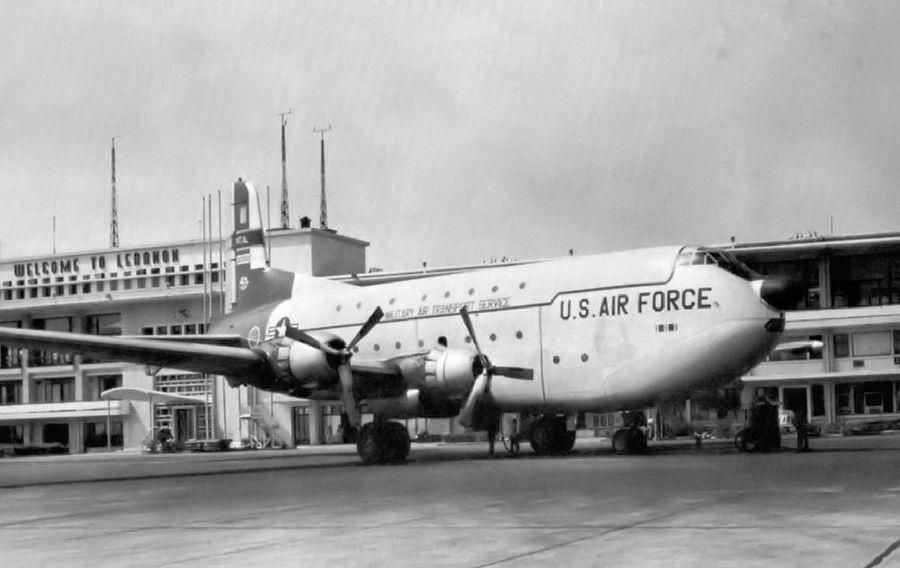
But history complicates that optimism. Fears over falling dominoes and strategic cohesion have led the U.S. toward intervention and escalation, even when the strategic value of the conflict was questionable. Crises over Taiwan and Lebanon in 1958 exemplified this. In both cases, U.S. leaders feared that failing to defend allies would encourage adversaries and demoralise partners.
Alliance politics often fall into one of two categories: buck-passing or chain-ganging. Buck-passing occurs when states avoid confronting a threat in the hope others will act, as European powers did in the 1930s, for example. Chain-ganging happens when alliances are so tight that one state’s decisions pull others into war, as occurred in the run-up to World War I.
Ending the Conflict with Iran
Going After the Cyprus Money Laundering Hub
The Need to Remove All Fissile Material from Iran
Operation Epic Fury and the Illusion of Victory
Recent scholarship has emphasised the tools great powers use to avoid entrapment: loopholes in treaties, military aid restrictions and the ability to walk away. But in practice, leaders may be drawn into conflicts for fear that inaction will harm their credibility.
In the 1958 Taiwan Strait Crisis, China began shelling the Taiwanese islands of Quemoy and Matsu and threatened to invade. The U.S. had intentionally kept its commitments vague to avoid being dragged into a conflict started by Taipei. But the crisis exposed the limits of ambiguity. Top military leaders concluded that conventional force alone could not defeat China. Secretary of state John Foster Dulles and president Dwight Eisenhower initially resisted calls for atomic strikes, but agreed that if Mao did not back down, nuclear use was likely. Dulles doubted the islands’ strategic value; he feared their loss would embolden Communist aggression.
That same summer, another crisis unfolded in the Middle East. On 14 July, Iraq’s Hashemite monarchy was overthrown in a coup inspired by Egypt’s Gamal Abdel Nasser. Lebanon’s president, Camille Chamoun, invoked the Eisenhower Doctrine—a U.S. foreign policy that enabled Middle Eastern countries to request both military and economic support from Washington—claiming Nasser and the Soviets were fueling domestic unrest. The U.S. deployed 1,700 Marines to Beirut.
Although the operation was framed publicly as a check on Soviet influence, the U.S. government’s real concern was the rising power of Nasser’s pan-Arabism. The unification of Egypt and Syria under the United Arab Republic in February 1958 had alarmed Washington. With Iraq, Lebanon and Jordan all destabilised, Eisenhower feared a regional domino effect. To deter further escalation, he even ordered preparations to deploy U.S. nuclear weapons from Germany to the region.
In both the Taiwan and Lebanon crises, U.S. leaders were less concerned with the intrinsic value of the territory in question than with the strategic message sent by inaction. They feared that failing to defend vulnerable allies would erode U.S. influence and empower adversaries. The result was not disengagement, but escalation, including preparations for nuclear use.
Today, those dynamics have not gone away. The U.S. is bound to a network of alliances across the globe—in Europe, the Middle East and the Indo-Pacific. In many of these relationships, local partners face existential threats and may act independently, expecting U.S. support. Whether in Israel, Taiwan or Ukraine, the logic of alliance cohesion continues to drive U.S. decisions in ways that scholarship often understates.
Even U.S. President Donald Trump, who has repeatedly questioned the value of the U.S.’s alliances, was unable to resist these pressures. His decision to engage with Iran shows how, even for populist leaders, the pressures of chain-ganging can be hard to escape.
Entrapment is not just a theoretical concern or a Cold War relic. When alliance cohesion is seen as fragile and the credibility of deterrence is on the line, the U.S. often chooses escalation—even when the war is someone else’s idea. The lesson is clear: U.S. allies do not need permission to start a fight, but once they do, Washington may find it harder than expected to stay out of it.
Albert B Wolf is a global fellow at Habib University.
This article appeared originally at The Strategist (ASPI).
When the Warfighter Becomes the Sensor
By Elise G. Annett • RealClearDefense
The U.S. and its Allies Need a Collective Maritime Strategy
By Antonios Marios Giannakopoulos • RealClearDefense
Making Maneuver Great Again
By Gary Anderson • RealClearDefense
Ending the Conflict with Iran
By Anthony Cowden • RealClearDefense
Going After the Cyprus Money Laundering Hub
By Lise Korson • RealClearDefense
Making Maneuver Great Again
By Gary Anderson • RealClearDefenseMaking Maneuver Great Again
By Gary Anderson, RealClearDefense
Bandwidth as a Service for Naval Forces
By Brandan R. Schofield, CIMSEC
The Army and the Marine Corps in a Pacific War
By Van Horrick & Bancroft, MWI
Coast Guard’s Updated Force Design Plan Includes Maven Smart System
By DS