
The Nuclear Non-Proliferation Treaty Breathed Its Last Breath
Published July 4, 2025 • Read time: 3m
The question that we hear often regarding the current wars in Europe and the Near East is:
“What does tomorrow look like?”
Of course, there are many facets to that simple question that, in turn, require many answers, not just one.
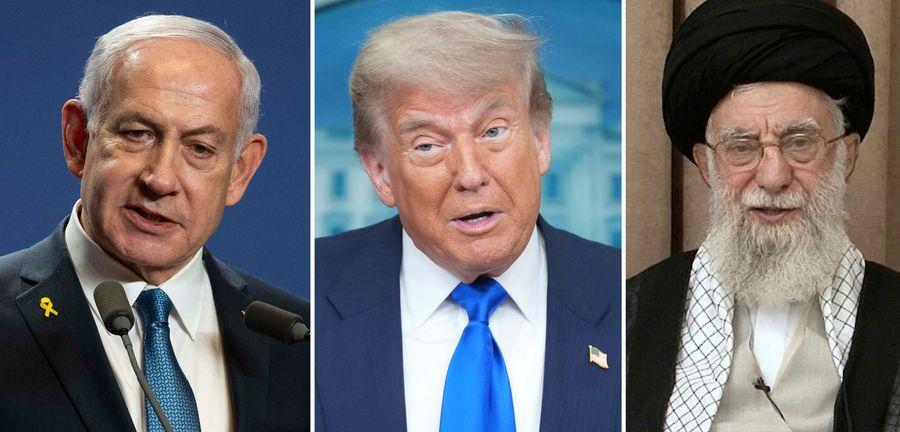
The only one of those possible answers on which I am certain is that the Nuclear Non-Proliferation Treaty (NPT) is dead. It may have breathed its last breath as a result of the American bombing of Iran’s nuclear facilities, which the Iranian Foreign Minister implied last Sunday. Even if that’s the case, however, the NPT was on life support long before this recent attack.
In fact, the NPT may have been still-born in 1970 when three UN members thought to already have or be pursuing nuclear weapons (Israel, India and Pakistan) never signed on to the treaty.
Despite that inauspicious debut, NPT seemed to be working for its first 25 years. North Korea signed the treaty in 1985. Ukraine signed on in 1994 as part of a deal (the Budapest Memorandum) with the USA, UK and Russia for security assurances in return for giving up the stockpile of nuclear weapons it possessed after the breakup of the Soviet Union. Yes, as the world entered the new millennium, the post-Soviet euphoria saw the high-water mark of the NPT.
Then things began to unravel.
North Korea became the only signatory to drop out in 2003. Three years later it tested its first nuclear weapon in an underground explosion. Then in 2014 Russia, despite the security assurances that it signed on to ten years earlier, invaded Ukraine and annexed the Crimean Peninsula. The pusillanimous response to the invasion by the Obama administration, the UK and all of Europe sent a message that was heard around the world.
Since 2006 American presidents (including most recently President Trump in 2019 when he became the first American president to visit North Korea) have tried unsuccessfully to get North Korea to give up its nuclear weapons. Why would they do so when they saw what happened to Ukraine in 2014 and then again with the second Russian invasion that began in 2022? Just as Obama was reluctant to incite a nuclear power (Russia) in 2014, Trump has been similarly weak in 2025 in dealing with Russia concerning Ukraine.
With this history, what was the incentive that the NPT provided to Iran to forego the pursuit of nuclear weapons?
The message is loud and clear: attain nuclear weapons and get treated with kid gloves by America and Russia. If you don’t have them, you’re a target for nuclear armed states. Iran was never going to give up its pursuit of nuclear weapons and who can blame them, particularly when its arch-enemy (Israel) is so armed.
Israel’s and America’s attacks on Iran (like Russia’s invasions of Ukraine) only reinforce the overarching historical message – treaties don’t ensure your safety, but nukes do!
South Korea’s Nuclear-Powered Submarines After the Midterms
By Jihoon Yu • RealClearDefense
Why Build a Billion-Dollar Warship if a Cheap Drone Can Sink It?
By Ege Can Gün • RealClearDefense
Megaspeed Proves: Congress Must Act on Chip Security
By Michael Groen • RealClearDefense
Creating a MEF Insurance Policy
By Steven Bancroft • RealClearDefense
Operation Epic Fury and the Illusion of Victory
By Stephen D. Cook • RealClearDefense
South Korea’s Nuclear-Powered Submarines After the Midterms
By Jihoon Yu • RealClearDefenseWhy Build a Billion-Dollar Warship if a Cheap Drone Can Sink It?
By Ege Can Gün • RealClearDefenseCreating a MEF Insurance Policy
By Steven Bancroft • RealClearDefense
U.S. Navy Used Expired Munitions During Iran War
By Riley Ceder, Navy Times
The Coast Guard Icebreaker Nobody Wanted
By David Roza, Task & Purpose