
U.S. AI Leadership in Middle East Needs To Be National Security Priority
Last updated 06:23 AM EDT • Read time: 5m
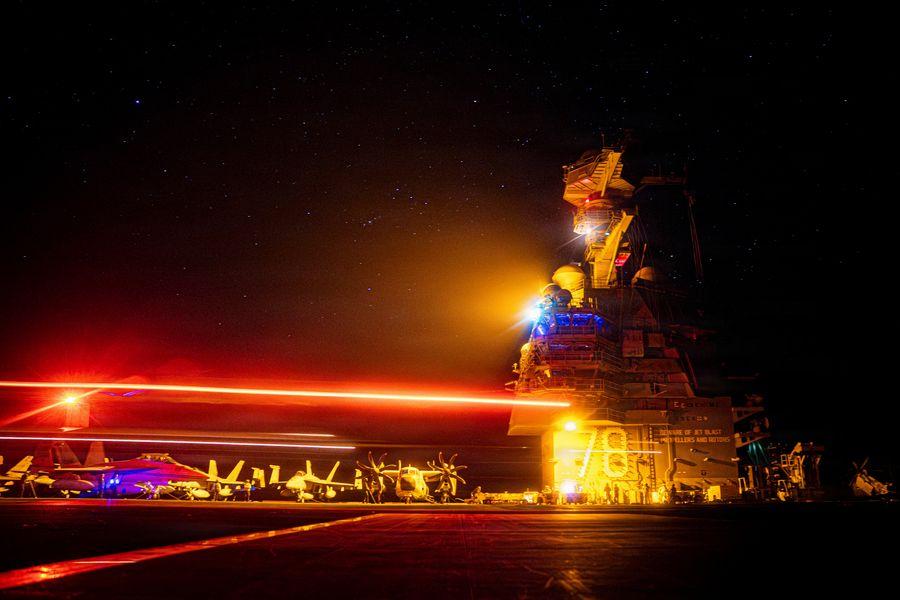
As American forces continue the work of neutralizing the Iranian nuclear threat, reducing the regime’s ability to export terror, and re-asserting freedom of the seas in the Strait of Hormuz, we must look ahead at how the global threat landscape is evolving and be able to quickly pivot and meet new challenges. It is becoming increasingly clear that the next strategic power struggle will concern more than just land or resources; the nation that controls artificial intelligence technology will be of significant strategic interest.
It is also becoming clear that the Middle East will continue to be a crucial player in this new battle. Its unique location between Europe and Asia continues to make the region a paramount geopolitical resource dating back to the earliest days of the spice trade. Later, the revelation that it was the depository for the lion’s share of the world’s energy multiplied its strategic relevance during the Cold War, continuing even to this day. Now, the Middle East’s resource wealth and central location make it a highly favorable market for the establishment of AI infrastructure, particularly in the capital-rich Gulf States. A recent PwC report suggests that by 2030 the Gulf States, Saudi Arabia, and Egypt together will account for roughly $320 billion in AI economic gains. In fact, some experts predict that the Gulf States could become the world’s third-largest AI hub, overtaking Europe and India in terms of AI infrastructure. AI computing power may indeed become the “new oil”.
The big question is: which global power will seize the initiative in this critical geopolitical region?
The Middle East has abundant energy resources and capital, but it lacks computing technology. Both the U.S. and the People’s Republic of China are in a position to supply that technology; we must ensure that it is the United States that achieves this economic and technological advantage.
The strategic importance of the emerging advanced tech industry is not lost on our adversaries: Among its first counterstrikes following the initiation of military action by the U.S. and Israel, Iran targeted American AI infrastructure in the UAE and Bahrain. America needs to employ our resources – technological, diplomatic, and soft power – to leverage our influence in the region to promote stability and economic development, while denying China a foothold.
This enormous new market for AI infrastructure is up for grabs, and the U.S. currently holds a significant lead in AI-related technology. U.S. technology, however, largely remains subject to tight Biden-era export controls, limiting its availability. Meanwhile, as we remain focused on the ongoing situation with Iran and the Strait of Hormuz, we risk taking our eye off that particular ball entirely. This would be a colossal mistake.
Waiting in the wings is communist China. Already the PRC has been investing heavily in the region, spreading its tentacles through state-sponsored tech companies such as Huawei, SenseTime, Alibaba, and China Telecom. China has taken the opposite approach to that of the U.S. in terms of exporting high tech chips, quite freely distributing their technology. While China remains well behind the U.S. in terms of advanced chip technology, the country is seen by certain Middle Eastern governments as a viable alternative to the U.S. The risk to both U.S. national security and global stability of ceding this space to China is as obvious as it is frightening
The argument for tight export controls on U.S. chip technology centers on the risk of that technology falling into the wrong hands. There is some validity to that; I can tell you from my time working in military intelligence that certainly our most sensitive technology should be kept close to the vest. It is, however, a manageable risk, and the counterargument holds that the best defense is a good offense – maintain our dominance of the technology by controlling the market. Strict export controls over 5G technology backfired on us; it drove the Chinese to simply develop the technology on their own, rather than be reliant on ours. The result was Huawei, which now feeds the 5G demands of nearly a quarter of the planet, expanding China’s influence.
The chip race is the new arms race, and the Middle East is the key battlefield. China will not hesitate to take advantage of our reluctance to engage. The Center for Strategic and International Studies (CSIS) lays it out succinctly: “Gulf states will continue to be central to the landscape of global computing power with or without the United States… U.S. policymakers should therefore prepare for a new Middle East-focused national security priority centered on compute, data centers, and AI interdependencies.”
The U.S. has for years taken this approach with Taiwan – accurately referred to as the West Berlin of Asia – by assisting in the build out of its semiconductor industry, which in turn has served as an effective bulwark against Communist Chinese ambitions over the Formosa Strait and the “first island chain” in the Western Pacific. A prudent American foreign policy would enhance our soft-power capabilities with a similar approach with our Middle Eastern allies by leveraging our current dominance in advanced tech, rather than surrendering that ground to a ruthlessly ambitious adversary.
Anthony Hartsook is a Colorado state representative and the minority caucus chair. He served with honor and distinction during a 26-year career as an intelligence officer in the U.S. Army.

The Gulf of Finland’s Forgotten Islands
By Ben Poulin • RealClearDefense
NATO’s New Spending Pledge Must Buy Real Energy Resilience
By Chuck Dockery • RealClearDefense
The Army Needs a Data Logistics Discipline Before the Next Surge
By Steve Ferenzi • RealClearDefense
2949 Marine Prisoners, Hostages, and Peacetime Governmental Detainees Since Our Corps' Founding
By Jon Couch • RealClearDefense
America Must Win the Biotech Race Against China
By Rob Maness • RealClearDefense
U.S. Air Force To Arm C-17 Cargo Aircraft With Cruise Missiles
By C. Jones, Defence Blog
How Marine Vet Ernest Langdon Became a Renowned Shooter & Gunsmith
By WATM
In First, Two CCAs Fly Air Combat Maneuvers Using Autonomy Software
By A&SF
Space Force Launches Mission Operations Center
By Jon Harper, DefenseScoop
Pentagon Mulls Placing Fleet of Military Satellites Around the Moon
By Ars Technica