
Washington's Deterrence Problem
Last updated 05:54 AM EST • Read time: 10m
When American leaders think about deterrence, they usually cite the strength of the military. “Our number one job, ” Defense Secretary Pete Hegseth recently told a gathering of generals, “is to be strong so we can prevent war.” This philosophy, echoed by Republicans and Democrats alike, holds that, when the military is at its most capable, adversaries will not test us.
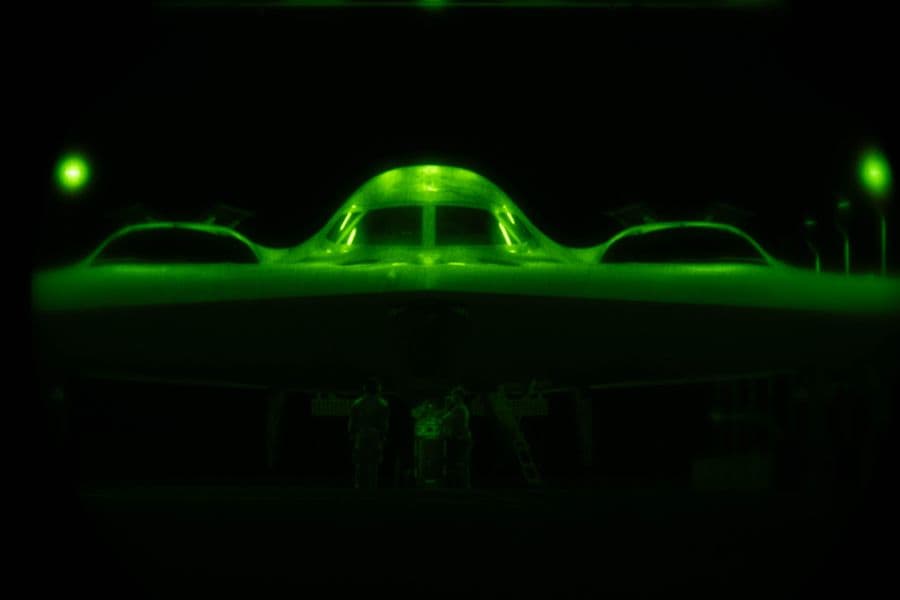
The logic of this view is sound, but it misses a fundamental aspect of deterrence: credibility. We may have the strongest military, but having a strong military does not mean adversaries believe it will be used. In other words, military strength alone does not prevent aggression; credible threats demonstrating America’s willingness to use force, and its resolve to see the task done, are just as important.
For a variety of reasons, America today faces a credibility problem in its deterrence strategy. Starting in the 2000s, the American public became disillusioned with intervention abroad. That reluctance, tied explicitly to misguided nation-building in regions of secondary concern, has extended to other commitments in areas more vital to American interests. This aversion to “forever wars,” though understandable, has thereby eroded Washington’s credibility and may tempt an adversary to test it abroad. To achieve peace through strength, then, Washington must urgently work to calibrate its messaging to adversaries and further encourage its allies to spend more on defense.
Deterrence & American Domestic Politics
Deterrence rests on two concepts: capability and credibility. Having the best military is great, but if an enemy does not believe that you will use it, then deterrence has failed.
This is because deterrence is, ultimately, in the mind of the beholder—whether an adversary is deterred depends on their perception of your willingness to use military force against them and your reputation for resolve. In this context, having the strongest military is of little use if the enemy does not believe your threats are credible or believes you will back down at the first opportunity.
Consider a textbook example: World War II. When Hitler went to war, Britain and France were perceived to have superior military capabilities. Yet Hitler considered them “little worms” with no backbone. He had good reason to: before invading Poland, Hitler took the Rhineland, Austria, the Sudetenland, and Czechoslovakia; at every turn, the Allies did not act. So, when considering the deterrence effect of the Franco-Polish alliance in 1939, Hitler deemed it irrelevant and attacked. In this case, the Allies had military strength but poor credibility, so deterrence failed. The example of 1939 is instructive, as the current state of America’s political situation mirrors that of Britain and France at the time. Indeed, both the British and French publics were reeling from previous conflicts where the costs were not commensurate with the gains. Additionally, their economies were still in the midst of recovery from the Great Depression; as bread and housing were top priorities for British and French citizens, the last thing they cared about was German aggression abroad. Similarly, today Americans are tired of “forever wars,” given their experiences in Iraq and Afghanistan, while, on the economic front, neoliberal excess and inflation have sapped the resolve of the American people for protracted commitments abroad. This is unsurprising: when faced with economic uncertainty, the last thing most Americans care about is whether Russia takes the Donbas or whether China seizes rocks in the South China Sea.
Ergo, America’s deterrence posture may seem ostensibly strong but, in actuality, be quite weak. Adversaries see America’s military power, but they also see a nation whose public rejects prolonged military action and that elected a chief executive who campaigned on a quasi-isolationist platform.
America’s History of Military Intervention
America’s current political state alone is bad enough for its deterrence posture, but this is compounded by a historical track record of abandoning military campaigns when faced with no decisive victory.
Consider the record of military action after 1945. In Korea, the public soured on the war as soon as a stalemate on the 38th parallel became permanent; in Vietnam, America’s failed bid to achieve a decisive victory sapped the endurance of the American people; in Somalia, the sight of American soldiers viciously dragged across Mogadishu prompted Clinton to withdraw; in Iraq, the public became disillusioned with the conflict by 2006, accelerating Americans’ broader skepticism of internationalism; and in Afghanistan, poll after poll showed that, though President Biden may have botched the withdrawal, in principle the public supported the pullout. In all of these cases, the public’s willingness to bear the burden gradually gave way to opposition towards prolonged operations once victory was no longer assured.
Some of these reactions were reasonable responses to misguided military adventures, but what matters in the eyes of our adversaries is not which war was consistent with our interests, but why America left. Whereas we see certain withdrawals as a recognition that our interests were better served elsewhere, the view in Beijing or Moscow could be that Washington, when the going gets tough, opts to pull out. Indeed, the conclusions we intend our enemies to draw from an event may differ from what our adversaries actually perceive. When looking at Kabul in 2021, for example, we may see a sensible appraisal of America’s commitments abroad; in Beijing and Moscow, a different conclusion can be drawn: America, if punished enough over time, tires of conflict.
That said, the current occupant of the White House is not shy about employing American power to protect what he sees as America’s interests. Operation Midnight Hammer can thus be seen as a potent deterrence signal, as is Trump’s unique authority over his electoral base. As such, adversaries can conclude that, though Trump came to power atop a quasi-isolationist base, he has no qualms with the use of military force.
However, even Trump’s actions project bad signals for deterrence. His apt diffusing of the Iran-Israel crisis notwithstanding, Trump did not go into this conflict with confidence. For months before Israel stuck, rumors abounded of daylight between Israel and Washington over whether to strike Tehran’s nuclear sites. Furthermore, Secretary of State Marco Rubio’s all but tepid public statement when Israel initially launched its campaign against Iran, coupled with American entry at a point when Iran’s defenses posed no credible threat, strongly suggests that the president did not embark on this venture with confidence and that, when he did, victory was more or less assured.
To illustrate this point further, consider how Midnight Hammer can plausibly be viewed by Beijing. For decades, China has cultivated a school of thought that the U.S. only engages in military action where and when Washington is confident of success. Whereas Americans may see Trump’s handling of the Iran-Israel War as a testament to peace through strength, Xi can conclude that Washington entered the conflict reluctantly and only when success was guaranteed. The lesson, for Beijing, could be that conflict over Taiwan can be, if not prevented by signaling the massive cost of intervention to the American people, then won outright after America tires.
The Taiwan case is especially concerning given the divergent stakes involved: important U.S. interests are at stake in Taiwan; but for the Chinese Communist Party, the matter is existential. Beijing will almost certainly have higher resolve for success in Taiwan than Washington, so it will be willing to hold out for longer. Given this reality, and how a war over the island will likely be protracted unless China achieves a quick success, the Chinese can plausibly conclude that, as casualties mount and the economic consequences start hitting the American public, they will have escalation dominance. Accordingly, even a strong U.S. military posture that defeats an initial Chinese onslaught might still fail to deter Beijing.
Furthermore, President Trump’s other military actions are likely to reinforce Beijing’s perception that American staying power is weak. Earlier this year, President Trump unleashed sustained strikes against the Houthi terrorist group in Yemen. But as U.S. munitions stocks were depleted, Washington negotiated a face-saving agreement even though Houthi strikes against ships in the Red Sea continued. Uncertainty over U.S. support for Ukraine is another example. If American leaders face a domestic reckoning over a conflict where, at less than 5% of the defense budget, Washington degraded Russia’s offensive military potential with no American boots on the ground, then that sends a poor message to China about U.S. credibility and resolve.
Of course, many of these examples have intrinsic factors. But human beings are prone to seeing past behavior as an indicator of future conduct. From Xi and Putin’s perspective, the lesson to be learned from this history may be that all one needs to do is amplify costs, maximize casualties, and hold out until the American people give way. This may be a mistaken perspective (see Pearl Harbor), but it is a plausible conclusion.
What can Washington do?
Today’s economic climate suggests that there are no easy fixes for America’s credibility problem. The forces pushing Americans to be wary of foreign entanglement––inequality, inflation, social media, and economic uncertainty––have no easy fixes. Recent advances in AI will only amplify these concerns.
History, moreover, provides a lesson on how Americans become more internationalist during uncertain economic times: during the period before World War II, President Roosevelt spent half a decade convincing the public about the value of internationalism. And even then, it took German aggression in Europe and the Japanese attack on Pearl Harbor for Americans to heed his advice.
Absent external shocks, this pattern of domestic skepticism will make any commitment on Washington’s behalf towards extended deterrence weak. Consequently, American allies should take American reluctance towards their security as a given for the foreseeable future.
To be sure, President Trump presents an unknown variable. He has shown himself willing to use force in the defense of allies but has simultaneously demonstrated repeated aversion towards prolonged military commitments and intervention where the likelihood of success is uncertain.
The lesson for America’s allies, then, is simple: they must engage in self-help. American assistance is preferable, but front-line states must prepare under the assumption that the U.S. is not as committed as it once was. Concurrently, allies must increasingly ask themselves what military capabilities they can provide to the U.S., and how their own capabilities can maximize the chances of success. Israel’s experience with Iran last June is instructive: it was Israeli dominance over Iran that ultimately drove the Trump administration to support and join its military campaign. The Baltic States, Japan, the Philippines, and Taiwan must all heed this lesson.
If allied military capability is effective, and the chances of short-term military success are high, then Washington’s commitments will be more credible. This prescription will also address long overdue changes in America’s burden sharing arrangements, effectively rebalancing America’s global posture for the better.
For Washington, in contrast, the task of making deterrence credible will require concerted messaging to adversaries about American staying power. Beijing and Moscow must be told, time and again, that the U.S. is committed, even if U.S. officials may have private misgivings. This is crucial, for if our enemies are left with doubts about the credibility of America’s commitments, then they may be tempted to test Washington’s alliances.
Ultimately, however, Americans are more likely to commit themselves to causes abroad if they feel their government delivers at home. Economically pessimistic people are, by nature, less charitable; likewise, Americans will be more supportive of allies abroad if they feel economically secure at home. Otherwise, the political line of “why spend X amount of money abroad when we need it here” will be nearly impossible to rebuke.
American leaders, in essence, have to do an obvious yet perhaps not so simple task: govern. Absent this, the deterrent effect of the U.S. military may not be as strong as our leaders expect.
Lucas de Gamboa is a recent graduate from Columbia University, with a degree in Political Science. He was a Saltzman Student Scholar at the Saltzman Institute of War and Peace and was co-president of Columbia's Alexander Hamilton Society chapter. He is also a research assistant at Columbia Law School and was a Hamilton National Defense Fellow.
All views expressed above are my own.

ICE Is Not a Four-Letter Word
By Meda Parameswara Reddy • RealClearDefense
The U.S. Can Draw Down in the Middle East Without Going Blind
By Cudi Zerey • RealClearDefense
America Needs a Joseph Directive
By Jeff Ballabon • RealClearDefense
Partnering Decides Whether Flexible Military Construction Can Work
By Matt Russell • RealClearDefense
Eight Months of Epic Fury and Still No Internal Alternative
By Stephen D. Cook • RealClearDefense

GE Aerospace to Supply Engines for Two US Navy Flight III Destroyers
By Defense Post
U.S. Air Force Asks Industry for New Cruise Missile for Ukraine
By Michael Peck, DNews
First Flight II San Antonio-class Amphib Completes Builder’s Trials
By Mongilio, USNI N.
LGM-35 Sentinel ICBM on Track for 2030
By Kris Osborn, Warrior Maven
On American Destroyers, Avoid a Self-Inflicted Wound in Spain
By Defense News