
Military Strategy
RealClear Context
Click below to continue reading this story, discover more Military Strategy stories from over 25 years of RealClear archives, or follow this topic to stay in the know.
The Art of Irregular Warfare Campaigning
Irregular Warfare (IW) Campaigning is the art of using available resources by the Department of Defense and other Agencies in a series of linked...
06/21/24Read it on Small Wars JournalU.S. and Australia Should Give ANZUS Teeth
As Canberra and Washington pass the 75th anniversary of the Australia, New Zealand and United States (ANZUS) Treaty – New Zealand’s participation was...
1h agoRead it on The Strategist (ASPI)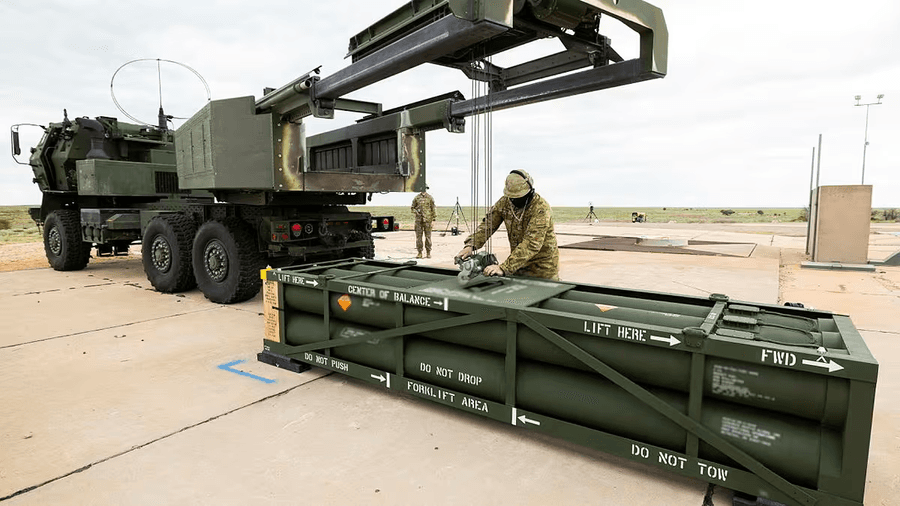
U.S. and Australia Should Give ANZUS Teeth
As Canberra and Washington pass the 75th anniversary of the Australia, New Zealand and United States (ANZUS) Treaty – New Zealand’s participation was suspended in the mid-1980s over its nuclear-free legislation – sentimentality is colliding with reality. The assumption of an automatic security blanket has evaporated, dismantled by China’s rapid military expansion and a U.S. foreign policy expecting allies to shoulder far more weight. To survive this shift, Canberra and Washington should pivot ANZUS from a passive safety net into a deterrence network that is open to other partners and built around hardware that can be deployed quickly.
The compounding pressure of growing Chinese strength and an increasingly transactional U.S. foreign policy is mounting. At the same time, Australia’s National Defence Strategy warns that a ‘strategic risk window’ is already open. Though not officially defined, this warning signals a period of heightened danger before AUKUS nuclear submarines arrive in the 2030s. What’s more, the U.S. midterm election results could lead to legislative friction and budget scrutiny, underscoring the urgency for AUKUS to demonstrate immediate, tangible results across political cycles.

How to Win Without Military Victory
Iran’s continued resistance presents a strategic paradox. Its conventional navy and air force have been badly damaged, its air defenses weakened, and much of its military infrastructure and senior leadership struck. Its economy is under extraordinary pressure. Yet Tehran has not accepted Washington’s terms. The regime remains in power and insists that the United States, not Iran, must make the concessions needed to end the conflict.
We Owned the Night, We Lost the War
The Echo of Afghan Counterterrorism Missions...
1d agoRead it on Modern War InstituteHow to Win Without Military Victory
Iran’s continued resistance presents a strategic paradox....
1d agoRead it on RealClearDefensePhilosophy at War: Wittgenstein and Irregular Warfare
On September 28th, 2026, Dr. Darrell Dooyema, Ph.D. published a perspective piece in Frontiers in Communications titled “A war of words:...
3d agoRead it on Small Wars JournalCombat Power, Sustained: A Hub-and-Mesh Arch. for Contested Logistics
In a future major conflict, the logistics network will still be expanding while the joint force generates, sustains, and regenerates combat power....
5d agoRead it on Modern War InstituteTailored Deterrence and Nuclear First Use in Europe
Stephen J. Cimbala, Tailored Deterrence and Nuclear First Use in Europe, No. 675, November 12, 2026 download Tailored Deterrence and Nuclear First...
6d agoRead it on National Institute for Public Policy
Tailored Deterrence and Nuclear First Use in Europe
Stephen J. Cimbala, Tailored Deterrence and Nuclear First Use in Europe, No. 675, November 12, 2026
download PDF
When Access Becomes the Fight
What Hormuz Can and Cannot Teach INDOPACOM About Sustaining Combat Power...
1w agoRead it on RealClearDefense
South Korea’s Nuclear-Powered Submarines After the Midterms
By Jihoon Yu • RealClearDefense
Why Build a Billion-Dollar Warship if a Cheap Drone Can Sink It?
By Ege Can Gün • RealClearDefense
Megaspeed Proves: Congress Must Act on Chip Security
By Michael Groen • RealClearDefense
Creating a MEF Insurance Policy
By Steven Bancroft • RealClearDefense
Operation Epic Fury and the Illusion of Victory
By Stephen D. Cook • RealClearDefense
South Korea’s Nuclear-Powered Submarines After the Midterms
By Jihoon Yu • RealClearDefenseWhy Build a Billion-Dollar Warship if a Cheap Drone Can Sink It?
By Ege Can Gün • RealClearDefenseCreating a MEF Insurance Policy
By Steven Bancroft • RealClearDefense
U.S. Navy Used Expired Munitions During Iran War
By Riley Ceder, Navy Times
The Coast Guard Icebreaker Nobody Wanted
By David Roza, Task & Purpose