
Canada's Defense Dilemma
Published Sept. 25, 2024 • Read time: 6m
Canada’s Defense Dilemma: Prioritizing North American Security in a Changing World
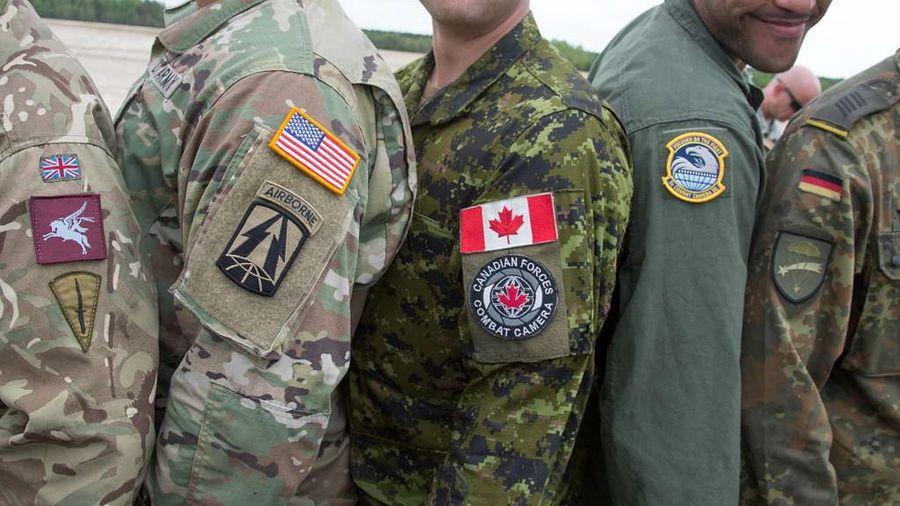
In recent years, Canada’s defense policy has faced increasing scrutiny both at home and abroad. As global security challenges grow more complex, the question of what role Canada should play in maintaining its defense commitments has become a focal point of debate. The country’s position within NATO and its historical partnership with the United States place Canada in a unique position. However, as international tensions rise in the Pacific, Arctic, and Northern Atlantic regions, it is crucial that Canada adopt a defense posture that is meaningful, but focused and restrained. While Canada must uphold its obligations, its commitment should remain primarily anchored in North American security—most notably, safeguarding the North Pacific, the Arctic, and the North Atlantic.
Canada’s military strategy has traditionally revolved around its partnership with the United States through the North American Aerospace Defense Command (NORAD) and its NATO commitments. The former, an enduring pillar of Canadian defense, represents the bedrock of the nation’s security posture. NORAD allows Canada to monitor and address potential airborne threats across the continent, ensuring that North America remains safe from missile or aerial attacks. Its significance is particularly pronounced in light of growing concerns over Russian and Chinese military activity in the Arctic and Pacific regions.
In recent years, the Arctic has emerged as a potential flashpoint in global geopolitics. As climate change melts polar ice, previously inaccessible regions are becoming economically viable for resource extraction and shipping. Both Russia and China have taken a keen interest in the Arctic’s potential, with Russia increasing its military presence in the region and China declaring itself a “near-Arctic state.” The Canadian government has responded by making some investments in Arctic sovereignty, including efforts to modernize its aging fleet of patrol ships and strengthen its northern presence. These efforts, while essential, remain modest compared to the capabilities of other major powers with interests in the Arctic. However, Canada has recently taken a significant step toward bolstering its presence in the region by planning to acquire as many as 12 conventionally powered submarines. This acquisition would allow Canada to better advance and defend its interests in the North Pacific, the Arctic, and the North Atlantic, providing a critical deterrent against any potential threats in these strategically important areas.
In the Pacific, Canada faces a different but equally pressing set of challenges. The rise of China as a global military power, combined with increasing tensions in the Indo-Pacific region, has led some to argue that Canada should increase its involvement in security initiatives beyond its shores. While there is value in contributing to global security, Canada must weigh the costs and benefits of becoming more deeply enmeshed in Indo-Pacific affairs. Canadian forces have a limited capacity to project power in the region, and any significant increase in their presence would likely come at the expense of commitments closer to home. Instead, Canada should remain focused on its existing partnerships in the region, such as through the Five Eyes intelligence alliance and its naval cooperation with partners like Japan and Australia. The planned acquisition of conventionally powered submarines would also enhance Canada’s ability to contribute to Pacific security in a meaningful way, while ensuring that its resources remain concentrated on the most pressing security concerns.
Similarly, the North Atlantic continues to represent a key area of concern for Canada’s defense policy. As a NATO member, Canada has participated in numerous military exercises and operations aimed at deterring Russian aggression in Europe. However, the growing strain on NATO’s cohesion, coupled with the resurgence of Russian naval activity in the North Atlantic, raises important questions about the extent of Canada’s commitment to European defense. Canada should undoubtedly continue to support NATO’s collective defense mission, but it must also ensure that its resources are not disproportionately allocated to overseas operations. The strategic importance of the North Atlantic, both as a trade route and a potential arena for military conflict, means that Canada’s defense posture in this region should remain robust but measured. The future submarine fleet could play a pivotal role here, enhancing Canada’s ability to monitor and defend its interests in the North Atlantic while maintaining a balanced defense posture.
One of the key challenges facing Canada’s defense policy is the question of resources.
The Canadian Armed Forces are relatively small, and the country’s defense budget, while growing, remains modest compared to many of its allies. This reality necessitates a defense strategy that is both pragmatic and focused. While some voices have called for Canada to significantly increase its military spending, doing so without a clear sense of priorities risks wasting valuable resources. Instead, Canada should concentrate on enhancing its core capabilities—particularly in areas that directly affect North American security. This means continuing to invest in modernizing NORAD, improving Arctic surveillance and infrastructure, and ensuring that Canada can contribute meaningfully to the defense of the North Atlantic and Pacific regions. The acquisition of submarines aligns with this strategy, providing Canada with the tools needed to project power and protect its interests within its immediate sphere of influence.
Moreover, Canada’s defense policy must be carefully calibrated to reflect its domestic political realities. Public support for military spending in Canada has traditionally been lukewarm, and any significant increase in defense expenditures would likely face political resistance. A more focused and restrained approach to defense not only makes strategic sense but also aligns with Canadian public sentiment. By concentrating on the most pressing security concerns—those that directly affect North America—Canada can build a defense policy that is both sustainable and politically viable.
There is also a broader question about Canada’s role on the global stage. As the world becomes increasingly multipolar, the temptation for nations to assert themselves more aggressively in international security affairs will only grow. But Canada must resist the urge to become a global military player. Instead, it should prioritize its historical strengths: diplomacy, peacekeeping, and multilateral cooperation. Canada’s contributions to global security should be primarily diplomatic and humanitarian, with military commitments focused on the defense of North America. The acquisition of submarines, therefore, must be seen within the context of protecting national interests rather than seeking to project power far beyond North American shores.
In conclusion, Canada must chart a careful course in its defense policy, one that is grounded in a clear understanding of its strategic priorities and resources. The growing challenges in the Arctic, North Pacific, and North Atlantic demand a meaningful response, but Canada’s commitments must remain focused and restrained. By continuing to prioritize North American security, Canada can fulfill its defense obligations in a way that is both effective and sustainable. The nation’s defense strategy should be one of cautious engagement, ensuring that it remains a reliable partner to its allies while avoiding unnecessary entanglements in distant conflicts. This approach will not only protect Canada’s core interests but also preserve its ability to respond to emerging threats in an increasingly uncertain world.
Andrew Latham, Ph.D., a tenured professor at Macalester College in Saint Paul, Minnesota. He is also a Senior Washington Fellow with the Institute for Peace and Diplomacy in Ottawa and a non-resident fellow with DefensePriorities, a think tank in Washington, DC.

Operation Epic Fury and the Illusion of Victory
By Stephen D. Cook • RealClearDefense
Previewing The Shenzen Summit: A Critical View
By Stephen Blank • RealClearDefense
How to Win Without Military Victory
By Kevin Eyer • RealClearDefense
We Keep Funding ‘Shared Infrastructure.’ Nobody Has Defined It.
By Frederick Gale • RealClearDefense
Congress Must Reauthorize Section 702 of the Foreign Intelligence Surveillance Act
By Bryce G. Poole • RealClearDefense

Five Takeaways From Navy Nominee’s Rocky Hearing
By Seligman & Weisgerber, WSJ
U.S. Air Force Taps Anduril for Containerized Launcher
By Global Defense News
Time To Say Goodbye to the NMESIS and NSM
By Marine Corps Compass Points
HII and U.S. Navy Break Ground on Shipyard Complex
By George Allison, UKDJ
Rare U.S. Air Force Spy Plane Spotted Over the Black Sea
By D. Malyasov, Defence Blog