
NATO's Cruise Missile Reckoning
Last updated 06:43 AM EDT • Read time: 7m
The 2026 NATO summit in Ankara was supposed to be about burden sharing. It may instead become a reckoning over whether the alliance can still arm itself fast enough to fight. After years of slow production and peacetime assumptions.
No NATO states stockpiles are more stretched than America's missile stockpile is being stretched from Ukraine to the Middle East to the Indo-Pacific, exposing a dangerous gap between NATO’s new defense-spending promises and the factories needed to turn those promises into firepower.
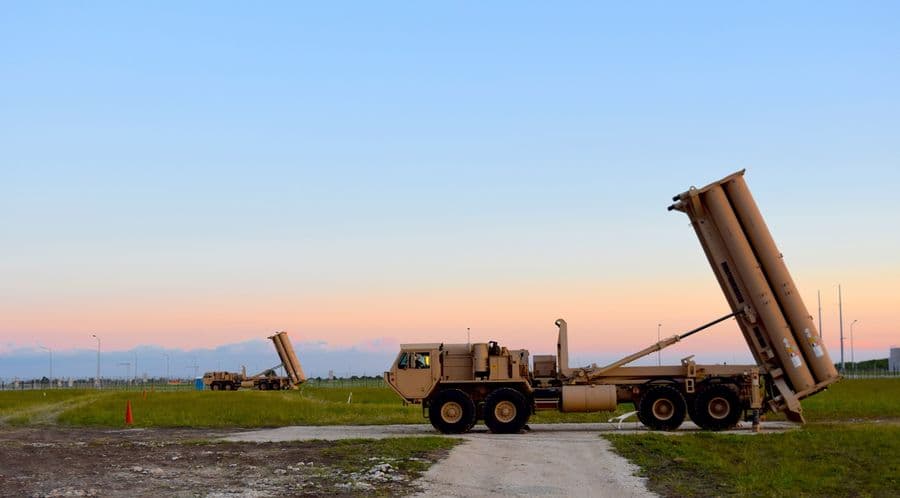
The alliance can pledge 5% of GDP, announce joint procurement, and speak grandly of industrial deterrence, but none of that matters if Tomahawks, Patriots, THAAD interceptors, and other precision weapons cannot be built at the speed modern war consumes them.
The U.S. has wagered its missile strike capabilities globally, overstretching precision-strike inventory across three theaters, theaters that are increasingly prone to geopolitical turmoil. From countering narco-terror operations in Southern Command to Indo-Pacific strategic planning, the U.S. has most notably spread itself thin through Operation Epic Fury in Iran and the previous Twelve-Day War in June of 2025, leaving stockpiles lower than ever. After striking Iran for over 120 days, additional missiles needed to be rerouted from the Indo-Pacific to the Middle East.
According to the Center for Strategic International Studies report on May 27, U.S. munitions had already been heavily depleted. With no rapid reproduction capacity, fears quickly arose that defensive capabilities would not return to normal until 2029 or 2030. And this assumes no further conflicts. Tomahawk missile production has averaged around 86 missiles per year, yet the Navy has significantly raised its orders to 785 for FY 2027. This well exceeds Raytheon’s production capacity of less than 200 per year. Newer entrants such as Hadrian, which operates advanced AI-driven factories that produce precision-machined missile components, could be part of the answer, especially given the vast deficit.
The Department of War has been aware of underlying issues at the manufacturing base. Factory production had adjusted to peacetime needs, inadvertently impairing the ability to ramp up production when needed. For products with one-time use cases, this insufficiency creates a severe risk to U.S. security and international strategy. America is operating within new geopolitical environments that require enhanced missile usage, with accelerated production and delivery.
The array includes ATACMS and PAC-3 Patriot missiles used in Ukraine to counter the Russian invasion; U.S. THAAD batteries, which are positioned across the Middle East in Israel, Saudi Arabia, and at least 19 U.S. bases; SM-3 and SM-6 interceptors on Aegis destroyers and allied land sites across the Indo-Pacific; and Tomahawk missiles supplying offensive strike capacity across South Korea, Taiwan, and Japan.
Little wonder that, as Defense Secretary Pete Hegseth has noted, U.S. inventories will take months and years to replenish. The lack of production capacity is causing a strategic recalculation of global power dynamics for allies and adversaries alike.
Aside from missiles being moved from Asian allies to the Middle East, Germany has taken the most recent hit. After working for months on acquiring Tomahawk missiles, the U.S. suddenly declined Germany’s request. The suspension leaves Germany hanging with a 400-missile shortfall. If allied forces can no longer rely on sustained supplies from the U.S., defense ministries will begin to hedge, reducing American influence abroad, rather than reinforcing the alliance architecture.
To be sure, the administration has recognized this risk. Assistant Secretary of War for Industrial Base Policy Michael Cadenazzi spoke about the vision for increasing industrial production as early as December last year. He called on manufacturers to share their intellectual property, create joint ventures, and collaborate on overcoming the urgent challenges facing procurement for defense. The sense of urgency became even more apparent when President Trump issued a Memorandum to the Secretary of War, reinstating the Defense Production Act of 1950, which allows for emergency powers in expanding defense supplies.
By June 17 of this year, Michael Cadenazzi articulated the Department’s strategy as interested in “using voluntary agreements as a way to bring industry in an antitrust environment to go ahead and … [address] nasty issues in the supply chain or the industrial base.” “We’re asking them to work together in a way that would normally be problematic in an open and competitive market sense,” he said. Yet even when working together, full reconstitution of supplies may take years. The production bottleneck is neither fiscal nor bureaucratic; instead, structural barriers at the base of production have accumulated over the years to delay output.
Aside from low industrial output, there are also shortages in skilled labor that are affecting skilled manufacturing across the board but are particularly alarming in how they relate to U.S. strategic military deterrence. On average, new engineers take eighteen months to train. This challenge follows the already high demand and low supply of high-skill engineers and machinists who are necessary for constructing complex and multipart defense products. Most missiles, furthermore, rely on sole-source materials, many of which are quickly handicapped by critical minerals shortages and trade barriers. With so many obstacles to rapid production, the rate of weapons production means that enemies are not properly deterred.
Part of the solution lies in the introduction of AI and more advanced automation into the supply chain. Hadrian, for example, addresses these very challenges through its advanced systems that can train workers in as little as 30 days to build equipment that could once only be assembled by highly trained workers with decades of experience. This should help to accelerate many of the current time lags.
The defense sector typically relies on government direction for any changes to its manufacturing processes; however, private companies have been quickly adapting their own methods through tech-driven improvements.
Palantir revolutionized the sector with its advanced all-in-one AI interface, becoming critical for the Department of War’s Project Maven. Boeing Defense has also rapidly advanced its use of digital modeling and machine learning for the assembly line, ultimately aiming at accelerating reliable output. Hadrian, meanwhile, is developing its own AI platforms as well, reducing skills training programs from several months down to 30 days. Instead of scaling production, the system significantly improves efficiency across existing production lines. The adjustment helps to overcome the skilled labor crisis, and the system is now deployed at Lockheed Martin’s Missiles and Fire Control facility for PAC-3 and THAAD components.
Anduril Industries partnered with Hadrian, showing that it can reduce lead time for the production of precision machined parts by up to 50%. Mike Hsu, head of Anduril’s supply chain, noted the key constraints, saying, “No system where cold production lines and unproductive workers are a feature, not a bug, serves the country well.” Instead, creating a faster and more flexible approach to production can resolve the macro strategic issues now facing U.S. security and its systems of alliances.
The invocation of the Defense Production Act is a clear indication that the U.S. is struggling with missile procurement. Two factors have converged to make this a potential disaster for the United States. Firstly, it has overstretched its strategy across multiple theaters, performing the role of global policeman at max capacity. Secondly, this role is being performed primarily through the use of missile weapon systems. These advanced systems are quickly depleted, yet they function as the weapon of choice for modern warfare, both for deterrence and striking capacity. The Iron Dome, the Golden Dome, and protective mini domes above every U.S. and allied base are in need of reliable missile supplies. It will be only through improved and revitalized manufacturing that the U.S. will maintain its global influence. Likewise, it will only be through novel manufacturing systems that the U.S. defense industry can meet the demands of current strategic replenishment. Without it, the U.S. and its allies face enemies ready to take advantage of the missile supply failure.
Joseph Hammond is a former Fulbright fellow and journalist who has reported extensively from Africa, Eurasia and the Middle East.

A Passage to the Middle East: India as a Mediator and Security Partner
By Irina Tsukerman • RealClearDefense
South China Sea is Key to Invigorate Positive U.S.–Malaysia Relations
By Brent D. Sadler • RealClearDefense
The Necropolitics of the Wasteland
By Yunus Emre Tumen • RealClearDefense
AI, Robotics, and Marines
By Gary Anderson • RealClearDefense
The Emerging SQUAD
By Muhammad Shoaib • RealClearDefense
AI, Robotics, and Marines
By Gary Anderson • RealClearDefense
AUKUS Partners Test Autonomous Maritime Systems
By Jangoulun Singsit, Naval Tech
AUKUS: USS Colorado Announced as First Submarine for SRF – West
By USNI News
Navy, Marine Corps Simulate Ship Strikes From Air and Land
By Alex Wilson, S&S
Air National Guard To Stand Up a New Special Tactics Squadron
By Patty Nieberg, T&P